


Yogurt Production Line
A yogurt production line is a fully integrated system designed to transform raw milk into safe, high-quality yogurt through a series of controlled processing steps. It is widely used in the food industry to ensure consistency, hygiene, efficiency, and product stability. A modern yogurt production line typically includes milk reception, filtration, standardization, homogenization, pasteurization, cooling, fermentation, mixing, filling, and packaging sections. Each stage plays an important role in determining the final texture, taste, and shelf life of the yogurt.The process begins with the reception of raw milk, which is tested for quality indicators such as acidity, fat content, protein content, and microbial safety. After passing inspection, the milk is filtered to remove impurities and then standardized to achieve the desired fat and solids levels. This step ensures uniform product quality. Next, the milk is homogenized under high pressure to break down fat globules and improve the smoothness and stability of the yogurt. Homogenization helps prevent separation and creates a more appealing texture.After homogenization, the milk is pasteurized at a controlled temperature to eliminate harmful microorganisms and improve safety. This is one of the most critical stages in the production line. The pasteurized milk is then cooled to a temperature suitable for adding starter cultures. These beneficial bacteria are responsible for converting lactose into lactic acid, which gives yogurt its characteristic flavor, aroma, and texture. During fermentation, the milk is held in insulated tanks or containers until the desired acidity and consistency are reached.Depending on the product type, the yogurt may be set directly in cups or fermented in bulk and then mixed with fruit, sugar, or flavorings. Stirred yogurt production lines often include blending tanks to ensure even distribution of ingredients. Once the yogurt reaches the required quality standard, it is transferred to filling machines. These machines accurately dispense the product into cups, bottles, pouches, or other containers. The packaging section may also include sealing, date coding, labeling, and carton packing systems.Automation is a major advantage of a yogurt production line. Automated control systems monitor temperature, pressure, flow rate, and timing to maintain stable production and reduce human error. Stainless steel construction and sanitary design are used throughout the line to meet strict food safety requirements. Cleaning-in-place systems are commonly installed to clean equipment efficiently without disassembly, saving time and ensuring hygiene.A yogurt production line can be customized according to production capacity, product type, and packaging requirements. It is suitable for producing plain yogurt, drinkable yogurt, fruit yogurt, and probiotic yogurt. With efficient operation and precise control, the line helps manufacturers increase productivity, reduce waste, and deliver products that meet market demands.
Products
Category:
-
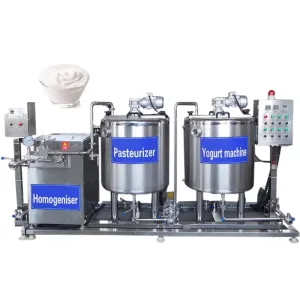
Small-scale Yogurt Production Line
Category: Cold & Hot Water TanksBrowse number: 225Number:Release time: 2026-08-28 11:18:37Small-scale Yogurt Production LineThe yogurt production line is a fully-automatic industrial system that converts raw cow milk or milk powder into fermented dairy products through precise pre-treatment, sterilization and packaging stages.PRODUCT DESCRIPTIONDescriptionThis milk processing production line manufactures various commercial milk products, including whole milk, skimmed milk and standardized milk with different fat contents.Raw materials for this line can be fresh raw milk or milk powder. Processing options include pasteurization, high-temperature short-time sterilization or UHT ultra...
News
Category:
No search results found!
Case
Category:
No search results found!
Video
Category:
No search results found!
Download
Category:
No search results found!
Job
Category:
No search results found!
Featured Products
No search results found!



 Phone
Phone