 +86 29-87031531


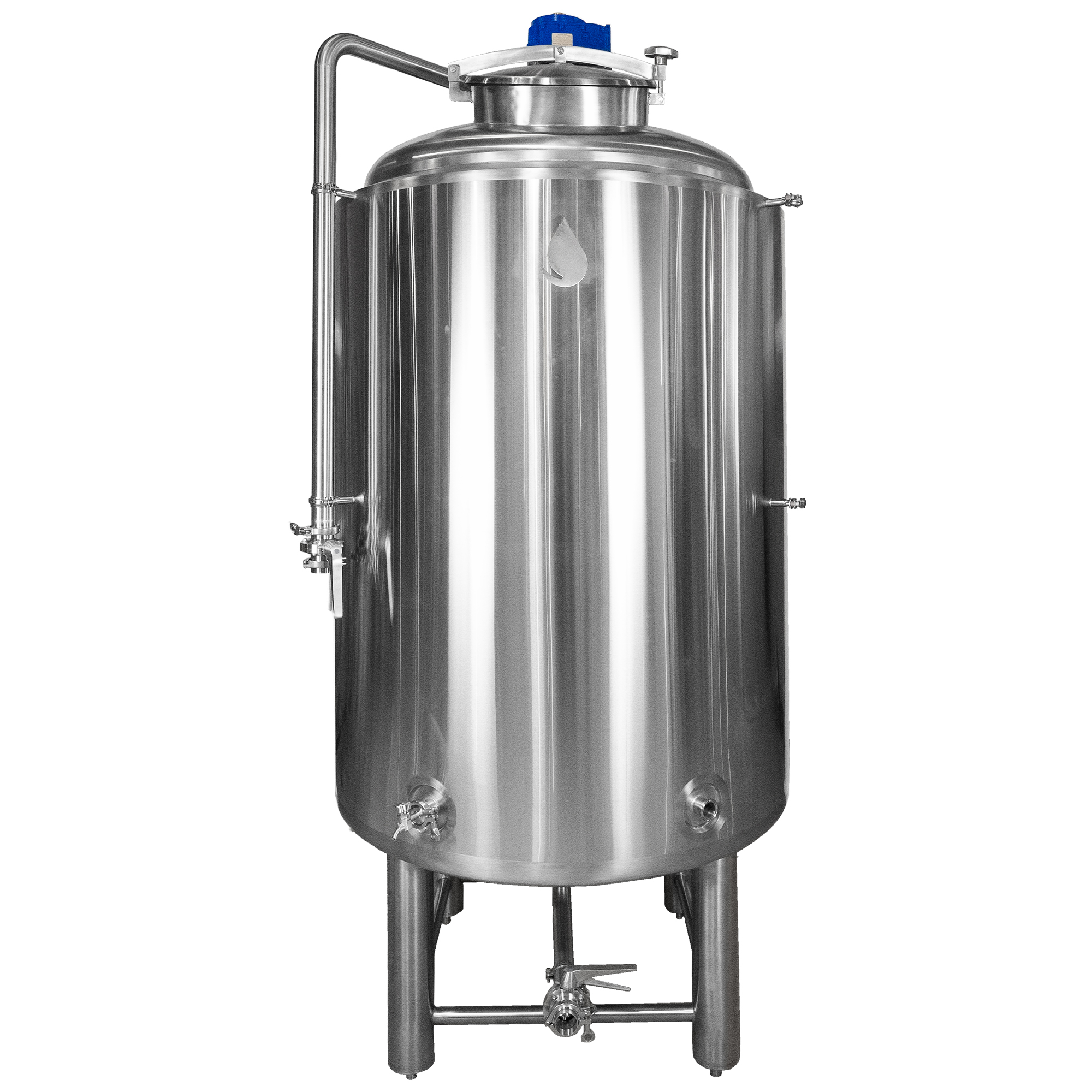
Stainless steel Bright Tank for Brewery Beer Storage and Conditioning
Basic Info.
Model NO. | ALT-BT-3000L |
Motive Force | Pressure |
Style | Vertical or Horizontal |
Performance | Fermentation |
Certification | CE, ISO9001 |
Tank Material | SUS304/SUS316L |
Thickness | 1.5mm ~ 3mm |
Capacity | Customized |
Design Pressure | 0-0.3MPa |
Work Temperature | -5-40℃ |
Sealing Materials | Silicone, NBR, EPDM, FKM |
Heating Method | Steam/Electric/Gas Heating |
Surface Treatment | Mirror Polish/Brushed |
Pressure Test Report | Provided |
Transport Package | Carton/Seaworthy Wooden Box |
Specification | Customized |
Trademark | Aelt |
Origin | Yangling, China |
HS Code | 8421299090 |
Production Capacity | 3000pieces/Month |
Packaging & Delivery | |
Package Size | 100.00cm * 100.00cm * 150.00cm |
Package Gross Weight | 60.000kg |
Product Description
The Stainless Steel Bright Beer Tank (BBT), also known as a Serving Tank or Conditioning Tank, is designed for beer maturation, clarification, carbonation, and serving after fermentation.

Our Stainless Steel Bright Tanks are the epitome of precision engineering, crafted specifically for the refined processes of sake fermentation, maturation, and storage.
The tank body is made of SUS304 or SUS316L stainless steel with smooth inner surface polishing, which is easy to clean and suitable for CIP systems.
The cooling jacket allows accurate temperature control during fermentation, improving beer quality and consistency.
Each beer bright tank can be customized in terms of volume, pressure rating, insulation thickness, and connection type, making it suitable for both start-up breweries and large-scale commercial projects.
By seamlessly integrating time-honored brewing traditions with cutting-edge hygienic design, these tanks create the perfect environment that enhances and preserves the subtle flavors of sake. They stand as benchmarks of food safety and operational excellence, ensuring that every drop meets the highest standards of taste and quality.
Main Features
a. Food Grade Stainless Steel Construction
SUS 304 standard, SUS 316 optional for higher corrosion resistance
b. Pressure Rated Design
Suitable for carbonated beer storage and serving
c. Smooth Sanitary Finish
Internal surface ≤0.4 μm, easy cleaning and sanitation
d. Efficient Temperature Control
Optional cooling jacket for stable beer conditioning
e. Compact Vertical Design
Saves floor space and improves brewery layout efficiency
f. CIP Ready Structure
Compatible with automated or manual cleaning systems
Applications
1. Craft Brewery
2. Microbrewery
3. Brewpub
4. Commercial Beer Factory
5. Pilot Brewing System
Optional Accessories
1. Pressure relief valve
2. Sampling valve
3. Manhole (Top / Side)
4. Level indicator
5. Temperature sensor
6. CIP spray ball
7. PLC automatic control system
Stainless steel Bright Beer Storage & Maturation Tank: Complete Guide for Modern Brewing Operations
Introduction
A Stainless Steel Bright Beer Storage & Maturation Tank is one of the most important pieces of equipment in commercial breweries, craft breweries, microbreweries, brewpubs, and beverage production facilities. After primary fermentation is completed, beer requires a controlled environment for conditioning, clarification, carbonation, maturation, and storage before packaging. Bright beer tanks provide the ideal solution for these critical brewing stages.
Modern breweries rely on bright beer tanks to maintain product consistency, improve beer quality, preserve carbonation, and ensure sanitary handling throughout the final production process. Manufactured from food-grade stainless steel, these tanks offer exceptional durability, corrosion resistance, hygiene, and operational efficiency.
As the global craft beer and premium beverage markets continue to expand, demand for high-quality stainless steel bright beer storage and maturation tanks has increased significantly. Breweries of all sizes require reliable storage solutions capable of supporting diverse beer styles while meeting strict food safety and production standards.
This comprehensive guide explores the definition, structure, advantages, specifications, applications, design considerations, maintenance requirements, and selection criteria of stainless steel bright beer storage and maturation tanks.
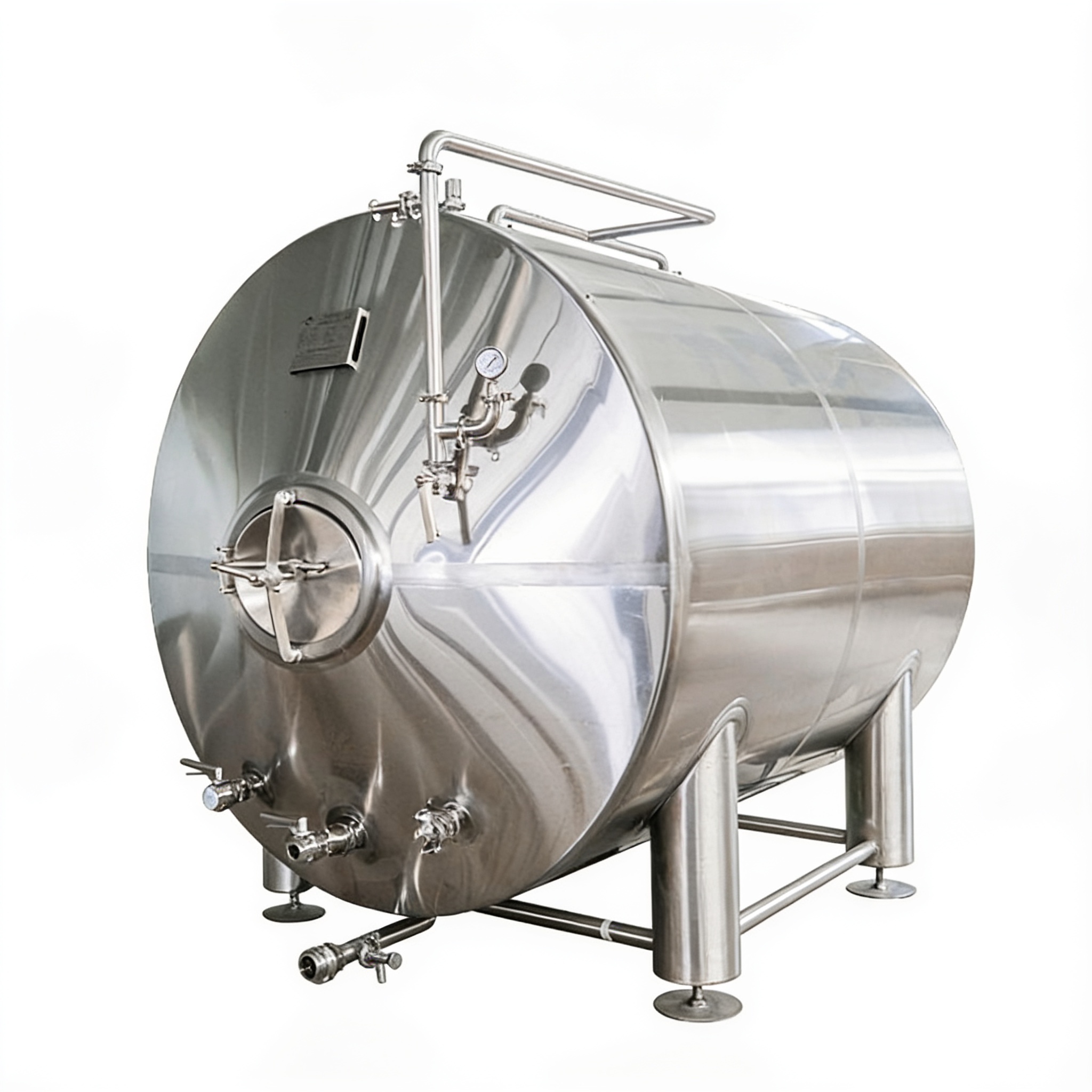
What Is a Stainless Steel Bright Beer Storage & Maturation Tank?
A Bright Beer Storage & Maturation Tank is a pressure-rated stainless steel vessel used after fermentation to condition, carbonate, clarify, mature, and temporarily store beer before packaging or serving.
The term "bright beer" refers to beer that has completed fermentation and appears clear, stable, and ready for final processing.
These tanks are commonly used for:
Beer conditioning
Carbonation
Clarification
Cold storage
Flavor maturation
Packaging preparation
Temporary beer holding
Unlike fermentation tanks, bright beer tanks are designed primarily for post-fermentation operations.
Importance of Bright Beer Storage in Brewing
Bright beer tanks play a vital role in maintaining beer quality.
Key functions include:
Flavor Stabilization
During maturation, flavors become more balanced and refined.
Benefits include:
Reduced harshness
Improved mouthfeel
Enhanced aroma integration
Greater product consistency
Carbonation Control
Bright tanks allow precise carbonation levels through:
Carbonation stones
CO₂ injection systems
Pressure regulation
Beer Clarification
Cold storage encourages:
Yeast settlement
Protein precipitation
Sediment reduction
Resulting in:
Improved clarity
Better appearance
Enhanced shelf stability
Packaging Preparation
Beer can be transferred directly from bright tanks to:
Bottling lines
Canning lines
Keg filling systems
Structure of a Stainless Steel Bright Beer Tank
A typical bright beer storage tank consists of several critical components.
Tank Shell
Constructed from:
SUS304 stainless steel
SUS316L stainless steel
Features:
Corrosion resistance
Food-grade surface
Long service life
Dished Top Head
Provides:
Structural strength
Pressure resistance
Easy cleaning
Cone Bottom or Dish Bottom
Allows:
Complete drainage
Sediment removal
CIP cleaning efficiency
Cooling Jacket
Common types:
Dimple jacket
Glycol cooling jacket
Functions:
Temperature maintenance
Cold conditioning
Carbonation Stone
Used for:
Fine bubble CO₂ diffusion
Rapid carbonation
Consistent carbonation levels
Pressure Relief Valve
Provides:
Safety protection
Overpressure prevention
Sample Valve
Allows:
Quality testing
Sampling during maturation
CIP Spray Ball
Supports:
Automated cleaning
Hygienic operation
Advantages of Stainless Steel Bright Beer Storage & Maturation Tanks
Excellent Sanitation
Food-grade stainless steel offers:
Smooth surfaces
Easy cleaning
Bacterial resistance
Corrosion Resistance
Stainless steel withstands:
Acids
Cleaning chemicals
Brewing environments
Long Equipment Life
Many tanks remain operational for decades with proper maintenance.
Consistent Beer Quality
Bright tanks help maintain:
Flavor consistency
Carbonation stability
Product clarity
Efficient Temperature Control
Integrated cooling systems provide:
Precise conditioning temperatures
Energy-efficient operation
Pressure Capability
Supports:
Carbonation
Storage
Packaging operations
Low Maintenance Costs
Advantages include:
Durable construction
Reduced downtime
Easy cleaning procedures
Main Applications
Bright beer tanks are used throughout the beverage industry.
Craft Breweries
Suitable for:
IPA
Lager
Pale Ale
Stout
Porter
Commercial Breweries
Supports:
Large-scale beer production
Packaging operations
Brewpubs
Allows:
Beer storage
Direct serving systems
Contract Brewing Facilities
Provides:
Flexible production scheduling
Temporary storage
Beverage Production Plants
Can be adapted for:
Cider
Hard seltzer
Kombucha
Sparkling beverages
Technical Specifications Table
Material | SUS304 / SUS316L Stainless Steel |
Capacity | 100L – 50,000L |
Design Pressure | 0.1 – 0.3 MPa |
Working Pressure | 0.05 – 0.25 MPa |
Surface Finish | Mirror Polish / 2B Finish |
Insulation Thickness | 50–100 mm |
Cooling Medium | Glycol Water |
Temperature Range | -5°C to 25°C |
Carbonation System | Optional |
CIP Cleaning | Included |
Manway Type | Top or Side |
Discharge Outlet | Sanitary Valve |
Control System | Manual or Automatic |
Common Tank Capacities
Small Brewery Tanks
100L | Pilot Brewing |
200L | Research Brewing |
300L | Nano Brewery |
500L | Small Craft Brewery |
1000L | Microbrewery |
Medium Brewery Tanks
2000L | Regional Brewery |
3000L | Commercial Brewery |
5000L | Large Craft Brewery |
8000L | Production Brewery |
10000L | Industrial Brewing |
Large Industrial Tanks
15000L | High Volume Production |
20000L | Commercial Facilities |
30000L | Beverage Plants |
50000L | Industrial Operations |
Materials Used in Bright Beer Tanks
SUS304 Stainless Steel
Most commonly used.
Advantages:
Cost-effective
Corrosion resistant
Food-safe
SUS316L Stainless Steel
Preferred for premium applications.
Benefits:
Superior corrosion resistance
Improved chemical resistance
Longer lifespan
Surface Finishing Standards
Internal Surface
Common finishes:
Ra ≤ 0.8 μm | Standard Sanitary |
Ra ≤ 0.6 μm | High Sanitary |
Ra ≤ 0.4 μm | Pharmaceutical Grade |
Benefits:
Easy cleaning
Reduced contamination
Better hygiene
External Surface
Options include:
Brushed finish
Mirror polish
Matte finish
Bright Beer Tank vs Fermentation Tank
Primary Use | Storage & Conditioning | Fermentation |
Yeast Activity | Minimal | Active |
Carbonation | Yes | Limited |
Temperature Range | Cold Storage | Fermentation Control |
Clarification | Yes | Partial |
Packaging Ready | Yes | No |
Beer Maturation Process
Step 1: Transfer
Beer moves from fermenter to bright tank.
Step 2: Cooling
Temperature decreases to conditioning levels.
Typical range:
0°C to 4°C
Step 3: Clarification
Particles settle naturally.
Includes:
Yeast
Proteins
Hops residue
Step 4: Carbonation
CO₂ is introduced.
Methods:
Natural carbonation
Forced carbonation
Step 5: Maturation
Beer flavor develops fully.
Step 6: Packaging
Beer is transferred to:
Bottles
Cans
Kegs
Cooling Systems
Temperature control is essential.
Glycol Jacket Cooling
Most popular option.
Advantages:
Uniform cooling
Precise temperature control
Energy efficiency
Dimple Jacket Design
Benefits:
Increased heat transfer
Lower operating costs
Insulation Options
Polyurethane Insulation
Most common.
Advantages:
Excellent thermal retention
Energy savings
Rock Wool Insulation
Used in specialized installations.
Benefits:
Fire resistance
Temperature stability
Carbonation Systems
Carbonation significantly affects beer quality.
Carbonation Stone
Features:
Fine pore structure
Efficient CO₂ absorption
Benefits:
Uniform carbonation
Reduced gas consumption
Pressure Regulation
Allows precise carbonation control.
Hygienic Design Features
Modern bright beer tanks follow sanitary standards.
Key features include:
Smooth welds
Dead-leg-free piping
Sanitary valves
CIP compatibility
Polished interiors
CIP stands for Clean-In-Place.
Benefits:
Reduced labor
Faster cleaning
Improved hygiene
Components:
Spray balls
Pumps
Chemical dosing
Automated controls
Quality Control Benefits
Bright tanks improve product consistency through:
Stable Carbonation
Consistent CO₂ levels.
Better Appearance
Clearer beer presentation.
Improved Shelf Life
Reduced contamination risk.
Flavor Consistency
Controlled maturation conditions.
Energy Efficiency Considerations
Modern tanks help reduce operational costs.
Strategies include:
Efficient insulation
Optimized cooling jackets
Automated temperature control
Reduced cleaning water usage
Safety Features
Typical safety components include:
Pressure Relief Valve | Prevent Overpressure |
Vacuum Relief Valve | Prevent Tank Collapse |
Temperature Sensor | Monitor Conditions |
Level Indicator | Product Monitoring |
Emergency Vent | Safety Protection |
Installation Requirements
Proper installation ensures optimal performance.
Foundation Requirements
Must support:
Tank weight
Product weight
Dynamic loads
Utility Connections
Includes:
Glycol supply
CO₂ supply
Water systems
Electrical systems
Maintenance Guidelines
Routine maintenance extends equipment life.
Daily Inspection
Check:
Pressure
Temperature
Valves
Weekly Maintenance
Inspect:
Seals
Connections
Instruments
Monthly Maintenance
Verify:
Cooling performance
Carbonation systems
Safety devices
Industry Standards
Common standards include:
Food-grade manufacturing requirements
Hygienic design standards
Pressure vessel regulations
Brewing industry specifications
Compliance ensures:
Safety
Product quality
Regulatory acceptance
Choosing the right Bright Beer Tank
Consider:
Capacity
Match production volume.
Material Grade
Select:
SUS304
SUS316L
Pressure Rating
Depends on carbonation requirements.
Insulation Quality
Impacts operating costs.
Automation Level
Options:
Manual
Semi-automatic
Fully automatic
Emerging Trends in Bright Beer Tank Technology
Smart Monitoring
Features:
Remote access
Data logging
Predictive maintenance
Automated Carbonation
Provides:
Greater consistency
Reduced labor
Advanced Surface Finishing
Improves:
Sanitation
Cleaning efficiency
Sustainable Design
Focuses on:
Energy savings
Water conservation
Frequently Asked Questions
What is a bright beer tank used for?
A bright beer tank is used for beer conditioning, carbonation, clarification, maturation, and storage before packaging.
Why is stainless steel preferred?
Stainless steel offers superior hygiene, corrosion resistance, durability, and ease of cleaning.
What temperature is used during maturation?
Most breweries maintain temperatures between 0°C and 4°C during conditioning.
Can bright tanks carbonate beer?
Yes. Most bright beer tanks are pressure-rated and equipped with carbonation systems.
What capacities are available?
Bright beer tanks typically range from 100 liters to over 50,000 liters.
How long does beer remain in a bright tank?
Storage time varies by beer style, typically from several days to several weeks.
Conclusion
The Stainless Steel Bright Beer Storage & Maturation Tank is an indispensable component of modern brewing systems. Designed to support beer conditioning, carbonation, clarification, maturation, and storage, these tanks help breweries maintain exceptional product quality while improving operational efficiency.
With food-grade stainless steel construction, advanced cooling systems, sanitary design features, and customizable capacities, bright beer tanks provide breweries with a reliable solution for producing premium-quality beer. Whether used in a small craft brewery or a large industrial brewing facility, a properly designed bright beer storage and maturation tank contributes significantly to flavor consistency, carbonation control, product stability, and overall brewing success.
As brewing technology continues to evolve, stainless steel bright beer storage and maturation tanks will remain a cornerstone of efficient, hygienic, and high-performance beer production systems worldwide.
This website uses cookies to ensure you get the best experience on our website.



 Phone
Phone