 +86 29-87031531


Pure Water Tank Stainless steel 304 1000 Liter Portable Storage Water Tank for Water Treatment Customized Chemical Alcohol Edible Oil Water Stainless Steel
Product Highlights
· Customizable Material: Available in SUS304 or SUS316L stainless steel based on customer requirements.
· Flexible Capacity Range: Storage capacity ranges from 50L to 30,000L to suit various production needs.
· Customizable Surface Finish: Options include mirror polish or frosted polish for both internal and external surfaces.
· Customizable Lid Types: Customers can choose between open lid or sealed lid configurations.
· Customizable Bottom Shape: Available in round shape or V shape bottom styles for complete discharge.
· Integrated Heating and Cooling: Heating and cooling systems can be added to the lid according to specific needs.
· Mobile Design with Wheels: Equipped with 4 movable wheels for easy transport to filling lines or other locations.
Product Attributes
Customization | Available |
After-sales Service | 1year, Offer Technology Support Over 10years |
Warranty | 1year |
Model NO. | ALT-S1003 |
Condition | New |
Customized | Customized |
Certification | ISO9001, GB, GMP,CE |
Tank Marerial | Stainless Steel |
Type | Storage Tank |
Storage Objects | Liquid, Paste |
Product Description
Scmixer SUS304 Stainless Steel Storage Tank for Pharmacy/Food/Dairy Products/Fruit Juice Beverages/Chemical/Biological Water Storage
(1)Product Application of CE certification stainless steel storage tank for hand wash liquid
(2)GMP standard design and manufacture, storage tank and mainly adopt SUS 304 or SUS316L material, depend on customer's demand..
(3)SUS304 Stainless Steel Storage Tank for Pharmacy/Food/Dairy Products/Fruit Juice Beverages/Chemical/Biological Water Storage
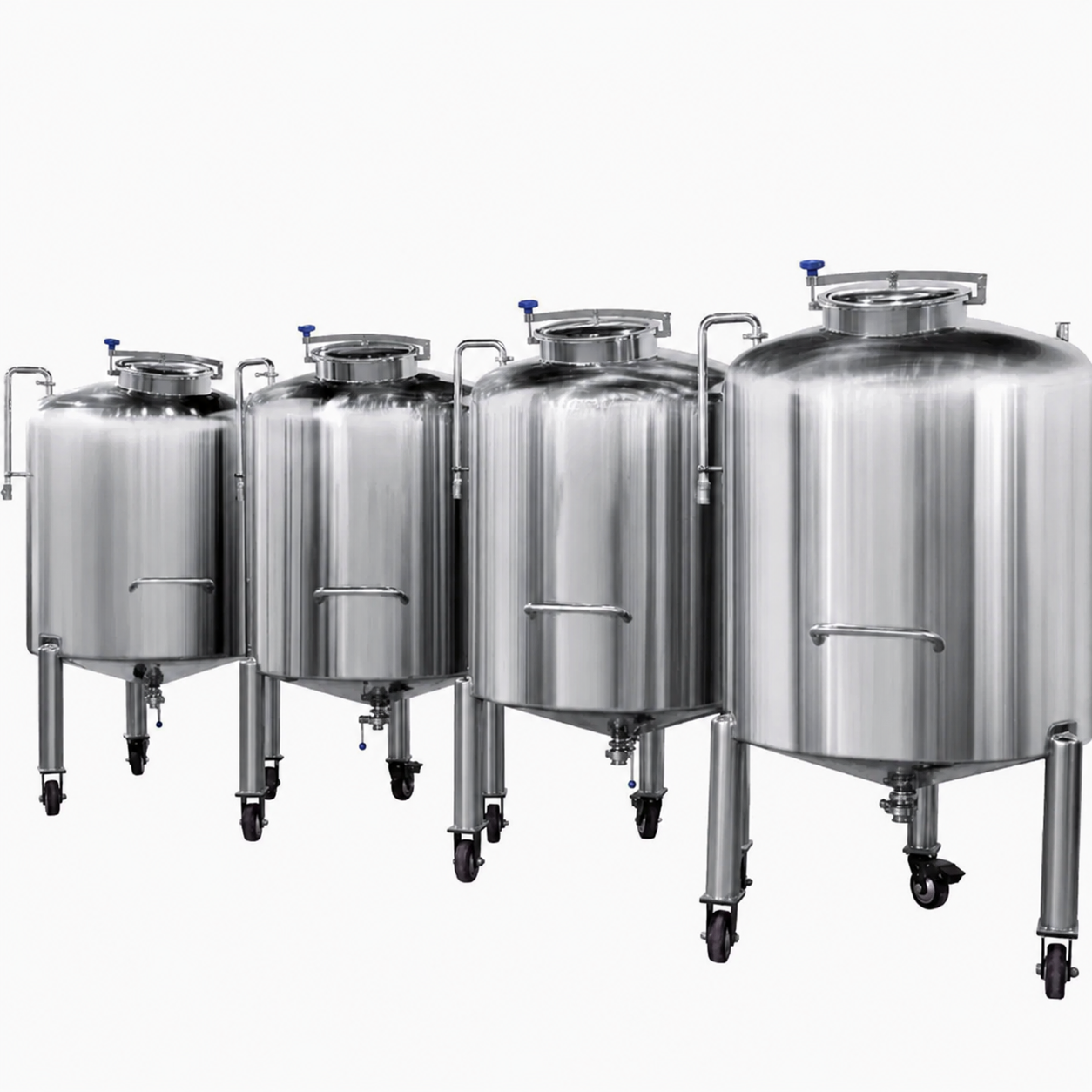
Scmixer SUS304 Stainless Steel Storage Tank for Pharmacy/Food/Dairy Products/Fruit Juice Beverages/Chemical/Biological Water Storage
All of our tanks are GMP hygiene standards, internal and external sanitation polishing≥300 mesh. There are two types of polishing and lid, mirror polish and frosted polish, open lid and sealed lid. All these types are optional.
Storage tank can make 50L to 20T capacity and accept customized service by customer.
1. Round shape or V shape bottom style available.
2. This stainless steel storage tank, Internal and external mirror polishing, fillet welding of tank no dead Angle, easy to clean.Discharge outlet at bottom.
3. Head with manhole, there are inlet, thermograph, CIPcleaning, feeding hole, reserved hole, can also according to need with a liquid level measurement system, heating and cooling system on the lid.
4. The CE certification stainless steel storage tank for hand wash liquid has 4 wheels on the leg, handle to move it easily.
5. Liquid soap stainless steel storage tank with CE is suitable for storage liquid products and other cream lotion products.

Material | SUS304 or SUS316L |
Volume | 50~30000L |
Construction | Vertical type or Horizontal type |
Surface Finish | Mirror Polish or Matt polish |
Standard Components | Manhole,sight glass, cleaning ball |
Optional Components | Vent filter, Temp. Gauge, display on the gauge directly on the vessel Temp sensor PT100, digital display on the control cabinet by instrument Temp sensor with control for heating and cooling Level gauge with digital display on the control cabinet by instrument Load cell Valves |
Applications | Wine, Beer Juices Food & Beverage Pharmaceutical |
Main Features of CE certification stainless steel storage tank for hand wash liquid:
1)Liquid soap stainless steel storage tank with CE meets GMP standard design.
2) The oil storage tank adopts SUS304&316L.
3) Internal and external mirror polishing of stainless steel storage tank,fillet welding of tank no dead Angle.
4) Head with manhole,CIP cleaning , feeding hole, reserved hole.
5) can be with liquid level measurement system and heating and cooling system according to customes' conmand.
6). 4 wheels on hte legs, easily to move.

Wheel part:With movable wheels, easier for carrying the products to the filling line or anywhere you need。

Bottom outlet: Quickly open and close, small flow resistance. Dished bottom design can ensure complete discharge.

Quick-install butterfly valve: Ball valve or butterfly valve.
Warmly welcome to vist our company and machines .
Welcome to learn more information about machines (picture ,video and specification ).(Turn-key project )
Purified Water Tank: Ultimate guide for Industry Applications
Purified water tanks are essential storage solutions in industries requiring high-quality, contaminant-free water. From pharmaceuticals and food processing to laboratories and healthcare facilities, these tanks ensure water purity, compliance with regulatory standards, and efficient industrial operations. This comprehensive guide explores the definition, applications, advantages, materials, construction, maintenance, installation, specifications, and industry best practices of purified water tanks.
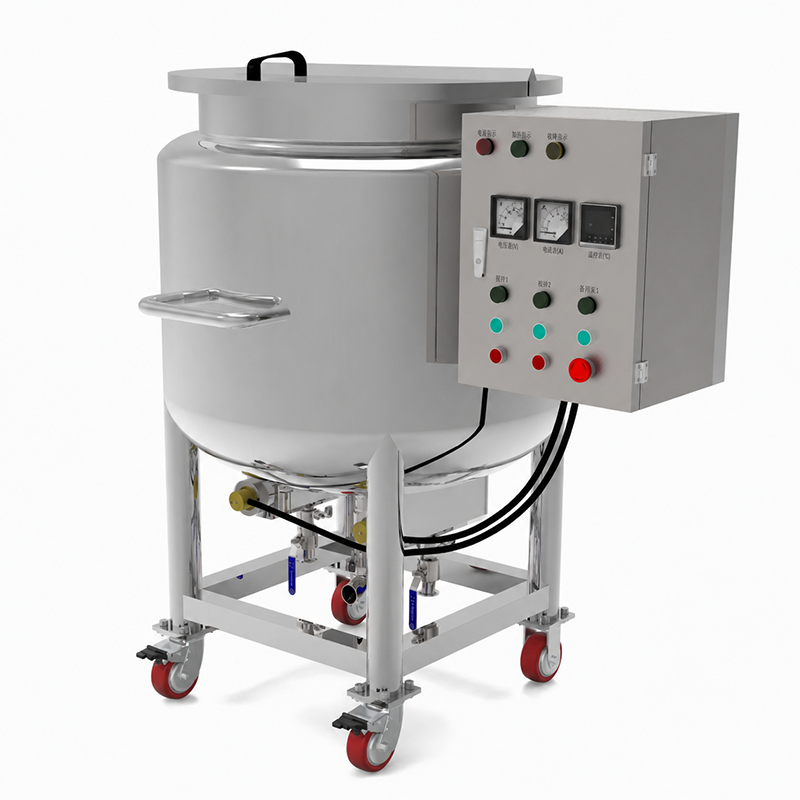
1. Introduction to Purified Water Tanks
Purified water tanks are specialized vessels designed to store water that has undergone extensive purification processes. These processes include filtration, reverse osmosis (RO), distillation, deionization, and ultraviolet (UV) sterilization. Maintaining the water's purity is crucial for industries where even minor impurities can affect product quality, safety, or laboratory results.
Key Features of Purified Water Tanks:
High corrosion resistance and durability
Smooth, hygienic inner surfaces to prevent microbial growth
Compliance with standards such as USP, FDA, and WHO
Available in various capacities from 500 liters to over 50,000 liters
Options for vertical and horizontal installation
2. Industrial Applications of Purified Water Tanks
Purified water tanks serve critical functions across multiple industries. Their role is not just storage; they ensure safe water supply for sensitive processes.
Pharmaceutical | Supplies water for drug formulation, cleaning, and lab use. |
Food & Beverage | Provides purified water for soft drinks, juices, and bottled water production. |
Chemical | Supplies high-purity water for chemical reactions and formulations. |
Laboratory | Ensures contamination-free water for experiments and research. |
Healthcare | Supports dialysis, sterilization, and medical equipment cleaning. |
Cosmetics | Provides water for skincare, creams, and other cosmetic products. |
3. Advantages of Purified Water Tanks
Investing in a high-quality purified water tank offers numerous benefits:
Consistent Water Quality: Maintains water purity to prevent contamination.
Durable Construction: Typically made from corrosion-resistant Stainless steel or high-grade polymers.
Hygienic Design: Smooth surfaces reduce microbial growth and facilitate cleaning.
Regulatory Compliance: Designed to meet FDA, WHO, and USP water standards.
Flexible Capacity Options: Tanks available from small laboratory units to large industrial installations.
Operational Efficiency: Continuous water supply ensures smooth industrial operations.
Reduced Maintenance Costs: Materials and design minimize cleaning frequency and tank degradation.
4. Materials and Construction
Purified water tanks must be constructed from materials that maintain water purity and prevent contamination.
304 Stainless Steel | Corrosion-resistant, cost-effective | Food, beverage, laboratories |
316 Stainless Steel | Superior corrosion resistance | Pharmaceutical, chemical industries |
Polypropylene (PP) | Lightweight, chemical-resistant | Small-scale storage, chemical storage |
Polyethylene (PE) | UV-resistant, non-reactive | Beverage and water treatment plants |
Design Considerations:
Smooth, polished interior surfaces
Seamless welding to reduce contamination risk
Proper venting and overflow to maintain pressure balance
Optional insulation for temperature-sensitive storage
Compatibility with Clean-in-Place (CIP) systems
5. Purified Water Tank Design Considerations
When designing a purified water tank, several factors must be considered:
Capacity Planning: Ensure the tank meets daily and peak water demand.
Tank Shape: Cylindrical or rectangular with sanitary design.
Inlet/Outlet Placement: Optimized for circulation and drainage.
Ventilation and Overflow: Maintain atmospheric balance and prevent contamination.
Temperature Control: Optional cooling or heating jackets for temperature-sensitive applications.
Accessibility: Ensure easy access for cleaning and maintenance.
6. Maintenance and Cleaning guidelines
Regular maintenance is essential to ensure long-term performance and water quality.
Routine Cleaning: Use non-abrasive cleaners to maintain hygienic surfaces.
Sanitization: Periodic UV or chemical sanitization to prevent microbial growth.
Inspection: Check for leaks, corrosion, or sediment buildup.
Valve Maintenance: Ensure inlet, outlet, and safety valves are functioning properly.
CIP Systems: Automated cleaning reduces manual labor and improves safety.
Record Keeping: Document maintenance schedules for regulatory compliance.
7. Installation Guidelines
Proper installation is critical for safe and efficient operation:
Place the tank on a leveled and solid foundation
Ensure adequate clearance around the tank for maintenance
Install proper piping, valves, and overflow connections
Connect to CIP and monitoring systems if applicable
Conduct pressure and leak testing before commissioning
8. Safety and Compliance Standards
Purified water tanks must comply with regulatory standards:
USP | United States Pharmacopeia standards for water quality |
FDA | Food and beverage safety compliance for storage tanks |
WHO | World Health Organization guidelines for water treatment |
GMP | Good Manufacturing Practices for pharmaceutical applications |
9. Common Problems and Solutions
Problem: Microbial contamination
Solution: Increase sanitization frequency, ensure proper CIP cleaning, monitor water quality.
Problem: Corrosion or material degradation
Solution: Use 316 stainless steel or corrosion-resistant polymers; inspect regularly.
Problem: Sediment accumulation
Solution: Install sediment filters, perform periodic draining and cleaning.
Problem: Improper water flow or circulation
Solution: Check inlet/outlet placement and pump capacity.
10. Purified Water Tank Specifications
Purified water tanks are available in multiple capacities and configurations:
PWT-500 | 500 | 304 SS | Ø800 × 1200 | 50 | CIP compatible, sanitary valves |
PWT-1000 | 1000 | 316 SS | Ø1000 × 1600 | 120 | Insulated, hygienic design |
PWT-5000 | 5000 | 316 SS | Ø2000 × 2000 | 600 | Large-scale industrial use, CIP system |
PWT-10000 | 10000 | 316 SS | Ø2500 × 3000 | 1200 | Full regulatory compliance, UV sanitized |
11. Best Practices for Optimal Performance
Install tanks in a clean, controlled environment
Monitor water quality regularly
Schedule routine inspections and maintenance
Use proper filtration and UV sterilization systems
Ensure all fittings and valves are sanitized
Keep detailed records of tank operation and maintenance
12. Purified Water Tank Trends
The industry is moving towards:
Automated Cleaning: Fully automated CIP and monitoring systems
Smart Monitoring: Sensors for water quality, temperature, and level
Eco-Friendly Materials: Sustainable polymers and energy-efficient designs
Customization: Tailored tank sizes, materials, and features for industry-specific needs
13. Frequently Asked Questions (FAQ)
Q1: What is the difference between a purified water tank and a regular water tank?
A: Purified water tanks are designed for water free of contaminants, with hygienic surfaces and compliance with regulatory standards, unlike ordinary water tanks.
Q2: How often should a purified water tank be cleaned?
A: Cleaning frequency depends on usage, but generally every 2–4 weeks with regular inspections.
Q3: Can purified water tanks store hot water?
A: Some tanks with thermal insulation and temperature control can store hot or chilled water.
Q4: Are purified water tanks suitable for pharmaceutical use?
A: Yes,
especially 316 stainless steel tanks with CIP compatibility and regulatory compliance.
14. Conclusion
Purified water tanks are vital assets for industries requiring high-quality, contaminant-free water. Proper design, material selection, installation, and maintenance ensure consistent water purity, regulatory compliance, and operational efficiency. Investing in a well-constructed, hygienic water tank is crucial for pharmaceuticals, food and beverage, chemical production, laboratories, and healthcare facilities.
This website uses cookies to ensure you get the best experience on our website.



 Phone
Phone