 +86 29-87031531


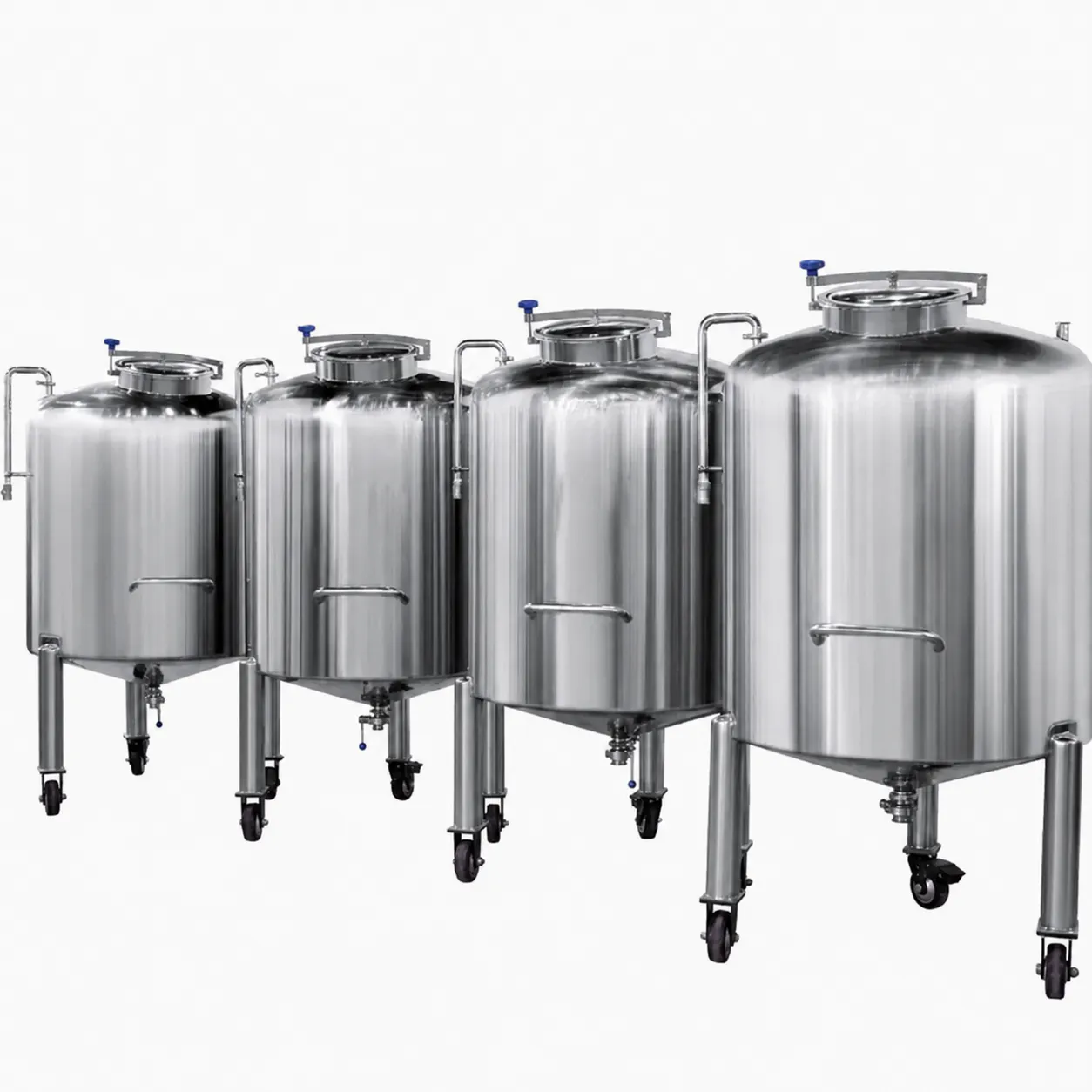
Industrial Lqiuid Tank Alcohol Chemical Sugar Syrup Edible Olive Oil Sealed Moveable Storage Tanks
Basic Info.
Model NO. | ALT-S1005 |
Condition | New |
Customized | Customized |
Certification | ISO9001, GS, CE |
Tank Marerial | Metal Tank |
Type | Tank Container |
Storage Objects | Solid, Liquid, Chemical |
Capacity | 200L( Can Be Customized) |
Material | SUS304/SUS316L |
Option2 | CIP Cleaning Ball Valve |
Wall Thickness | 3mm(Customized) |
Discharge | Bottom Ball Valve Outlet |
Option4 | Fluid Level Indicator |
Application | Liquids, Creams, Oil, Gel etc. |
Machine Type | Seal Type |
Feature | Duarble |
Function | Storage Material |
Working Pressure | 0.2MPa |
Transport Package | Wooden Case |
Specification | Customized Design for capacity needed |
Trademark | Aelt |
Origin | China |
Product Description
Industrial Lqiuid Tank Alcohol Chemical Sugar Syrup Edible Olive Oil Sealed Storage Tanks
The storage capacity of the storage tanks produced by Aelt Machinery can reach up to 10000L, and 100-15000L storage tanks can also be customized according to their own needs. The storage tanks are made of SUS316L or 304 Stainless steel, which has good thermal insulation performance. The attached configuration is as follows: import and export Feed port, manhole, thermometer, fly-proof, dust-proof breathing hole, CIP cleaning sprinkler


Main Features
1.Consisting of inner tank body and outer covering layer, among which is heat preservation material.
2.material of tank is good quality stainless steel.
Standard scheme:
1.Quick open type manhole
2.Numeral indication type thermometer
3 .T type cleaning head
4. lever discharge valve
5.Adjustable conic supporting feet
We provide Turn-key project service to customer
1. Factory Layout design;
2. Factory Decoration based on GMP standard;
3. Formula of products;
4. Raw material etc;
5. Machine design, whole production line from A to Z;
6. Shipping service, FOB, CFR, CIF etc;
7. Installation service. Training service, Maintenance service.
1. What Is a Mobile Small Storage Tank?
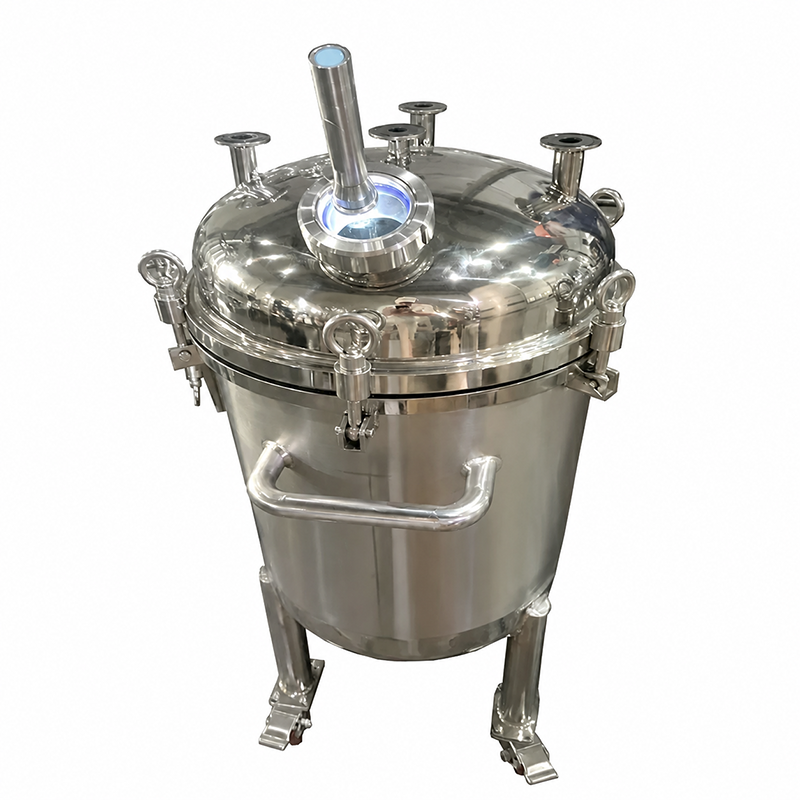
A mobile small storage tank is a lightweight or medium-duty storage container mounted on a movable base such as wheels, skids, or portable frames. Unlike fixed storage tanks, mobile tanks are designed for:
Easy transportation within facilities
Temporary or flexible storage needs
On-site mixing, dosing, or dispensing
Multi-location usage within a production system
These tanks are commonly constructed from Stainless steel, polyethylene, or composite materials depending on the application.
Key Characteristics
Compact capacity (typically 50L to 5000L)
Portable design with wheels or forklift compatibility
Corrosion-resistant construction
Hygienic internal surface finishing
Optional insulation or agitation systems
Suitable for liquid transfer and temporary stora
2. Types of Mobile Small Storage Tanks
Mobile storage tanks are categorized based on structure, mobility system, and application.
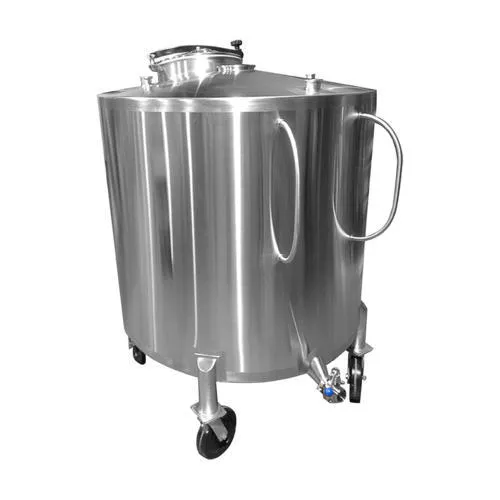
2.1 Wheel-Mounted Storage Tanks
These tanks are equipped with heavy-duty wheels for manual movement.
Features:
Easy short-distance transport
Locking wheels for stability
Suitable for indoor workshops
2.2 Skid-Mounted Portable Tanks
Mounted on a rigid steel frame for forklift transport.
Features:
High durability
Suitable for industrial environments
Easy loading and unloading
2.3 Trailer-Mounted Tanks
Designed for outdoor and field operations.
Features:
High mobility over long distances
Common in agriculture and construction
Often used for water or fuel transport
2.4 Stainless Steel Hygienic Mobile Tanks
Designed for food, beverage, and pharmaceutical industries.
Features:
Mirror-polished interior
Sanitary valves and fittings
CIP cleaning compatibility
3. Materials Used in Mobile Small Storage Tanks
Material selection is critical for durability, safety, and chemical compatibility.
Material Comparison Table
Material
Properties
Applications
Stainless Steel 304 | Corrosion-resistant, hygienic | Food, beverage, general liquids |
Stainless Steel 316 | High chemical resistance | Pharmaceutical, chemical industry |
Polyethylene (PE) | Lightweight, cost-effective | Water, non-corrosive liquids |
Polypropylene (PP) | Chemical resistant, durable | Acidic/alkaline solutions |
Carbon Steel (coated) | Strong but needs protection | Industrial fluids, oil storage |
Stainless Steel Advantage
Stainless steel is the most widely used material for mobile tanks due to:
Long service life
Easy cleaning
Resistance to oxidation
Compliance with hygiene standards
4. Applications of Mobile Small Storage Tanks
Mobile small storage tanks are used across multiple industries.
4.1 Food & Beverage Industry
Milk storage and transfer
Juice blending and transport
Syrup and ingredient handling
Clean water storage
4.2 Pharmaceutical Industry
Purified water storage
Intermediate solution handling
Sterile liquid transport
4.3 Chemical Industry
Acid and alkaline solution storage
Chemical mixing and dosing
Safe transfer between production stages
4.4 Agriculture
Fertilizer mixing tanks
Pesticide dilution systems
Irrigation water transport
4.5 Water Treatment Systems
Portable purified water storage
Emergency water supply systems
Filtration system buffering
4.6 Industrial Manufacturing
Lubricant storage
Cooling liquid handling
Process chemical transfer
5. Advantages of Mobile Small Storage Tanks
Mobile tanks offer multiple operational benefits compared to fixed tanks.
5.1 High Flexibility
They can be easily relocated within production areas.
5.2 Space Efficiency
Ideal for facilities with limited installation space.
5.3 Cost Efficiency
Lower installation cost compared to large fixed tanks.
5.4 Easy Maintenance
Simplified cleaning and inspection due to compact design.
5.5 Multi-Purpose Use
Can store different liquids depending on cleaning and configuration.
5.6 Operational Mobility
Supports dynamic workflows in industrial environments.
5.7 Safety Improvement
Reduces manual liquid transfer risks and leakage hazards.
6. Design Structure of Mobile Small Storage Tanks
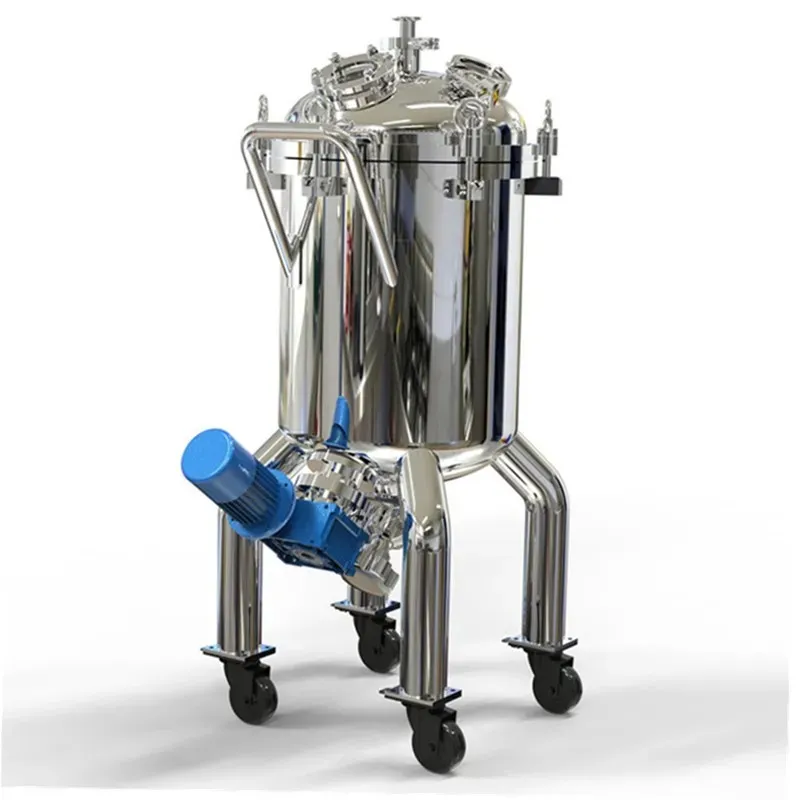
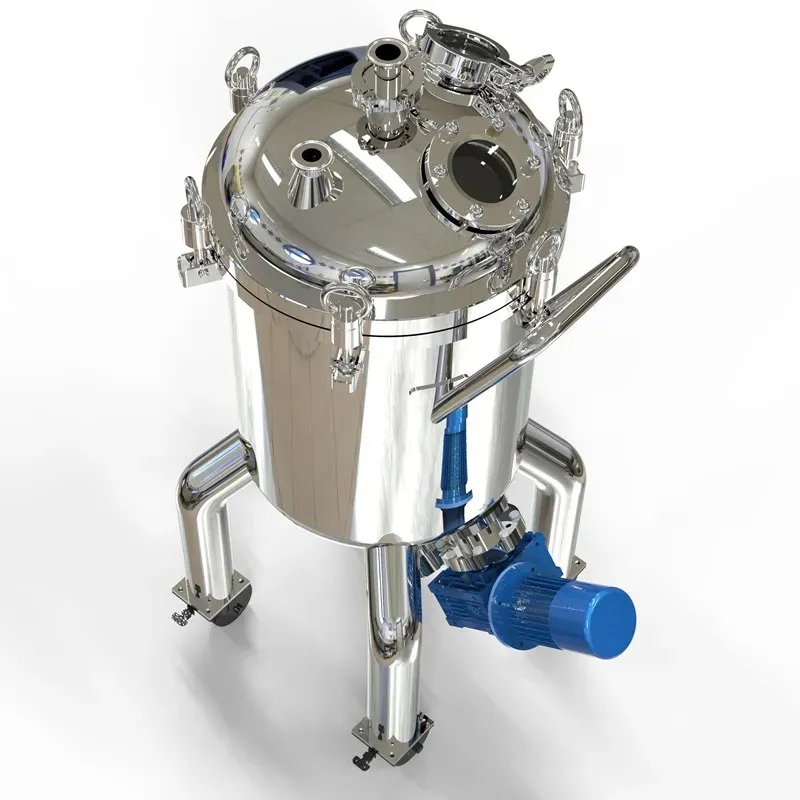
A mobile tank typically consists of the following components:
6.1 Tank Body
Main storage chamber designed for liquid containment.
6.2 Base Frame
Provides structural support and mobility integration.
6.3 Wheels or Mobility System
Industrial casters
Lockable wheels
Forklift skids
6.4 Inlet and Outlet Ports
Used for filling, draining, and circulation.
6.5 Vent System
Prevents pressure buildup during filling or discharge.
6.6 Manhole or Inspection Port
Allows internal cleaning and inspection.
6.7 Optional Accessories
Level indicators
Agitators
Heating/cooling jackets
Flow meters
7. Capacity and Specification Table
Mobile small storage tanks come in various sizes depending on application needs.
Standard Specification Overview
Model
Capacity
Material
Mobility Type
Application
MST-100 | 100L | SS304 | Wheel-mounted | Lab use |
MST-500 | 500L | SS304 | Skid-mounted | Food processing |
MST-1000 | 1000L | SS316 | Forklift skid | Pharma use |
MST-2000 | 2000L | SS316 | Heavy-duty wheels | Chemical industry |
MST-5000 | 5000L | SS316 | Trailer-mounted | Agriculture & field use |
8. Working Principle of Mobile Storage Tanks
The working principle is simple but highly effective:
Liquid is filled through the inlet port
Tank stores liquid under safe sealed conditions
Optional mixing or temperature control occurs if installed
Liquid is discharged via outlet valve
Tank is moved to another location if required
This flexible workflow improves production efficiency and reduces downtime.
9. Maintenance and Cleaning guidelines
Proper maintenance ensures long-term performance and hygiene.
9.1 Routine Cleaning
Clean after each use (especially food or chemical applications)
Use non-corrosive cleaning agents
9.2 CIP Cleaning (Optional)
Clean-in-place systems allow automated cleaning without disassembly.
9.3 Inspection Checklist
Check valve leakage
Inspect weld joints
Ensure wheel stability
Monitor corrosion signs
9.4 Sanitization
For hygienic applications:
Use steam sterilization
UV or chemical sanitization
10. Installation and Operation Guidelines
Installation Steps
Place tank on flat, stable surface
Ensure wheel locking system is functional
Connect inlet/outlet piping securely
Test for leakage before operation
Operation Guidelines
Do not exceed maximum capacity
Avoid incompatible chemical mixing
Maintain balanced weight distribution during transport
Use trained operators for industrial applications
11. Safety Considerations
Mobile tanks must follow strict safety practices:
Avoid overpressure conditions
Use correct material for chemical compatibility
Ensure grounding for flammable liquids
Regularly inspect mobility system
Prevent unauthorized access in industrial zone
12. Selection Guide for Mobile Small Storage Tanks
When choosing a mobile storage tank, consider:
12.1 Liquid Type
Water-based liquids → PE or SS304
Chemicals → SS316 or PP
Food-grade liquids → SS304/316
12.2 Capacity Requirement
Small lab use → 50–500L
Industrial use → 500–5000L
12.3 Mobility Requirement
Indoor → wheel-mounted
Factory → skid-mounted
Outdoor → trailer-mounted
12.4 Temperature Conditions
Standard → no insulation
Hot/cold liquids → insulated tanks
13. Industry Trends of Mobile Storage Tanks
Modern mobile tanks are evolving toward:
13.1 Smart Monitoring Systems
Level sensors
Temperature sensors
Digital flow tracking
13.2 Lightweight Materials
Advanced polymers
Hybrid stainless designs
13.3 Automation Integration
Automated filling systems
Smart CIP cleaning
13.4 Modular Design
Interchangeable components
Flexible industrial integration
14. Common Problems and Solutions
Problem 1: Leakage
Cause: valve wear or poor sealing
Solution: replace seals and inspect joints
Problem 2: Contamination
Cause: insufficient cleaning
Solution: improve CIP or manual cleaning schedule
Problem 3: Mobility Failure
Cause: damaged wheels or overload
Solution: replace casters and reduce load
Problem 4: Corrosion
Cause: wrong material selection
Solution: switch to SS316 or chemical-resistant material
15. Conclusion
A Mobile Small Storage Tank is a highly versatile and essential piece of equipment for modern industries requiring flexible liquid storage and transport. Its compact structure, durable materials, and mobility features make it ideal for food processing, pharmaceuticals, chemicals, agriculture, and industrial manufacturing.
By selecting the correct material, capacity, and mobility type, businesses can significantly improve operational efficiency, safety, and productivity.
This website uses cookies to ensure you get the best experience on our website.




 Phone
Phone