 +86 29-87031531


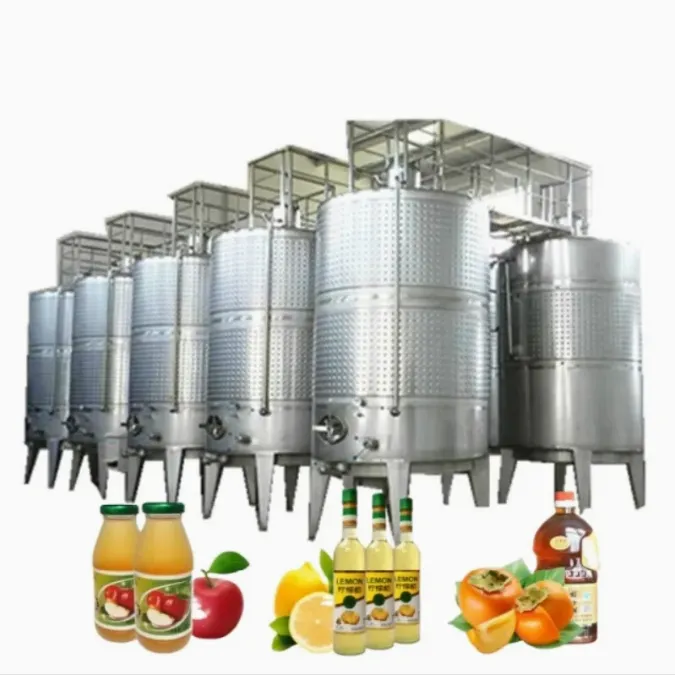
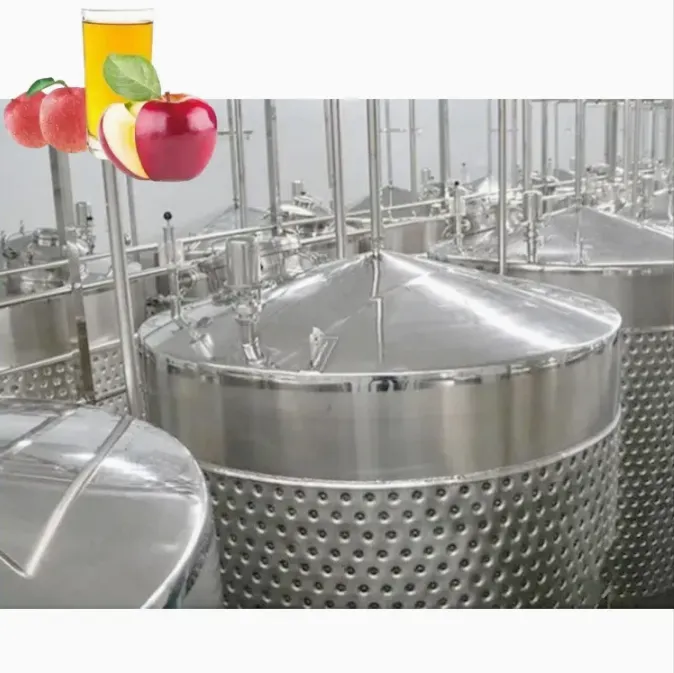
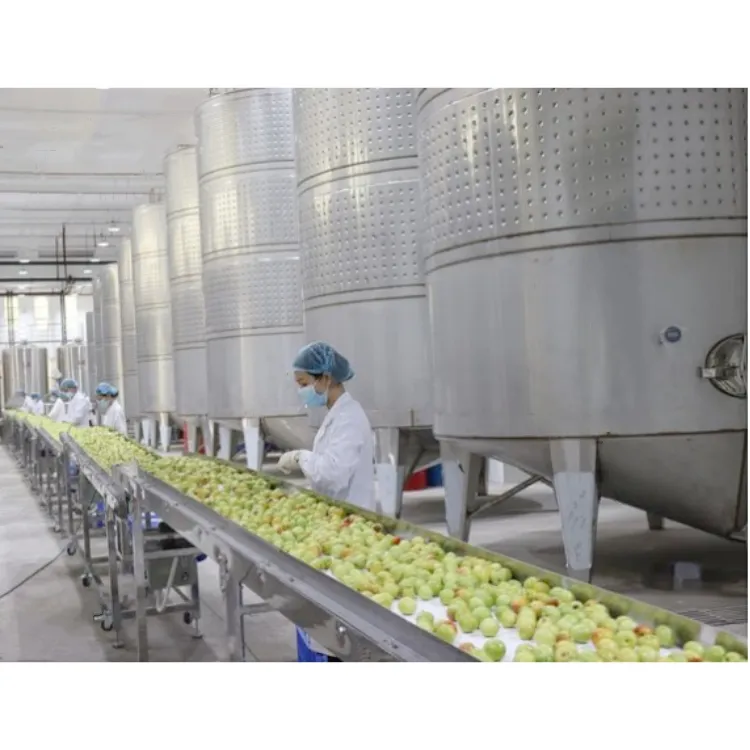
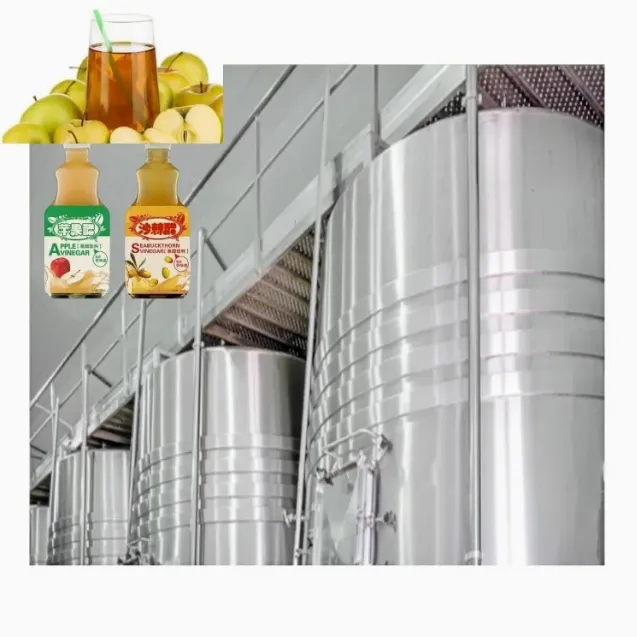
High Quality Fruit Juice Vinegar Production Line /Fruit Wine Processing Machine/ Apple Cider Making Equipment
| Model NO. | ALT-F5558 |
| Type | Complete Processing |
| Voltage | 380V |
| Power | 80kw |
| Customized | Customized |
| Raw Material | SUS304 |
| Condition | New |
| Feature | Automatic |
| Automatic | |
| MOQ | 1 Set |
| Transport Package | Wooden Case |
| Specification | 300-2000ton/year |
| Trademark | Aelt |
| Origin | China |
| HS Code | 8438600000 |
| Production Capacity | 200sets/Year |
| Packaging & Delivery | |
| Package Size | 2500.00cm * 1500.00cm * 280.00cm |
| Package Gross Weight | 15000.000kg |

Raw material | Fresh fruit | Fruit juice concentrate | ||||
End product | Wine | Vinegar | ||||
Annual capacity | 100ton | 300ton | 500ton | 1000ton | 1500ton | 2000ton |
Machine Material | SUS304 | |||||
Voltage | 380V 50Hz 3Phase | |||||
Pre-fermentation treatment: Pre-treatment includes fruit sorting, crushing, pressing, clarification of juice, and improvement of juice. Broken, de-stalking: Breaking requires each seed to rupture, but the seeds and fruit stalks cannot be broken, otherwise the oil esters, glycosides and some substances in the stalks in the seeds will increase the bitterness of the wine. The crushed pulp immediately separates the pulp from the fruit stems, preventing the grassy taste and bitter substances in the fruit stems from being dissolved. The crusher has a double roll crusher, a drum scraper, a centrifugal crusher, a hammer crusher and the like.
· Juice adjustment: Sugar adjustment: Brewing alcohol with 10%-12% alcohol content, the sugar content of the juice needs 17-20°Bx. If the sugar content does not meet the requirements, sugar is needed. In actual processing, sucrose or concentrated juice is commonly used.
· Acid adjustment: acid can inhibit the growth of bacteria, make the fermentation go smoothly; make the red wine bright color; make the wine taste fresh and soft, and produce ester with alcohol to increase the aroma of the wine; increase the storage and stability of the wine . Dry wine is easy to be 0.6%-0.8%, sweet wine 0.8%-1%, general pH is greater than 3.6 or titratable acid is less than 0.65%. Acid should be added to the juice.
· Alcohol fermentation:
Preparation of wine master: The wine mother is added to the fermented yeast after the expansion, and the production needs to be expanded three times before it can be added. It is called first-stage culture (test tube or flask culture), secondary culture, tertiary culture, and finally Cultivate in a jug.
· Fermentation equipment: The fermentation equipment should be able to control temperature, easy to wash, drain, and ventilate well. It should be cleaned before use and fumigation with SO2 or formaldehyde. The Fermentation vessel can also be used for both fermentation and storage, requiring no leakage, can be sealed, and does not chemically interact with the liquor. There are fermenters, fermentation tanks, and special fermentation equipment, such as rotary fermenters, automatic continuous cycle fermenters.
· Filtration, sterilization, bottling: filtration with diatomaceous earth filtration, thin plate filtration, microporous membrane filtration, and the like. Fruit wine is usually packed in glass bottles. When bottling, empty bottles are immersed in 2-4% lye at a temperature above 50 °C, cleaned, drained and sterilized. Fruit wine can be pasteurized and then bottled or cold-packed. Alcohol with low alcohol content should be sterilized after bottling.


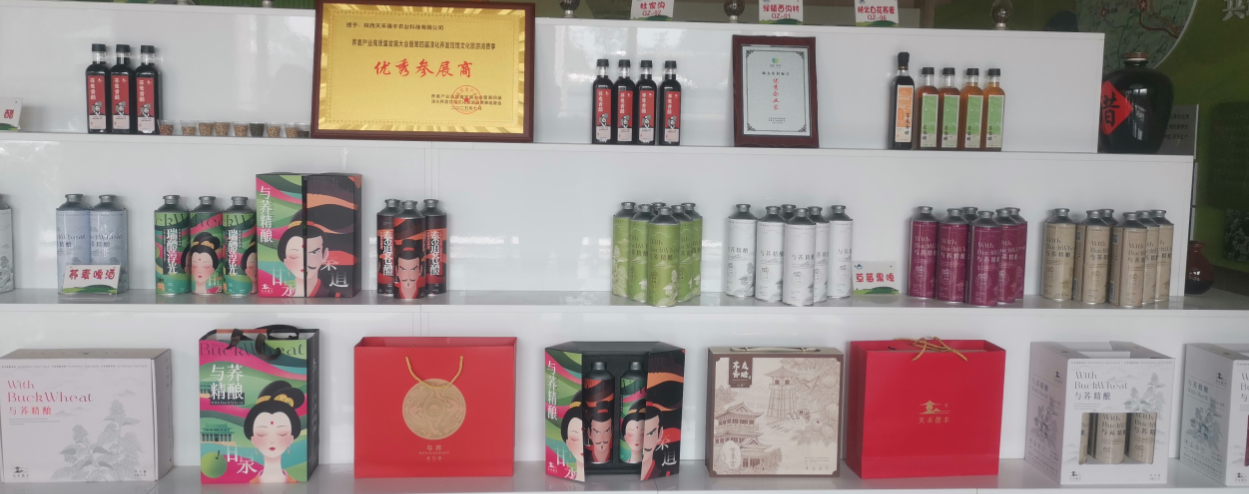
Detailed Photos
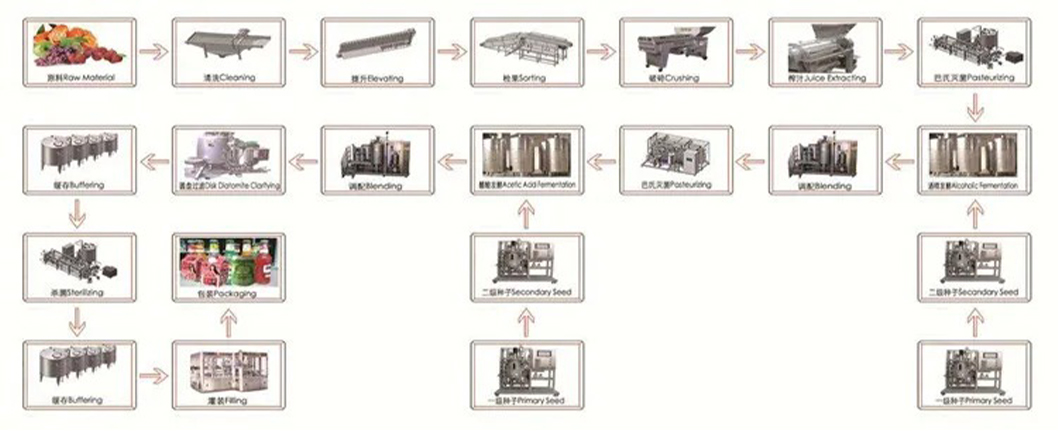
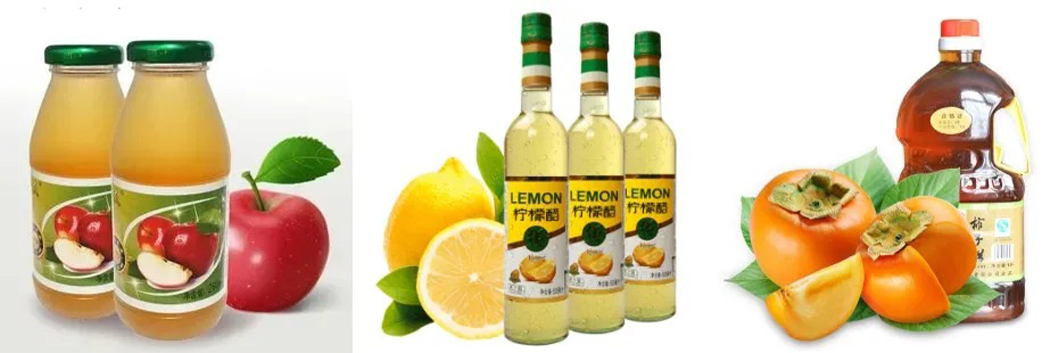
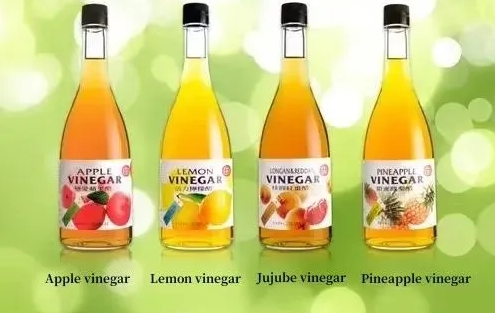
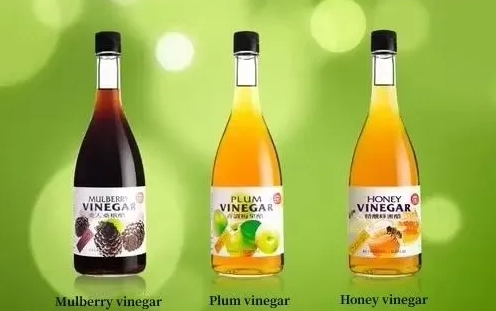
Fruit - or wine - vinegar is based on wine fermented from fruit such as grapes, apples, dates and many others. It is used in food processing and in cooking for salad dressings, vegetable pickling and sauces.
We provide process designs and equipment for vinegar production with capacities starting from 4,000 liters per day.
For key figures for vinegar plant construction
Block diagram
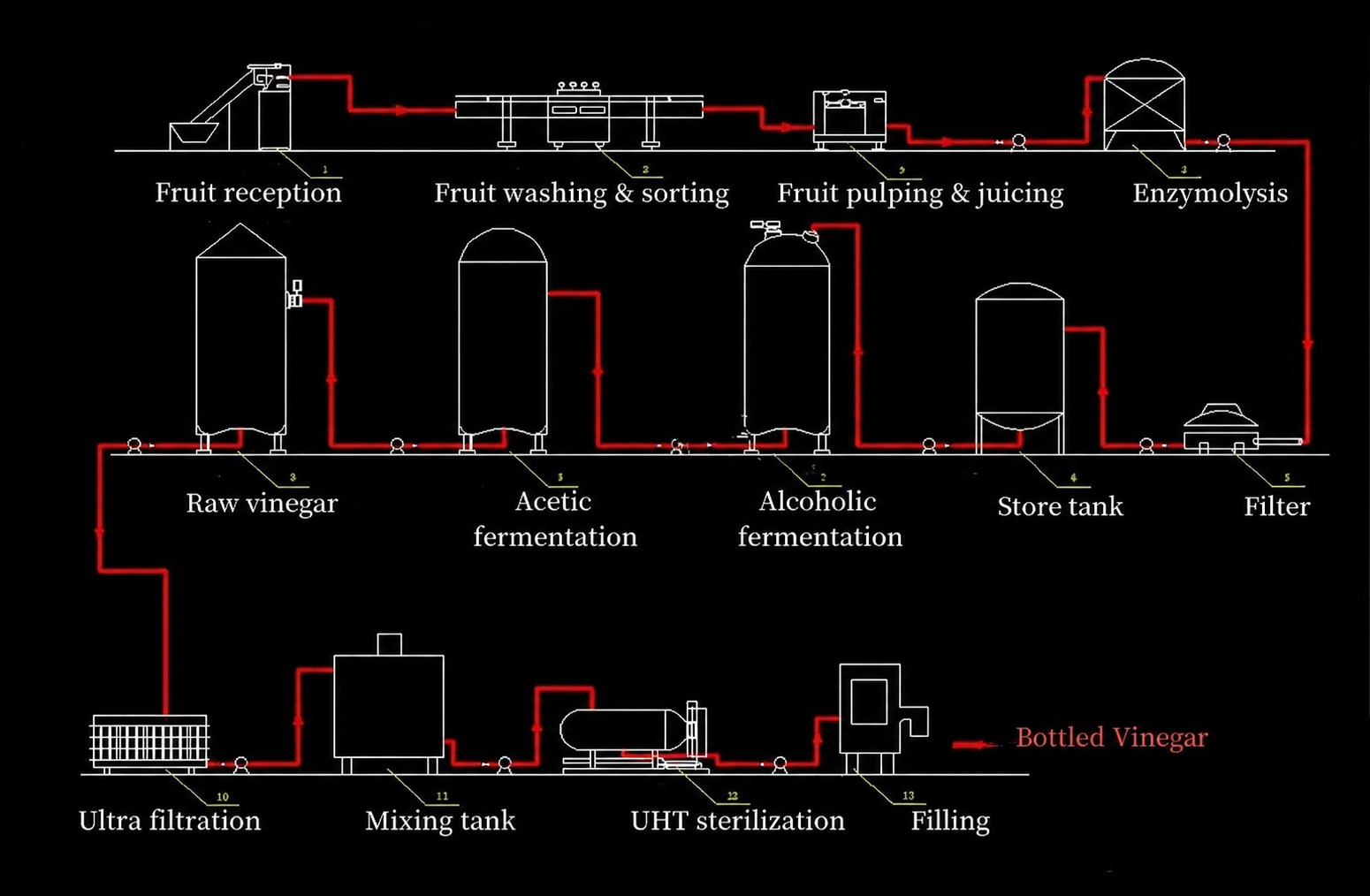
Acetic acid bacteria convert ethanol into vinegar. After a maturing period, the vinegar is clarified in a fining and filtration process.
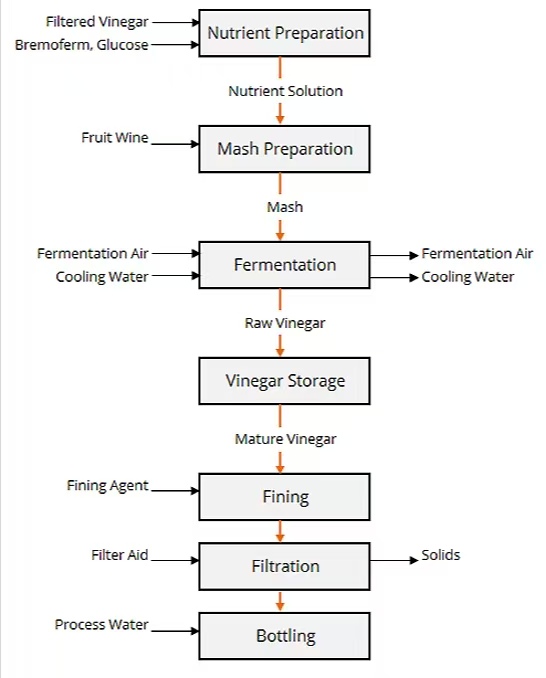
Wine and mash preparation
Preparation of fruit wine as vinegar substrate
The fruit is washed, peeled and put into the fruit milling cutter where it is cut to the optimum particle size according to the kind of fruit.
The resulting fruit juice is put into fermenters, where the alcoholic fermentation into fruit wine takes place under addition of enzymes (for pectine reduction) and yeast. After separation of the yeast and solids, the fruit wine is ready for mash preparation.
Mash preparation
The fermentation substrate (wine) must have an ethanol content in the range of 5 to around 15 %. It is mixed with raw vinegar containing acetic acid bacteria in the injection tank. Nutrients and some vinegar are blended in the nutrient vessel, then added to the injection tank and mixed to dilute.
This mash preparation is carried out in batches once or twice a week in one of the injection tanks while the other is used as feed tank for the fermentation.
Vinegar fermentation
The fermentation is operated semi-continuous.
The alcoholic mash is aerated in the fermentation tank using our proprietary » Alt-8-Self-Priming Aeration system. The fermentation cycle is finished when the vinegar concentration reaches its maximum and the alcohol content decreases to around 0.3 % vol,. Then about a third of the fermenter content is pumped into the ejection tank.
The fermenter is refilled with fresh mash from the injection tank for the next fermentation batch. A batch cycle lasts about a day, but is dependent on the alcohol content of the raw material.
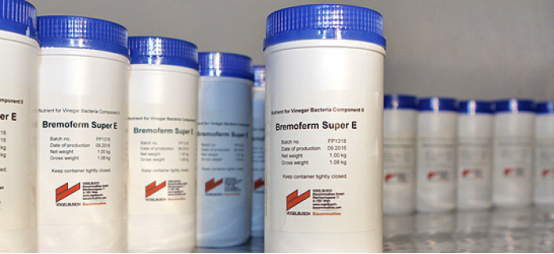
Nutrients
Nutrients are vital for the optimal growth of acetic acid bacteria. The combination of nutrients is selected according to the type of raw material used, to improve its nutritive value and thus the yield.
For fruit wine, di-ammonium phosphate and Aenlunte, a proprietary formulation developed by Vogelbusch, which is rich in vitamins, minerals and other nutritive substances, are added to the mash.
Maturing, fining, filtration
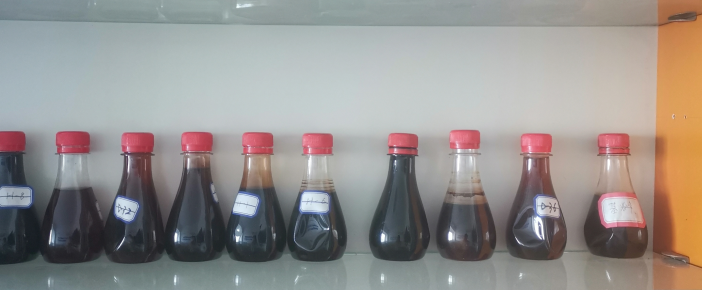
The fresh (raw) vinegar discharged from the fermenter is allowed to mature in the ejection tanks for several weeks. In the course of maturing impurities which cause turbidity (such as bacteria, coagulated proteins, precipitated salts) settle to the bottom of the tanks.
If required, the clarifying of the raw vinegar can be advanced with fining agents in specially equipped fining tanks. To remove any remaining solids, the mature vinegar passes through a filter module. Before bottling or bulk filling, it is finally filtered over a de-germination filter and diluted to the desired concentration with process water.
Production capacities
FERMENTER TYPE | V300 | V600 | V1200 | V2400 | |
Volume | m³ | 18 | 36 | 72 | 144 |
Production capacity (10 % vinegar) | l/d | 4,000 | 8,000 | 15,000 | 30,000 |
Cooling water connection load 24 °C | m³/h | 20 | 40 | 80 | 160 |
Average required area | m² | 300 | 400 | 600 | 800 |
Minimum required building height | m | 7.6 | 7.7 | 9.5 | 10.5 |
Fully automated fermentation
The fully automated vinegar fermentation of Vogelbusch uses a sensor-equipped measurement system for online detection of alcohol in the fermenting mash.
The alcohol concentration is constantly measured during the fermentation process. As soon as the adjusted residual alcohol content is reached, the raw vinegar is automatically ejected and the fermenter is refilled with fresh mash.
An emergency power supply with automatic start ensures interruption-free fermentation in case of power failure.
Cooling requirements
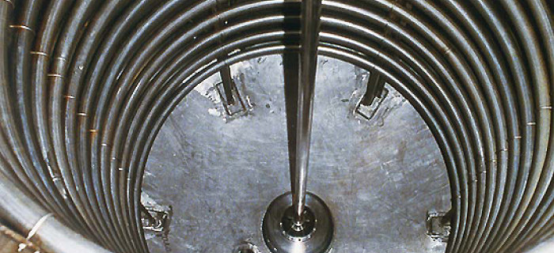
Fermentation is an exothermal process and cooling is essential. To conduct away the heat, cooling water with 24 °C at a recycle temperature of 27 °C is decisive for vinegar production.
Vogelbusch proprietary design includes a finely balanced cooling coil system installed inside the fermenter (image: inner view of a fermenter).
CUSTOMIZED SOLUTIONS
Our services are tailored to your requirements with design and supply packages starting from key components (fermenter along with aerator and the process control system) up to EPC solutions for the complete process line, including measuring & control and laboratory equipment.
Our experts are also available to upgrade or revamp existing plants and to integrate vinegar units into other manufacturing facilities, for instance alcohol production.
All figures given here are typical and can vary depending on plant configuration and equipment.
FRUIT WINE VINEGAR
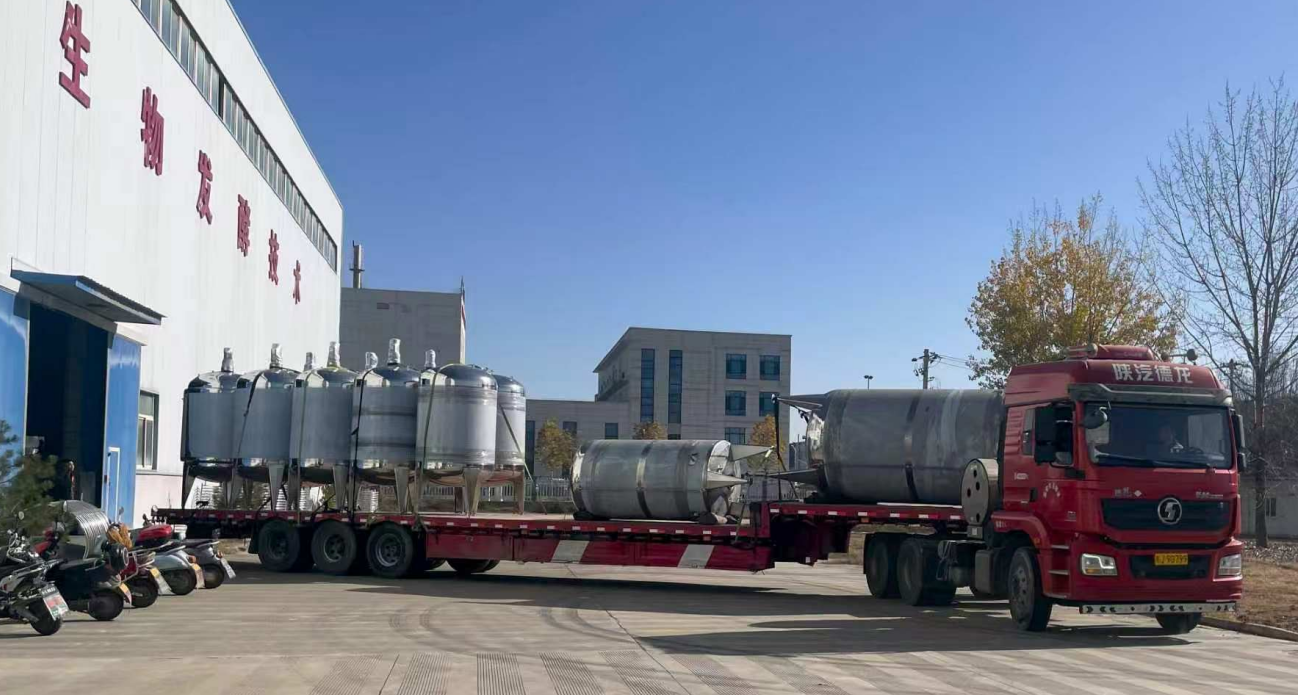
Our wine vinegar showcase projects
SHOWCASE PROJECTS
All information given here is typical and can vary depending on plant configuration. For particular information please send us a message with your project details.
Which minimum plant capacity is recommended?
And the investment for such plant?
Which acetic acid concentration can be reached?
What is the minimum supply package from Vogelbusch?
Can I use the Aelt aerator in an existing fermenter?
Why do I need an emergency power supply?
Why are nutrients required in the process?
How can I get more information for my vinegar plant project?
Find out more about the processes used in vinegar production:
Treating of input materials for bioconversion.
RAW MATERIAL PREPARATION
Converting substrates by using micro-organisms.
FERMENTATION
Separating suspended particles.
FILTRATION
This website uses cookies to ensure you get the best experience on our website.



 Phone
Phone