 +86 29-87031531


Fruit Wine Fermentation System Fruit Vinegar Production Line
Basic Info.
Model NO. | ALT-F5530 |
Power | Different Capacity Different Power |
Customized | Customized |
Material | |
Turn-Key Project | Yes |
Capacity | Design as Customer Request |
Warranty | 2 Years |
Transport Package | Wooden Case or Film |
Specification | small or big capacity |
Trademark | Aelt |
Origin | China |
HS Code | 8438800 |
Production Capacity | 10set /Month |
Product Description
1. Pre-fermentation treatment
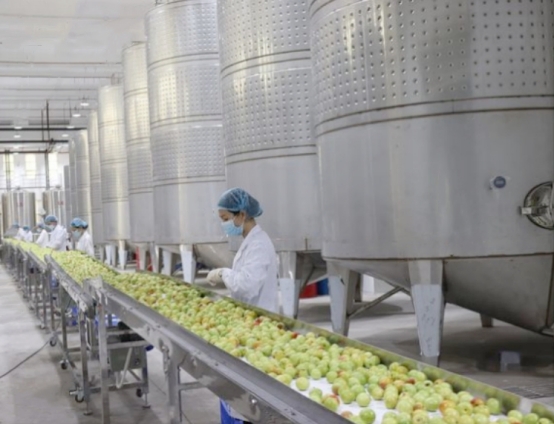
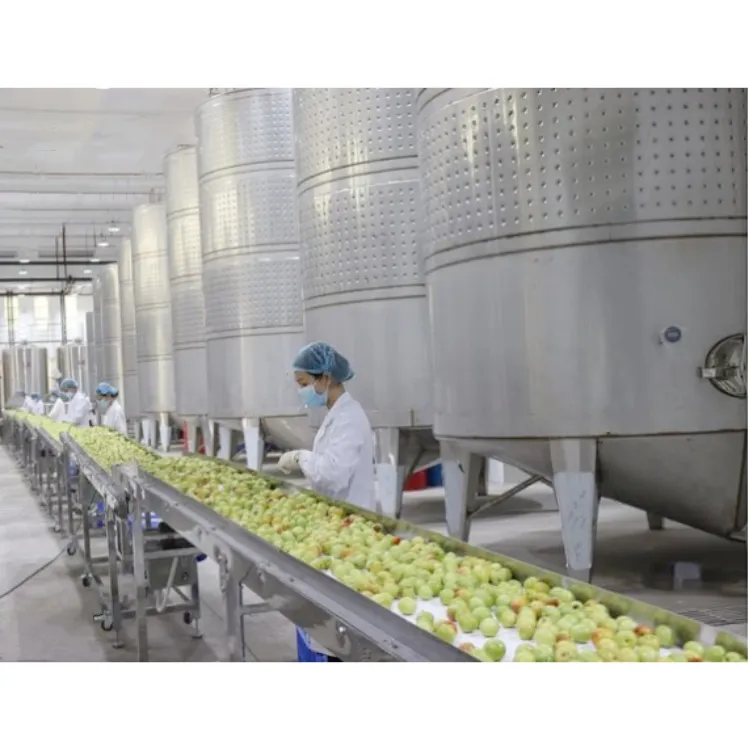
Pre-treatment includes fruit sorting, crushing, pressing, clarification of juice, and improvement of juice. Broken, de-stalking: Breaking requires each seed to rupture, but the seeds and fruit stalks cannot be broken, otherwise the oil esters, glycosides and some substances in the stalks in the seeds will increase the bitterness of the wine. The crushed pulp immediately separates the pulp from the fruit stems, preventing the grassy taste and bitter substances in the fruit stems from being dissolved. The crusher has a double roll crusher, a drum scraper, a centrifugal crusher, a hammer crusher and the like.
2. Separation of slag juice
The juice that flows out without pressure after being crushed is called self-flowing juice, and the juice that flows out after pressurization is called squeezed juice. The quality of the self-flowing juice is good, and it is better to separately ferment and obtain high-quality wine. The pressing is carried out twice, and the first time the pressure is gradually applied, and the juice in the pulp is pressed out as much as possible. The quality is slightly poor, and it should be brewed separately or combined with the self-flowing juice. Loosen the residue, add water or not, for the second press, the pressed juice is heavy, low quality, suitable for distilled liquor or other purposes. The equipment is typically a continuous screw press.
3. Clarification of fruit juice
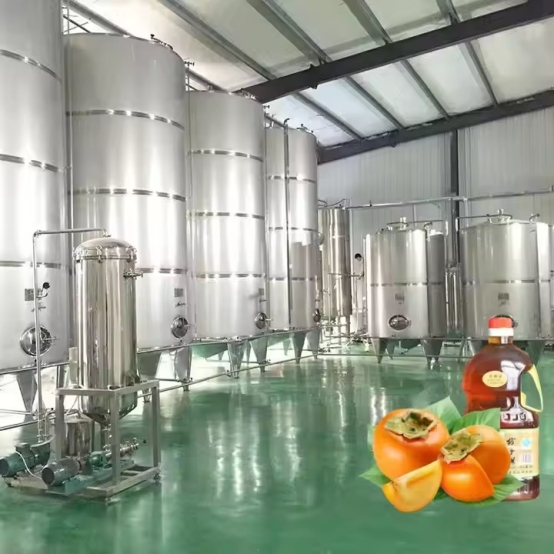
Some insoluble substances in the pressed juice will produce adverse effects in the fermentation, which will bring odor to the wine. Moreover, the fruit wine obtained by using the clarified juice has high stability, is not sensitive to the action of oxygen, and has a light color. Low iron content, stable aroma, and refreshing wine. For clarification, please refer to the clarification of the juice.
4. Sulfur dioxide treatment
The role of sulfur dioxide in fruit wine is sterilization, clarification, anti-oxidation, acidification, dissolution and reduction of pigments and tannins, and the flavor of wine is improved. The use of sulfur dioxide is gaseous sulfur dioxide and sulfite, the former can be directly passed through the pipeline, while the latter is dissolved in water and added. The concentration of sulfur dioxide in the fermentation substrate is 60-100 mg/L. In addition, the following factors need to be considered: when the raw material contains high sugar, the chance of sulfur dioxide binding increases, and the dosage is slightly increased; when the acid content of the raw material is high, the active sulfur dioxide content is high, the dosage is slightly reduced; the temperature is high, easy to be combined and volatile, The dosage is slightly reduced; the higher the microbial content and activity, the more complicated, the higher the dosage; the mildew is severe and the dosage is increased.
5. Juice adjustment
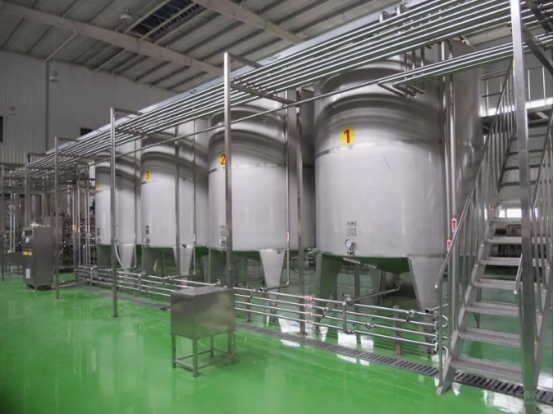
5.1 Sugar adjustment: Brewing alcohol with 10%-12% alcohol content, the sugar content of the juice needs 17-20°Bx. If the sugar content does not meet the requirements, sugar is needed. In actual processing, sucrose or concentrated juice is commonly used.
5.2 Acid adjustment: acid can inhibit the growth of bacteria, make the fermentation go smoothly; make the red wine bright color; make the wine taste fresh and soft, and produce ester with alcohol to increase the aroma of the wine; increase the storage and stability of the wine . Dry wine is easy to be 0.6%-0.8%, sweet wine 0.8%-1%, general pH is greater than 3.6 or titratable acid is less than 0.65%.
Acid should be added to the juice.
6. Alcohol fermentation
6.1 Preparation of wine master: The wine mother is added to the fermented yeast after the expansion, and the production needs to be expanded three times before it can be added. It is called first-stage culture (test tube or flask culture), secondary culture, tertiary culture, and finally Cultivate in a jug.
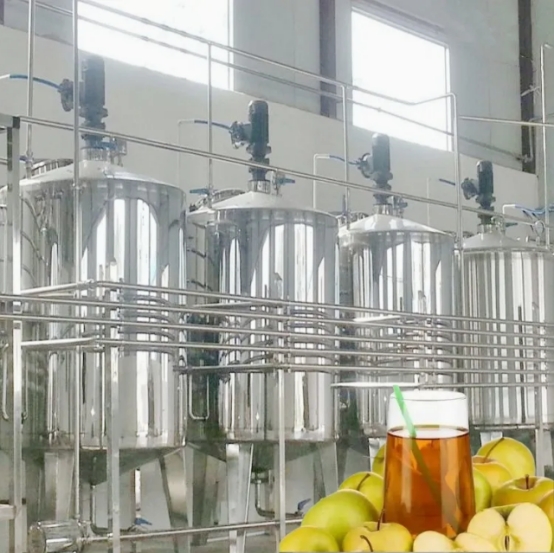
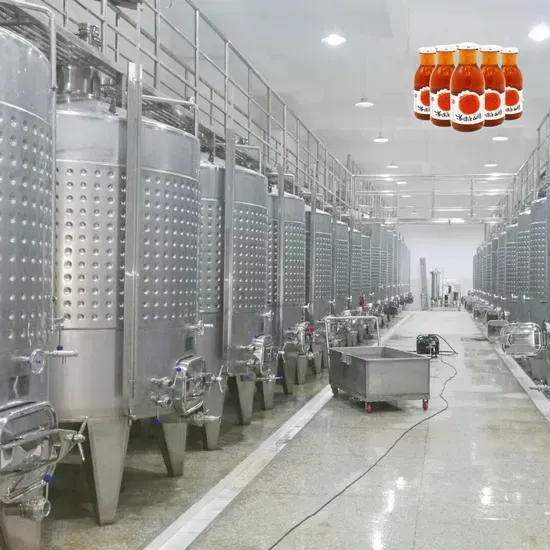
6.2 Fermentation equipment: The fermentation equipment should be able to control temperature, easy to wash, drain, and ventilate well. It should be cleaned before use and fumigation with SO2 or formaldehyde. The Fermentation vessel can also be used for both fermentation and storage, requiring no leakage, can be sealed, and does not chemically interact with the liquor. There are fermenters,fermentation tanks, and special fermentation equipment, such as rotary fermenters, automatic continuous cycle fermenters.
7. Filtration, sterilization, bottling
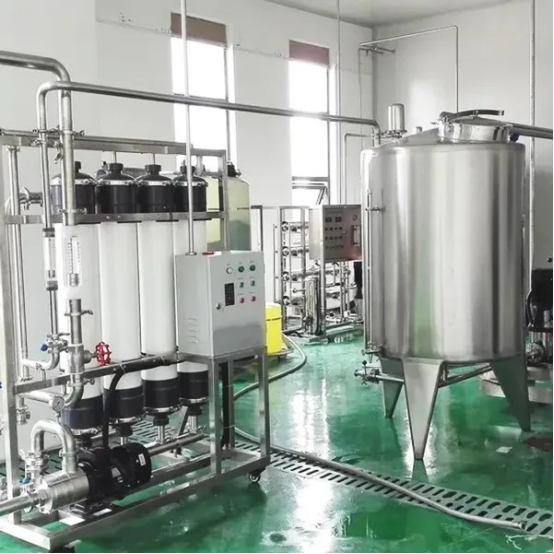
filtration with diatomaceous earth filtration, thin plate filtration, microporous membrane filtration, and the like. Fruit wine is usually packed in glass bottles. When bottling, empty bottles are immersed in 2-4% lye at a temperature above 50 °C, cleaned, drained and sterilized. Fruit wine can be pasteurized and then bottled or cold-packed. Alcohol with low alcohol content should be sterilized after bottling.
Processing Flow:
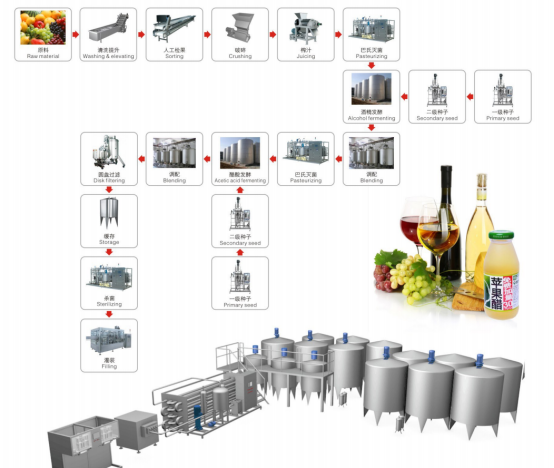
Fresh fruit - cleaning - sorting - crushing - juicing - pasteurizing - alcoholic fermentation - blending - pasteurizing - acetic acid fermentation - blending - flitering - buffering - sterilizing - buffering - filling or storage
Technical Parameters:
Alcoholic fermentation time | about 3-4 days |
Acetic fermentation time | About 3 days |
Capacity | we custom machine for customer's requirements |
Final product | fruit alcoholic drink, acetic drink |
Finished products:
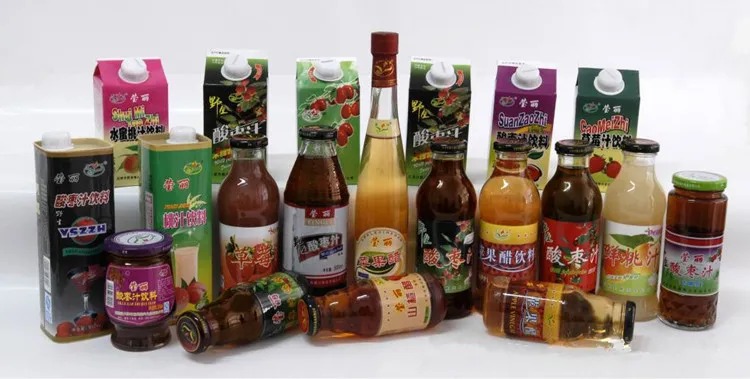
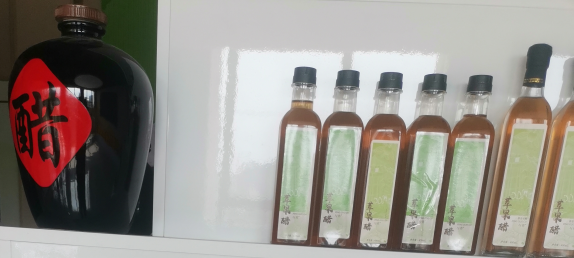
Fruit Wine Fermentation System & Fruit Vinegar Production Line
Complete Industry Guide
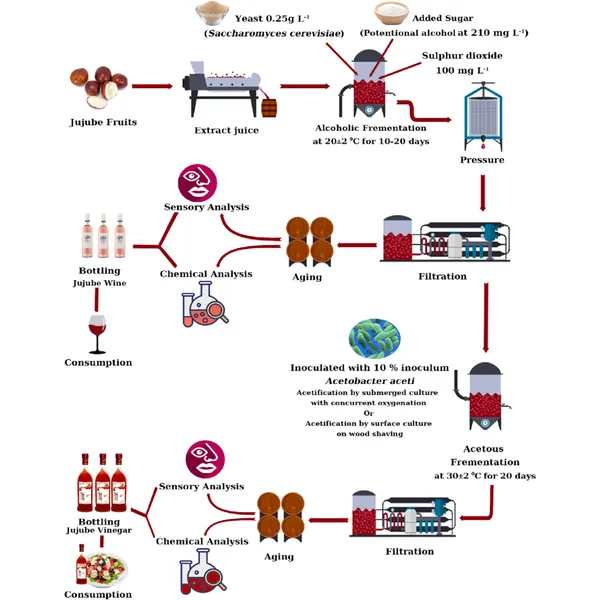
1. Introduction to Fruit Fermentation Industry Equipment
The global demand for natural fermented beverages is increasing rapidly due to consumer preference for healthier, low-additive, and functional drinks. Among the most important industrial systems in this sector are:
Fruit Wine Fermentation System
Fruit Vinegar Production Line
These two systems represent core technologies in modern beverage processing industries, enabling large-scale transformation of fruits into wine, cider, vinegar, and functional fermented beverages.
Modern industrial fermentation equipment integrates:
Automated juice extraction
Controlled microbial fermentation
Temperature and pH regulation
Sterile processing environments
Continuous production capabilities
Fruit raw materials commonly used include:
Apple
Grape
Pineapple
Mango
Berry fruits
Citrus fruits
Tropical fruits
2. Overview of Fruit Wine Fermentation System
2.1 What is a Fruit Wine Fermentation System?
A fruit wine fermentation system is an integrated industrial processing line designed to convert fruit juice into alcoholic beverages through controlled yeast fermentation.
The system ensures:
Stable fermentation environment
Precise sugar conversion
Controlled alcohol content
Flavor preservation
Food-grade hygiene standards
2.2 Core Principle of Fruit Wine Fermentation
The fermentation process follows this biochemical reaction:
Sugar + Yeast → Alcohol + Carbon Dioxide + Flavor Compounds
Key controlled parameters include:
Temperature (12°C – 28°C depending on fruit type)
pH level (3.0 – 4.5)
Oxygen control (anaerobic fermentation)
Yeast strain selection
Fermentation time (5–30 days)
2.3 Main Process Flow of Fruit Wine Production
Raw Fruit Selection
Washing and Sorting
Crushing and Pulping
Juice Extraction
Sugar Adjustment (optional)
Yeast Inoculation
Primary Fermentation
Secondary Fermentation
Clarification
Aging and Stabilization
Filtration
Bottling
2.4 System Composition
Equipment Module
Function
Fruit Washer | Removes dirt and pesticide residues |
Sorting Conveyor | Separates defective fruits |
Crusher Machine | Breaks fruit into pulp |
Juice Extractor | Extracts fruit juice |
Fermentation Tank | Main fermentation reactor |
Cooling System | Maintains fermentation temperature |
Storage Tank | Aging and stabilization |
Filtration System | Removes yeast and solids |
Filling Machine | Bottling final wine |
2.5 Technical Parameters of Fruit Wine Fermentation System
Parameter
Specification
Capacity Range | 500–50,000 L/day |
Fermentation Type | Anaerobic fermentation |
Material | Stainless steel 304/316L |
Temperature Control | 10°C – 30°C |
Pressure Type | Atmospheric / Slight pressure |
Automation Level | Semi-automatic / Fully automatic |
Cleaning System | CIP Automatic Cleaning |
2.6 Key Features
High efficiency fermentation control
Stable alcohol production rate
Precision temperature management
Hygienic stainless steel construction
Modular system expansion
Reduced fermentation loss rate
Fully automated PLC control system
2.7 Advantages of Fruit Wine Fermentation System
High-quality aroma retention
Consistent alcohol content output
Low labor operation requirement
Energy-efficient design
Scalable industrial production
Suitable for multiple fruit types
Strong microbial stability control
2.8 Application Industries
Fruit wine factories
Beverage production plants
Organic alcohol manufacturing
Craft beverage industry
Export beverage processing
Agricultural product deep processing
3. Overview of Fruit Vinegar Production Line
3.1 What is Fruit Vinegar Production Line?
A fruit vinegar production line is an industrial system designed to convert fruit juice or wine into vinegar through a two-stage fermentation process:
Alcoholic fermentation
Acetic acid fermentation
This process produces vinegar rich in:
Organic acids
Amino acids
Polyphenols
Flavor compounds
3.2 Fruit Vinegar Fermentation Principle
The chemical reaction is:
Alcohol + Acetic Acid Bacteria + Oxygen → Acetic Acid + Water
Key conditions:
Oxygen-rich environment
Temperature: 28°C – 35°C
Acetic acid bacteria inoculation
Controlled fermentation time
3.3 Production Process Flow
Fruit Selection
Washing and Sorting
Crushing and Juicing
Alcoholic Fermentation
Acetic Acid Fermentation
Aging and Flavor Development
Filtration
Sterilization
Bottling and Packaging
3.4 System Equipment Composition
Equipment Section
Function
Fruit Washer | Cleaning raw materials |
Crusher & Press | Juice extraction |
Alcohol Fermentation Tank | Produces base wine |
Acetic Fermentation Reactor | Converts alcohol to vinegar |
Aeration System | Supplies oxygen for bacteria |
Storage Tank | Aging vinegar |
Filtration Unit | Removes solids |
Pasteurizer | Sterilization |
Filling Line | Packaging vinegar |
3.5 Technical Specifications
Item
Specification
Capacity | 1,000–100,000 L/day |
Material | Stainless Steel 304/316L |
Fermentation Type | Dual-stage fermentation |
Aeration System | Micro-oxygen supply |
Control System | PLC Smart Control |
Cleaning System | CIP System |
Energy Consumption | Low-energy optimized design |
3.6 Key Features of Fruit Vinegar Production Line
Fully automated fermentation control
High acetic acid conversion efficiency
Stable microbial environment
Precise oxygen supply system
Hygienic closed production design
Strong flavor consistency control
Modular scalable configuration
3.7 Advantages of Fruit Vinegar Production Line
High yield vinegar output
Strong taste and aroma stability
Reduced fermentation cycle time
Low operational cost
High food safety compliance
Suitable for multiple fruit raw materials
Continuous production capability
3.8 Industrial Applications
Food seasoning vinegar production
Health beverage industry
Organic food manufacturing
Functional fermented drinks
Export vinegar production plants
Agricultural fruit processing industry
4. Comparison Between Fruit Wine Fermentation System and Fruit Vinegar Production Line
Feature
Fruit Wine System
Fruit Vinegar Line
Final Product | Alcoholic fruit wine | Fruit vinegar |
Fermentation Type | Anaerobic | Aerobic + Anaerobic |
Microorganism | Yeast | Yeast + Acetic acid bacteria |
Oxygen Requirement | No oxygen | Requires oxygen |
Taste Profile | Sweet / alcoholic | Sour / acidic |
Process Complexity | Medium | Higher |
Production Cycle | 5–30 days | 10–60 days |
5. Core Technologies in Modern Fermentation Systems
5.1 Stainless Steel Hygienic Design
Modern systems use 304/316L stainless steel, ensuring:
Corrosion resistance
Non-toxic surface
Easy cleaning
Long operational lifespan
5.2 PLC Intelligent Control System
Functions include:
Temperature automation
Fermentation curve control
Alarm systems
Data recording
Remote monitoring
CIP (Clean-in-Place) technology provides:
Automatic tank cleaning
Chemical circulation cleaning
Reduced manual labor
High sanitation compliance
5.4 Temperature Control System
Includes:
Cooling jackets
Glycol circulation
Heat exchangers
Digital temperature sensors
5.5 Oxygen Control Technology (Vinegar Line)
Micro-oxygen injection
Air compressor system
Flow regulation valves
Dissolved oxygen sensors
6. Technical Specifications Summary Table
6.1 Fruit Wine Fermentation System
Item
Range
Capacity | 500–50,000 L/day |
Fermentation Tank Volume | 100–20,000 L |
Temperature Range | 10–30°C |
Fermentation Time | 5–30 days |
Automation Level | High |
Material | SS304/316L |
6.2 Fruit Vinegar Production Line
Item
Range
Capacity | 1,000–100,000 L/day |
Fermentation Stages | 2-stage system |
Temperature Range | 28–35°C |
Aeration System | Required |
Production Cycle | 10–60 days |
Automation Level | High |
7. Industry Advantages of Integrated Fruit Fermentation Systems
Modern fruit fermentation equipment provides:
High production efficiency
Reduced manpower dependency
Stable product quality
Strong scalability
Hygienic closed systems
Smart automation control
Multi-fruit compatibility
8. Raw Materials Used in Fruit Fermentation Industry
Common raw materials include:
Apples (cider, vinegar, wine)
Grapes (wine production)
Pineapple (tropical wine & vinegar)
Cashew apple (special vinegar)
Mango (fruit wine)
Berries (premium wine)
Citrus fruits (functional vinegar)
9. Market Trends and Industry Development
9.1 Global Demand Growth
The global fermented beverage market is growing due to:
Health-conscious consumers
Natural product preference
Organic food demand
Low-sugar beverage trends
9.2 Technology Trends
Smart fermentation monitoring
AI-based process control
Modular production systems
Energy-saving designs
Zero-waste processing systems
9.3 Product Innovation Trends
Low-alcohol fruit wine
Functional fruit vinegar drinks
Probiotic fermented beverages
Organic certified production lines
10. Installation and Operation Guide
10.1 Installation Steps
Equipment layout design
Tank positioning
Pipeline installation
Electrical wiring
Control system setup
Testing and calibration
10.2 Operation Workflow
Raw material loading
Automated processing start
Fermentation monitoring
Sampling and quality testing
Final product packaging
10.3 Maintenance Requirements
Regular CIP cleaning
Sensor calibration
Pump maintenance
Temperature system inspection
Tank sterilization
11. Safety and Hygiene Standards
Modern fermentation systems comply with:
GMP standards
HACCP food safety system
ISO hygiene standards
Key safety features:
Pressure relief valves
Emergency shutdown system
Anti-overflow design
Temperature safety control
12. Future Outlook of Fruit Fermentation Industry
The future of fruit fermentation equipment includes:
Fully automated smart factories
AI-driven fermentation optimization
Sustainable green production systems
Mobile modular processing units
High-efficiency enzyme fermentation
Carbon-neutral production technology
13. Conclusion
The Fruit Wine Fermentation System and Fruit Vinegar Production Line represent two core pillars of the modern fruit processing industry. These systems integrate advanced fermentation technology, intelligent automation, hygienic stainless steel construction, and energy-efficient engineering.
With increasing global demand for natural, healthy, and functional beverages, these systems provide a strong foundation for industrial-scale production of fruit-based wine and vinegar products.
Their flexibility, scalability, and efficiency make them essential equipment for modern beverage manufacturing industries worldwide.
This website uses cookies to ensure you get the best experience on our website.




 Phone
Phone