 +86 29-87031531


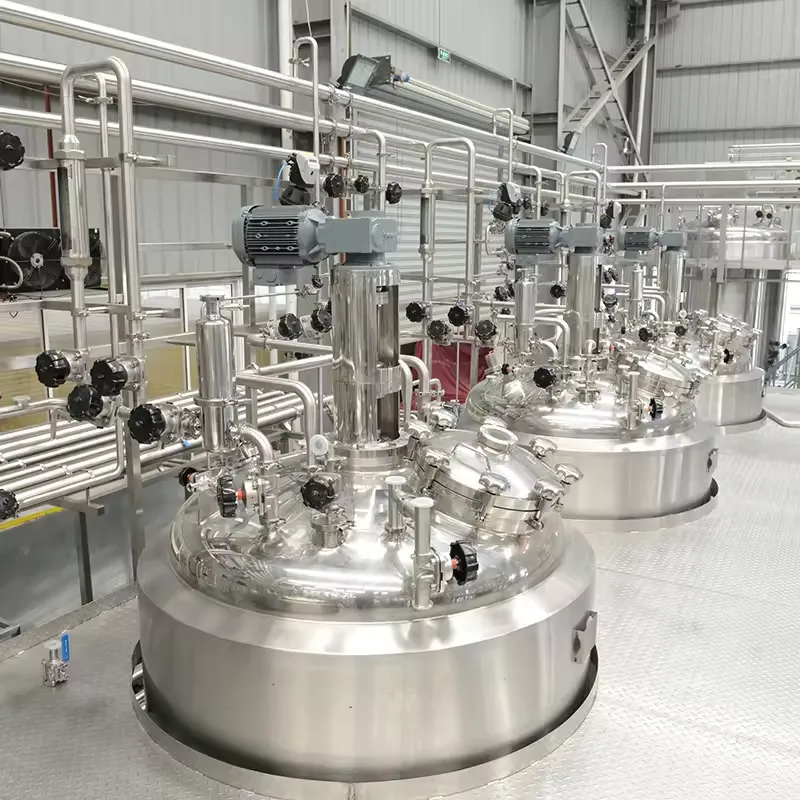
An industrial Stainless steel fermenter for large scale production is a highly engineered vessel used to support controlled biological, chemical, and food processing reactions at commercial scale. These systems are designed for consistent batch, fed-batch, and continuous fermentation processes across industries such as biotechnology, pharmaceuticals, food and beverage, biofuels, enzymes, and specialty chemicals. When businesses need reliable performance, hygienic operation, process stability, and long service life, stainless steel fermenters remain one of the most widely adopted solutions for industrial production environments.
In modern manufacturing, the demand for scalable, sanitary, and precise fermentation equipment continues to grow. An industrial stainless steel fermenter for large scale production is not only a container for microbial growth or biochemical conversion. It is a complete process system that typically integrates temperature control, pH monitoring, dissolved oxygen regulation, agitation, sterilization capability, aseptic sealing, pressure management, and data connectivity. These functions help manufacturers optimize productivity, maintain product quality, and reduce contamination risks in demanding production settings.
For organizations planning expansion, facility upgrades, or new process lines, understanding the structure, advantages, specifications, and use cases of an industrial stainless steel fermenter for large scale production is essential. The following guide provides a clear overview of this equipment category, with SEO-friendly terminology, practical technical details, and comparison tables suitable for use in industry pages, directory pages, and blog content.
A stainless steel fermenter is a sealed vessel built from corrosion-resistant stainless steel, typically used to grow microorganisms or carry out controlled fermentation reactions. In large scale production, these fermenters are designed to process volumes ranging from hundreds of liters to many tens of thousands of liters. The term industrial stainless steel fermenter for large scale production refers to equipment built for repeated commercial use where hygiene, reproducibility, and operational efficiency are critical.
Unlike laboratory fermenters used for research or development, industrial units are engineered for higher throughput and greater durability. They often include advanced control systems and specialized components to support long production cycles, strict sanitation standards, and integration with upstream and downstream process equipment.
Stainless steel is the preferred construction material because it offers a strong balance of mechanical strength, corrosion resistance, cleanability, and compliance with sanitary requirements. Depending on the application, common material grades include SUS 304 and SUS 316L, with 316L often preferred in more demanding sanitary, pharmaceutical, or corrosive environments.
Stainless steel has become the standard material for many Industrial Fermentation Systems due to its proven performance in harsh production environments. An industrial stainless steel fermenter for large scale production must withstand repeated cleaning, sterilization, pressure changes, agitation, and exposure to process media. Stainless steel is well suited to these demands.
In large-scale systems, material selection is not just about durability. It also affects product purity, process consistency, maintenance cost, and lifecycle value. For this reason, stainless steel remains a leading choice for industrial fermentation tank design.
A modern fermenter is far more than a static vessel. It is a controlled processing environment that supports the biological or chemical transformation of raw materials into valuable products. The core functions of an industrial stainless steel fermenter for large scale production include:
These functions make the fermenter a central component of any large-scale fermentation plant. Whether producing enzymes, amino acids, probiotics, organic acids, or fermented beverages, process control is essential for quality and yield.
The industrial stainless steel fermenter for large scale production is used across a wide range of industries. Its versatility makes it suitable for both biological and industrial fermentation processes.
| Industry | Typical Applications | Production Focus |
|---|---|---|
| Biotechnology | Microbial cultivation, enzyme production, protein expression | High purity, controlled growth conditions |
| Pharmaceuticals | Active ingredient fermentation, cell culture support, bio-process development | Hygiene, reproducibility, compliance |
| Food and Beverage | Beer, wine, dairy fermentation, vinegar, kombucha, soy-based products | Flavor consistency, sanitary processing |
| Biofuels | Ethanol, biodiesel-related bioprocessing, biomass conversion | Efficiency, high-volume throughput |
| Industrial Enzymes | Enzyme synthesis for detergents, textiles, food processing | Stable output, batch repeatability |
| Specialty Chemicals | Organic acids, amino acids, biopolymers | Process precision, scale-up readiness |
| Agriculture | Biofertilizers, microbial inoculants, feed additives | Contamination control, production scale |
Because each industry has different requirements, fermenter design must be adapted to specific process conditions, product sensitivity, and sanitation standards. Large-scale production systems are often customized for the target application.
Choosing an industrial stainless steel fermenter for large scale production offers several important benefits. These advantages support both operational efficiency and product quality.
Stainless steel fermenters are built for repeated use in demanding industrial environments. They can handle long operating cycles, frequent cleaning, and high mechanical stress.
The smooth internal finish of stainless steel improves cleanability and lowers the risk of contamination. This is especially important in food, beverage, and pharmaceutical production.
Consistent control of temperature, oxygen, agitation, and pH helps maintain stable fermentation conditions, which improves batch consistency and output quality.
Large industrial systems support scale-up from pilot production to full commercial manufacturing with fewer changes to process logic and operating parameters.
While the initial investment may be higher than that of smaller or lower-grade vessels, stainless steel fermenters often deliver better long-term value due to durability and lower replacement frequency.
Many industrial fermenters integrate with PLC systems, SCADA platforms, sensors, and remote monitoring tools. This improves operational control and reduces manual intervention.
Stainless steel supports steam-in-place and clean-in-place systems, which are essential in sterile and sanitary production environments.
These benefits explain why the industrial stainless steel fermenter for large scale production continues to be a preferred choice for manufacturers seeking quality, consistency, and long-term operational stability.
A large scale stainless steel fermenter contains multiple components designed to support controlled fermentation. Although exact configurations vary by process and industry, most units include the following parts:
| Component | Function |
|---|---|
| Tank body | Main vessel that holds the fermentation medium |
| Agitator system | Provides mixing and improves mass transfer |
| Sparger | Introduces air or oxygen into the broth |
| Jacket or coil | Helps heat or cool the process |
| Sensor ports | Allow monitoring of pH, temperature, DO, foam, and pressure |
| Sampling port | Supports aseptic sample collection |
| Manhole | Provides access for inspection and maintenance |
| Inlet and outlet lines | Used for media loading, gas feed, discharge, and cleaning |
| Control panel | Manages operation, monitoring, alarms, and automation |
| Pressure relief system | Supports safe operation under internal pressure changes |
In advanced systems, additional elements may include antifoam dosing ports, sterile air filters, load cells, remote data interfaces, and automated valve arrays. Each component contributes to safe, efficient, and repeatable production.
The specifications of an industrial stainless steel fermenter for large scale production depend on process requirements, production volume, and industry standards. The table below summarizes common technical parameters.
| Specification | Typical Range / Option |
|---|---|
| Working volume | 500 L to 100,000 L or more |
| Total volume | Usually 10% to 20% higher than working volume |
| Material grade | SUS 304, SUS 316L, or other sanitary stainless steel grades |
| Surface finish | Mechanical polish, mirror polish, or sanitary internal finish |
| Agitation speed | Variable speed depending on process needs |
| Temperature range | Process-dependent; often ambient to sterilization temperature |
| Pressure rating | Atmospheric to pressure-rated designs |
| pH control | Automatic or manual control systems |
| Dissolved oxygen control | Available for aerobic and oxygen-sensitive processes |
| Sterilization method | Steam sterilization, SIP, or external sterilization support |
| Cleaning method | CIP-compatible design |
| Control system | Manual, semi-automatic, or fully automated PLC control |
| Instrumentation | Temperature, pH, DO, foam, pressure, and level sensors |
| Installation type | Vertical, custom skid-mounted, or plant-integrated layout |
These specification ranges are general references only. The actual configuration of an industrial stainless steel fermenter for large scale production should be matched to the intended product, microbial strain, process time, and facility requirements.
Different process goals require different fermenter structures. The most common types include:
The selection of fermenter type has a direct impact on productivity, process control, and operating cost. In large scale production, batch and fed-batch systems are especially common because they offer strong control and easier validation.
When evaluating an industrial stainless steel fermenter for large scale production, several design factors should be considered carefully. These factors influence performance, safety, and total operating efficiency.
The height-to-diameter ratio affects mixing, oxygen transfer, heat exchange, and cleaning. Proper geometry is essential for process performance.
Impeller type, number of impellers, shaft design, and motor power all influence mass transfer and broth homogeneity.
Large fermentation systems generate heat during microbial growth. Adequate jacket or coil design is needed to maintain temperature control.
For aerobic fermentation, sparger design and gas flow rate are important for oxygen delivery and process efficiency.
Sanitary seals, valves, filters, and access ports reduce contamination risk and protect product quality.
CIP and SIP compatibility are essential for reducing downtime and ensuring sanitary operation between production cycles.
Automated monitoring and control systems improve consistency, reduce labor requirements, and support better data collection.
Manholes, inspection ports, and service space should be considered during installation planning to simplify future maintenance.
While stainless steel is the dominant choice for large-scale systems, other materials such as glass-lined steel, plastic, or alternative alloys may be used in limited applications. The following comparison highlights the main differences.
| Material | Advantages | Limitations |
|---|---|---|
| Stainless Steel | Durable, sanitary, pressure-resistant, long life | Higher initial cost, heavier weight |
| Glass-lined Steel | Chemical resistance, smooth interior | Fragile, more limited in scale and mechanical stress |
| Plastic / Polymer | Lower cost, lightweight | Lower temperature and pressure tolerance, shorter service life |
| Carbon Steel | Strong and economical for non-sanitary applications | Lower corrosion resistance, not ideal for hygienic fermentation |
For sanitary, repeatable, and large-volume fermentation, stainless steel remains the most practical and widely accepted option.
Efficiency in fermentation depends on controlling biological variables while minimizing waste, downtime, and contamination. An industrial stainless steel fermenter for large scale production improves efficiency in several ways.
In competitive manufacturing environments, these efficiency gains can have a direct effect on cost per unit, production capacity, and profitability.
Hygiene is one of the most important considerations in large-scale fermentation. A stainless steel fermenter must be designed for easy cleaning and reliable sterilization to protect product quality and process integrity.
CIP (Clean-in-Place) systems allow internal surfaces to be cleaned without disassembly, using controlled circulation of water, detergents, and rinsing solutions. SIP (Sterilize-in-Place) systems use steam or other approved methods to sterilize the internal environment before production begins.
Key sanitation features may include sanitary welds, drainable geometry, polished internal surfaces, sterile vents, and hygienic valves. These features are especially valuable in the production of food ingredients, pharmaceuticals, and sensitive biological products.
Modern industrial stainless steel fermenters for large scale production increasingly rely on automation. Control systems can monitor process variables in real time and adjust operating conditions to keep the fermentation stable.
| Control Parameter | Why It Matters |
|---|---|
| Temperature | Affects microbial growth rate and product formation |
| pH | Influences enzyme activity and culture stability |
| Dissolved oxygen | Critical for aerobic processes and cell metabolism |
| Agitation speed | Improves mixing and oxygen transfer |
| Foam level | Prevents overflow and process disruption |
| Pressure | Supports safety and stable vessel performance |
| Level | Helps manage fill volume and batch consistency |
With automation, operators can collect process data, create production records, and improve repeatability. This is especially important in regulated industries where traceability and documentation are required.
Selecting the right industrial stainless steel fermenter for large scale production requires matching equipment design to process goals. Important selection criteria include:
A well-matched fermenter supports stable operation, easier scale-up, and more efficient production planning. Choosing the correct configuration from the beginning can reduce downtime and improve long-term performance.
When planning a fermentation project, engineers and procurement teams often ask the following questions:
These questions help define the technical specification of the industrial stainless steel fermenter for large scale production and ensure the final design supports the intended process.
From a business perspective, large scale fermenters are capital equipment investments with long-term impact. Stainless steel systems are valued not only for immediate performance, but also for their operational lifespan, compatibility with automation, and ability to support demanding production schedules.
A properly designed industrial stainless steel fermenter for large scale production can support years of reliable service, provided it is maintained correctly and used within its design limits. This long-term value is one reason stainless steel remains dominant in large-scale bioprocessing and sanitary manufacturing.
An industrial stainless steel fermenter for large scale production is a critical asset for modern manufacturing in biotechnology, food and beverage, pharmaceuticals, biofuels, enzymes, and specialty chemical production. Its stainless steel construction, sanitary design, strong mechanical performance, and compatibility with automation make it ideal for controlled fermentation at commercial scale.
Whether used for batch, fed-batch, or continuous operation, this equipment supports repeatable production, improved hygiene, efficient thermal management, and reliable process control. For businesses that need scalable and durable fermentation solutions, stainless steel fermenters remain one of the most dependable options in industrial processing.
When evaluating options, it is important to focus on working volume, material grade, sterilization needs, control systems, and overall process compatibility. A well-designed fermenter can significantly improve output stability, sanitation, and lifecycle performance in large scale production environments.
```
This website uses cookies to ensure you get the best experience on our website.




 Phone
Phone
Comment
(0)