 +86 29-87031531


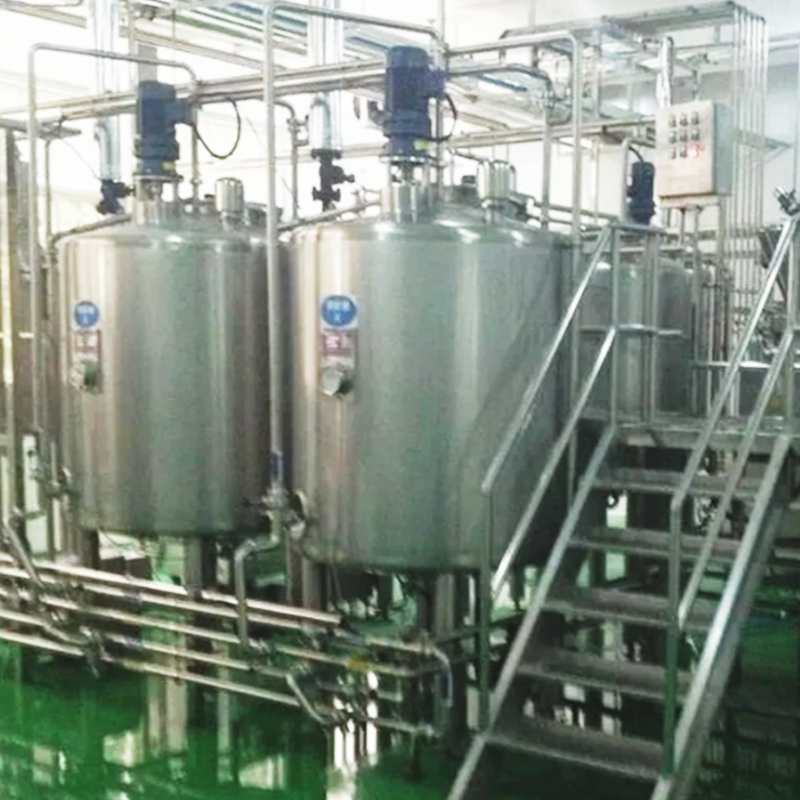
A Stainless steel fermentation vessel is one of the most important components in any modern brewing setup.
In advanced brewery systems, it serves as the controlled environment where yeast converts sugars into alcohol, carbon dioxide,
and complex flavor compounds. For breweries focused on consistency, product quality, and efficient production, the fermentation
vessel is not just a tank—it is a precision-engineered process tool that directly affects beer stability, aroma, clarity,
and final taste.
As brewing technology continues to evolve, stainless steel fermentation vessels have become the standard choice for craft breweries,
commercial breweries, pilot brewing lines, and industrial beer production. Their durability, hygienic design, corrosion resistance,
and compatibility with automation make them ideal for advanced brewery systems. Whether producing lager, ale, specialty beer,
or experimental styles, the fermentation vessel plays a central role in fermentation control and overall brewery performance.
This guide provides an original, SEO-friendly overview of stainless steel fermentation vessels, including definitions,
applications, features, advantages, specifications, material considerations, design options, and purchasing factors.
It is written for use in brewery-related blog posts, category pages, industry pages, product guides, and technical landing pages.
A stainless steel fermentation vessel is a sealed or pressure-capable tank designed to hold wort or beer during fermentation.
Inside the vessel, yeast metabolizes fermentable sugars and produces alcohol and carbon dioxide. In advanced brewery systems,
these vessels are built with sanitary stainless steel construction, controlled cooling, pressure management features, and
ports for monitoring temperature, gravity, and process activity.
Depending on the brewery design, a fermentation vessel may be called a fermenter, fermentation tank, Conical fermenter,
cylindroconical tank, unitank, or pressure fermenter. While shapes and configurations vary, the core purpose remains the same:
to provide a stable, clean, and controllable environment for fermentation.
Stainless steel is the preferred material because it resists corrosion, supports high-temperature cleaning, maintains structural
strength under pressure, and does not impart unwanted flavors. In professional breweries, stainless steel fermentation vessels
are widely used because they support repeatable processes and long service life.
Stainless steel offers a unique combination of properties that make it highly suitable for brewery fermentation systems.
Advanced breweries require equipment that can perform consistently under challenging conditions, including repeated cleaning cycles,
variable temperatures, internal pressure, and contact with acidic liquids. Stainless steel meets these demands effectively.
| Material Property | Benefit in Brewery Fermentation |
|---|---|
| Corrosion resistance | Protects against acidic wort, beer, cleaning chemicals, and moisture exposure |
| Hygienic surface | Supports sanitary brewing and reduces contamination risk |
| Durability | Withstands repeated use, pressure, temperature variation, and mechanical wear |
| Easy cleaning | Compatible with CIP systems and thorough sanitation routines |
| Neutral flavor profile | Does not affect beer taste, aroma, or appearance |
| Long service life | Provides excellent lifecycle value for advanced brewery systems |
In addition to these benefits, stainless steel supports modern fabrication techniques such as polished welds, sanitary fittings,
tri-clamp connections, and precision jacket integration. These design elements are particularly important in advanced brewery systems
where process accuracy and hygiene are essential.
Fermentation is a biological process in which yeast converts sugars into ethanol and carbon dioxide. This stage has a major influence
on final beer character, including body, residual sweetness, attenuation, ester profile, and mouthfeel. A stainless steel fermentation
vessel helps breweries control this process more accurately.
In advanced brewery systems, fermentation is often managed with precise temperature control, pressure regulation, automated monitoring,
and data-driven process optimization. These capabilities help breweries maintain consistency across batches and improve productivity.
When fermentation conditions are stable, beer quality improves. This is why the fermentation vessel is a foundational component
of advanced brewery systems.
Modern stainless steel fermentation vessels include a wide range of features designed to improve brewing efficiency, sanitation,
and process reliability. While configurations vary, most advanced brewery systems benefit from several common engineering elements.
| Feature | Purpose | Typical Benefit |
|---|---|---|
| Conical bottom | Collects yeast and trub | Improved yeast Harvesting and sediment removal |
| Cooling jacket | Controls fermentation temperature | Stable fermentation and better flavor consistency |
| Pressure-rated construction | Supports closed fermentation and carbonation | Higher process flexibility and reduced oxygen exposure |
| Sanitary ports | Allows sampling, transfer, and monitoring | Safe and efficient operation |
| Tri-clamp fittings | Provides hygienic connection points | Easy assembly and maintenance |
| CIP spray ball | Enables automated cleaning | Faster sanitation and reduced labor |
| Insulation | Reduces heat gain or loss | Better thermal efficiency |
| Level and temperature sensors | Supports process control | Improved automation and batch tracking |
In advanced brewery systems, these features help turn fermentation into a controlled, repeatable, and measurable process.
A high-quality stainless steel fermentation vessel is engineered not only for holding liquid, but for supporting performance
across every production cycle.
There are several common types of stainless steel fermentation vessels used in breweries. The best choice depends on production
volume, fermentation style, space constraints, and process requirements.
| Type | Description | Common Use |
|---|---|---|
| Standard fermenter | General-purpose tank for fermentation without pressure emphasis | Small and medium breweries, basic fermentation lines |
| Conical fermenter | Tank with a cone-shaped bottom for yeast collection | Yeast recovery, sediment separation, batch clarity |
| Cylindroconical tank | Vertical cylindrical body with cone bottom | Professional brewery fermentation and conditioning |
| Unitank | Pressure-capable vessel used for fermentation and carbonation | Closed fermentation, bright beer preparation, space efficiency |
| Open-top fermenter | Traditional vessel with open upper design | Some specialty brewing styles and craft operations |
| Double-wall jacketed tank | Includes thermal jacket for precise temperature control | Advanced brewery systems requiring stable process management |
Among these options, the cylindroconical stainless steel fermentation vessel is one of the most widely adopted in advanced brewery
systems because it provides strong process control, efficient sediment handling, and compatibility with industrial brewing workflows.
Stainless steel fermentation vessels bring a wide range of operational and quality benefits to breweries. These advantages become
especially valuable as production volume increases and process consistency becomes more important.
For breweries competing in a quality-driven market, these advantages can translate into lower operating risk, better beer quality,
and improved production efficiency. That is why stainless steel fermentation vessels are often considered essential equipment
in advanced brewery systems.
Specifications vary depending on tank size, brewery scale, and process requirements. The table below shows common technical
parameters found in stainless steel fermentation vessels used in advanced brewery systems.
| Specification | Common Range / Option | Notes |
|---|---|---|
| Material | Food-grade stainless steel 304 or 316 | 316 offers enhanced resistance in demanding environments |
| Capacity | Small pilot sizes to large industrial volumes | Often selected based on batch size and brewery output |
| Wall construction | Single wall or double wall jacketed | Jacketed designs improve temperature control |
| Pressure rating | Atmospheric to pressure-capable | Depends on fermentation and carbonation needs |
| Surface finish | Polished sanitary finish | Supports cleaning and contamination prevention |
| Insulation | Optional PU foam or equivalent insulation | Helps stabilize internal temperatures |
| Cooling system | Dimple jacket, glycol jacket, or external cooling | Used for active temperature management |
| Manway | Top or side access | Allows inspection and internal maintenance |
| Bottom style | Conical, sloped, or flat | Conical bottoms are common in advanced brewery systems |
| Fittings | Tri-clamp sanitary connections | Designed for safe and efficient transfer |
When comparing vessel specifications, brewers should evaluate not only capacity and pressure rating, but also process compatibility,
cleaning accessibility, and expansion potential. The right fermentation vessel should fit both current production goals and future growth.
Quality control is a major priority in advanced brewery systems. Every stage of brewing affects the final product, but fermentation
is especially sensitive because yeast behavior influences flavor development, attenuation, and stability. A stainless steel
fermentation vessel supports quality control in several ways.
Because the fermentation vessel directly affects yeast health and environmental stability, it is one of the most important
control points in brewery production. In advanced brewery systems, quality control often begins with vessel design.
Sanitation is essential in beer production. Even small amounts of contamination can affect taste, aroma, shelf life, and product safety.
Stainless steel fermentation vessels are designed to support hygienic operation and efficient cleaning.
Most modern brewery systems use Clean-In-Place, or CIP, methods to clean fermentation vessels without requiring full disassembly.
CIP systems typically circulate water, alkaline detergent, acid solution, and rinse water through spray devices and piping networks.
| Cleaning Element | Function | Benefit |
|---|---|---|
| CIP spray ball | Distributes cleaning solution inside the tank | Uniform cleaning coverage |
| Drainable bottom | Helps remove liquid completely | Prevents residue accumulation |
| Sanitary welds | Reduce gaps and crevices | Less contamination risk |
| Polished interior | Creates a smooth surface finish | Easier cleaning and lower residue retention |
| Accessible manway | Allows manual inspection | Supports deep cleaning and maintenance |
The sanitary design of stainless steel fermentation vessels is one reason they are preferred in advanced brewery systems.
Proper cleaning also supports longer equipment life and more reliable beer quality.
Temperature is one of the most critical variables in fermentation. Different yeast strains perform best at different temperatures,
and even minor fluctuations can influence ester formation, attenuation, and fermentation speed. Stainless steel fermentation vessels
used in advanced brewery systems often include integrated temperature control features.
Jacketed cooling systems allow glycol or another thermal medium to circulate around the tank wall. This helps remove excess heat
generated during active fermentation and keeps yeast operating within the desired range. Some systems also include insulated shells
to minimize environmental heat transfer.
In modern brewery systems, precise temperature control is often one of the main reasons for selecting a stainless steel fermentation
vessel with advanced jacket design.
Advanced brewery systems increasingly use pressure-rated fermentation vessels to support closed-system brewing. Pressure fermentation
can help reduce oxygen uptake, improve process efficiency, and create additional flexibility in beer production.
A pressure-capable stainless steel fermentation vessel can be used for fermentation, conditioning, and in some cases carbonation.
This can reduce the need for separate process tanks and help optimize brewery floor space.
| Pressure Fermentation Benefit | Operational Value |
|---|---|
| Reduced oxygen exposure | Helps preserve flavor and freshness |
| Controlled carbonation | Supports certain beer styles and packaging workflows |
| Improved transfer efficiency | Can reduce pumping and handling steps |
| Space efficiency | One vessel may support multiple process stages |
| Enhanced process control | Useful in advanced brewery systems with automation |
Pressure fermentation is not required for every brewery, but it is a powerful capability in professional operations seeking
greater flexibility and control.
Selecting the right fermentation vessel requires more than choosing a tank size. Breweries should consider production goals,
beer styles, process flow, available space, and cleaning strategy. For advanced brewery systems, vessel selection should support
both current operations and future expansion.
The ideal stainless steel fermentation vessel should deliver reliability, sanitation, and process control while matching the brewery’s
operating model. In advanced brewery systems, equipment selection is a strategic decision that affects efficiency and product quality.
Stainless steel fermentation vessels are used across many brewing environments. Their versatility makes them suitable for different
levels of production and a wide range of beer styles.
| Application | Description |
|---|---|
| Craft breweries | Used for batch consistency, style flexibility, and professional brewing standards |
| Microbreweries | Support efficient space use and reliable production in compact facilities |
| Commercial breweries | Enable high-volume fermentation with controlled process management |
| Pilot brewing systems | Used for recipe development and test batches |
| Specialty beer production | Support controlled fermentation for unique flavors and techniques |
| Research and training environments | Useful for studying yeast performance and brewing process behavior |
Even though stainless steel fermentation vessels are durable, they still require proper maintenance to remain efficient over time.
Routine inspection, cleaning, and component checks help preserve performance and extend service life.
Proper maintenance is especially important in advanced brewery systems, where equipment is expected to operate reliably and repeatedly
under demanding production conditions.
For content planning and on-page optimization, the following keyword themes are commonly associated with stainless steel fermentation
vessel pages and advanced brewery system content:
| Primary Keyword Theme | Related SEO Phrases |
|---|---|
| stainless steel fermentation vessel | fermentation tank, brewery fermenter, Stainless steel fermenter |
| advanced brewery systems | modern brewery equipment, automated brewing systems, professional brewery tanks |
| conical fermenter | cylindroconical tank, yeast collection tank, Beer fermentation vessel |
| pressure fermentation | closed fermentation, pressurized fermenter, unitank brewery system |
| Sanitary Stainless Steel Tank | CIP fermenter, hygienic brewery tank, food-grade brewing vessel |
Using these phrases naturally throughout a page can improve relevance for search engines while keeping the content useful for brewery
buyers, engineers, and operators.
A stainless steel fermentation vessel is a core asset in advanced brewery systems. It supports controlled fermentation, sanitation,
temperature stability, yeast management, and long-term brewing efficiency. Because stainless steel offers durability, corrosion
resistance, hygienic performance, and compatibility with automation, it remains the industry standard for modern fermentation
operations.
Whether used in a craft brewery, commercial production facility, or pilot system, the stainless steel fermentation vessel plays
a direct role in beer quality and operational consistency. By choosing the right vessel design, breweries can improve process
control, support scalable growth, and produce beer with greater repeatability and confidence.
For businesses building or upgrading advanced brewery systems, fermentation vessel design should be considered a strategic part of
production planning. The right stainless steel fermenter helps create a cleaner process, better flavor outcomes, and more efficient
brewery operations.
```
This website uses cookies to ensure you get the best experience on our website.




 Phone
Phone
Comment
(0)