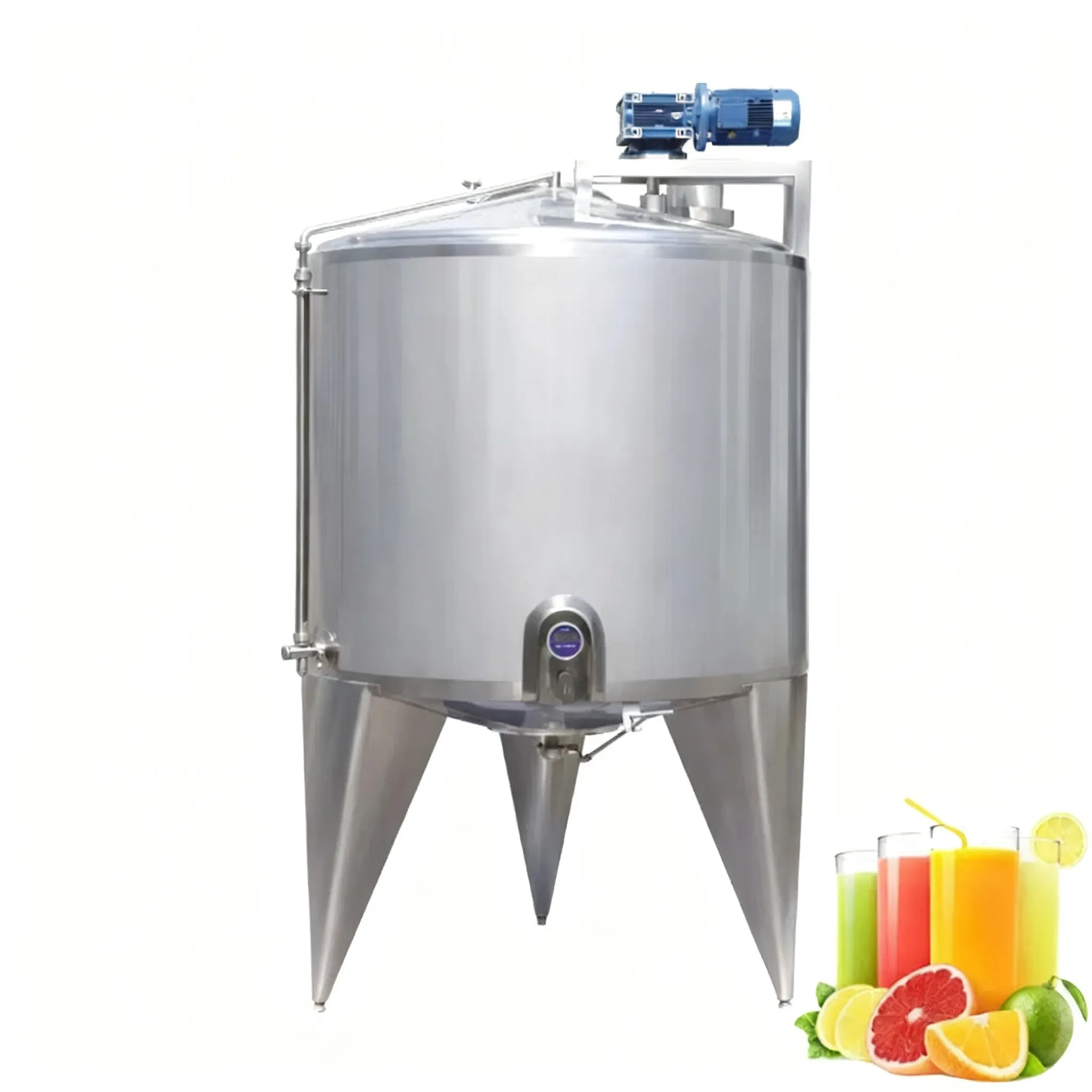
Industrial Electric Heating Mixing Tank
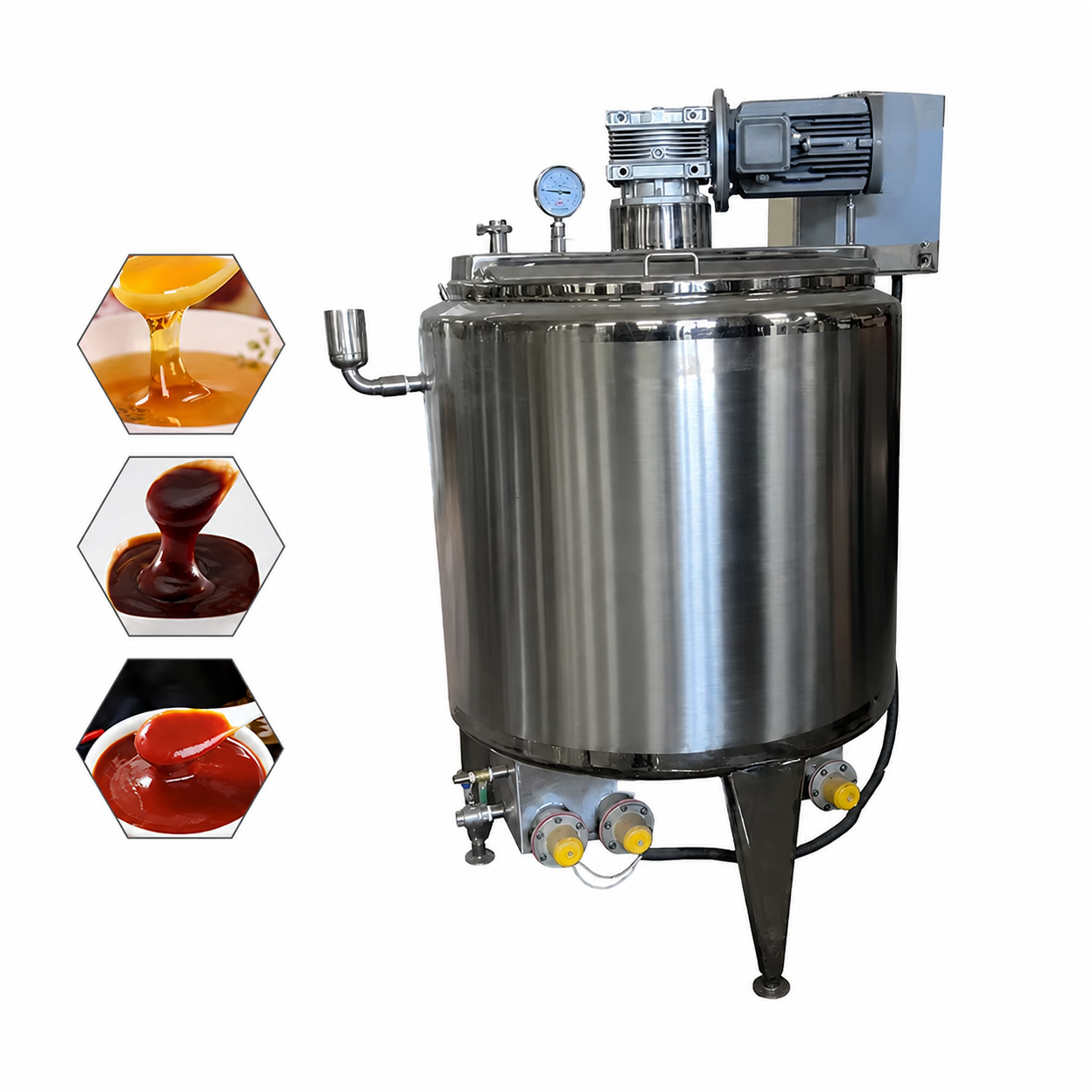
300-liter double-jacketed mixing tank for stirring sauces, fruit jam and tomato paste, equipped with electric heating, industrial mixing tank
PRODUCT DESCRIPTION
Description
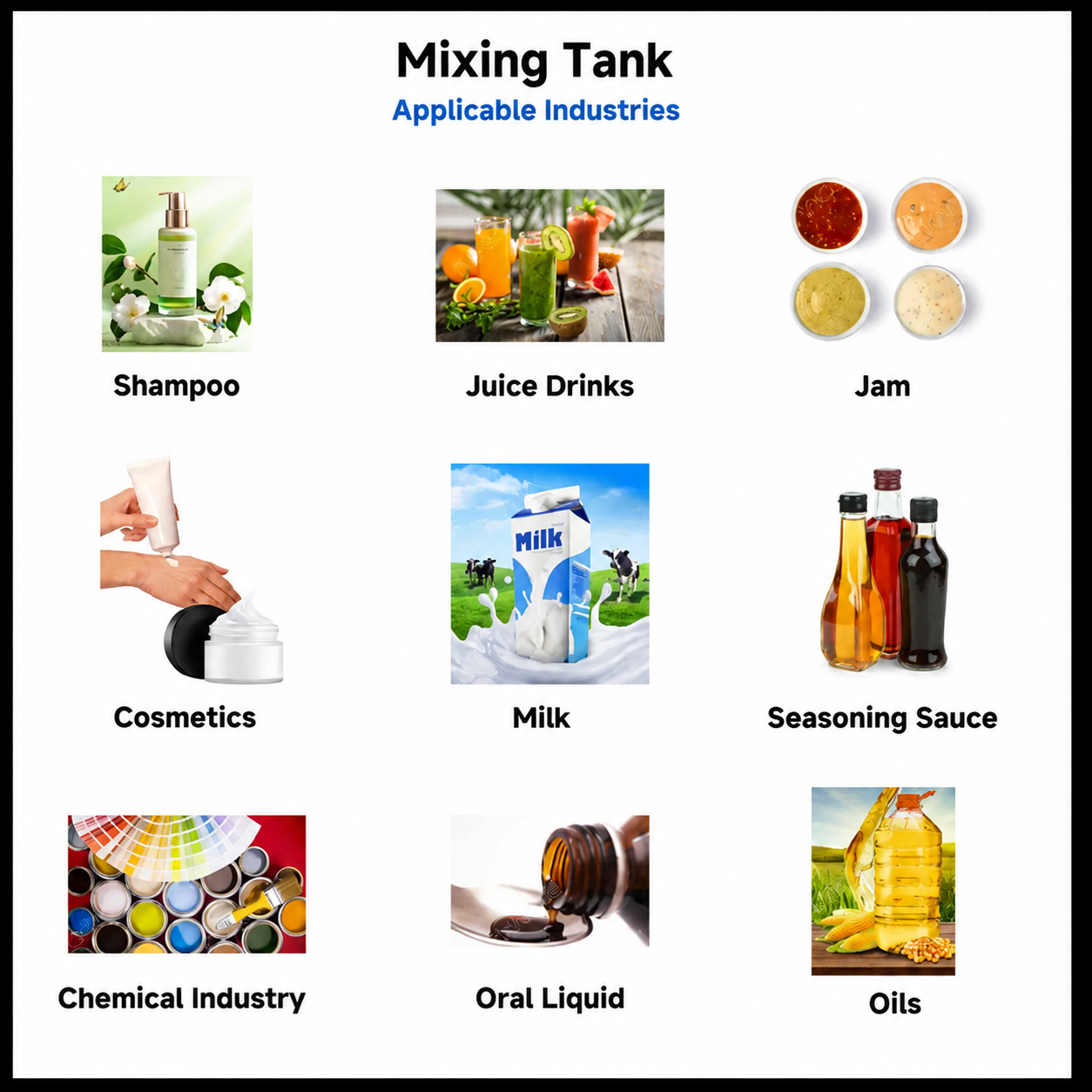
Industrial mixing tanks are widely applied in heating, cooking, dissolving, stirring, mixing and heat-preserving processes for food, beverage, pharmaceutical, chemical, building material, forest-product and other industries.
Working Principle
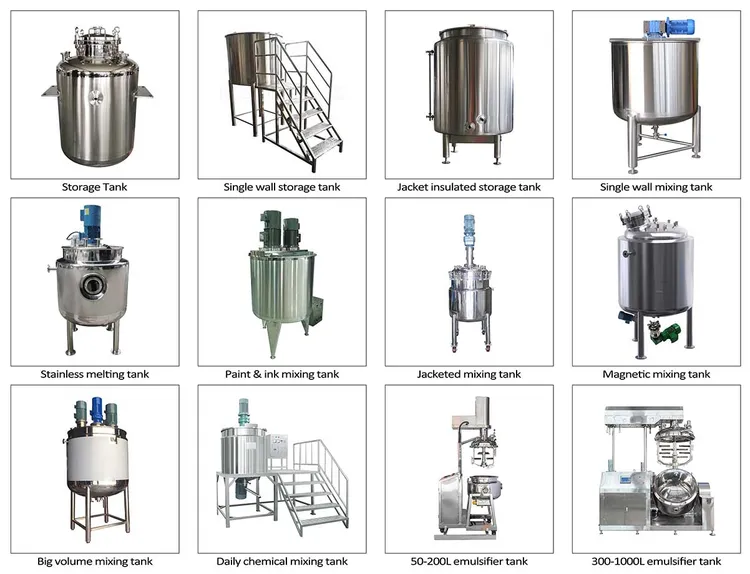
Aelt mixing tanks come in various configurations, including vertical, round, sloped-bottom, conical-bottom and dished-bottom types. We supply single-wall or jacketed mixing tanks to meet heating or cooling requirements. Agitation specifications can be customized per customer requirements. The mixing tanks support CIP cleaning for convenient tank sanitation. All our mixing tanks are designed, manufactured and inspected in compliance with GMP and ASME standards.
Structural Features
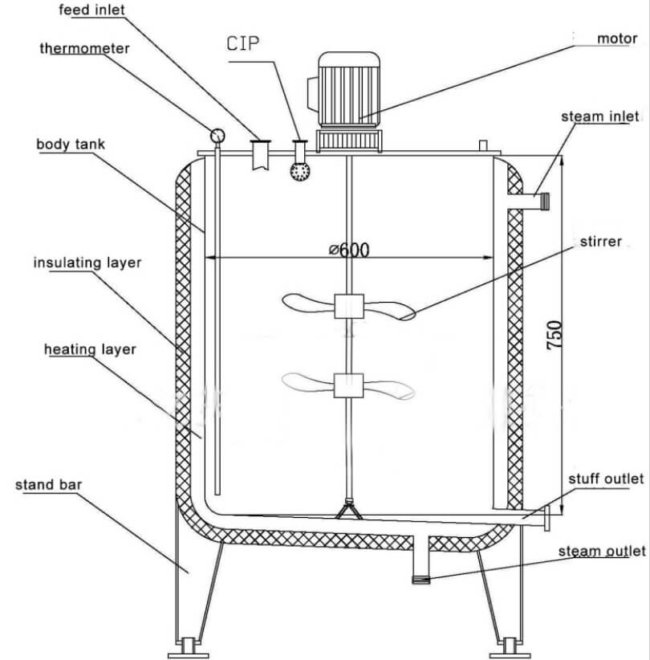
Product contact surfaces of this equipment are fabricated from high-grade Stainless steel, featuring smooth, clean and aesthetic finishes that satisfy national food hygiene and chemical GMP standards. The unit consists of top head, tank body, jacket, external thermal-insulation layer and agitation assembly, forming an intermediate heat-exchange layer. After materials are loaded into the tank, steam flows into the intermediate layer for heat exchange to realize dissolving and mixing. Pressure gauges and safety valves are installed on pipelines connected to the intermediate layer to monitor internal pressure. Operators can keep track of real-time working conditions inside the equipment via these instruments.
Industrial Agitators, Mixers and Blenders
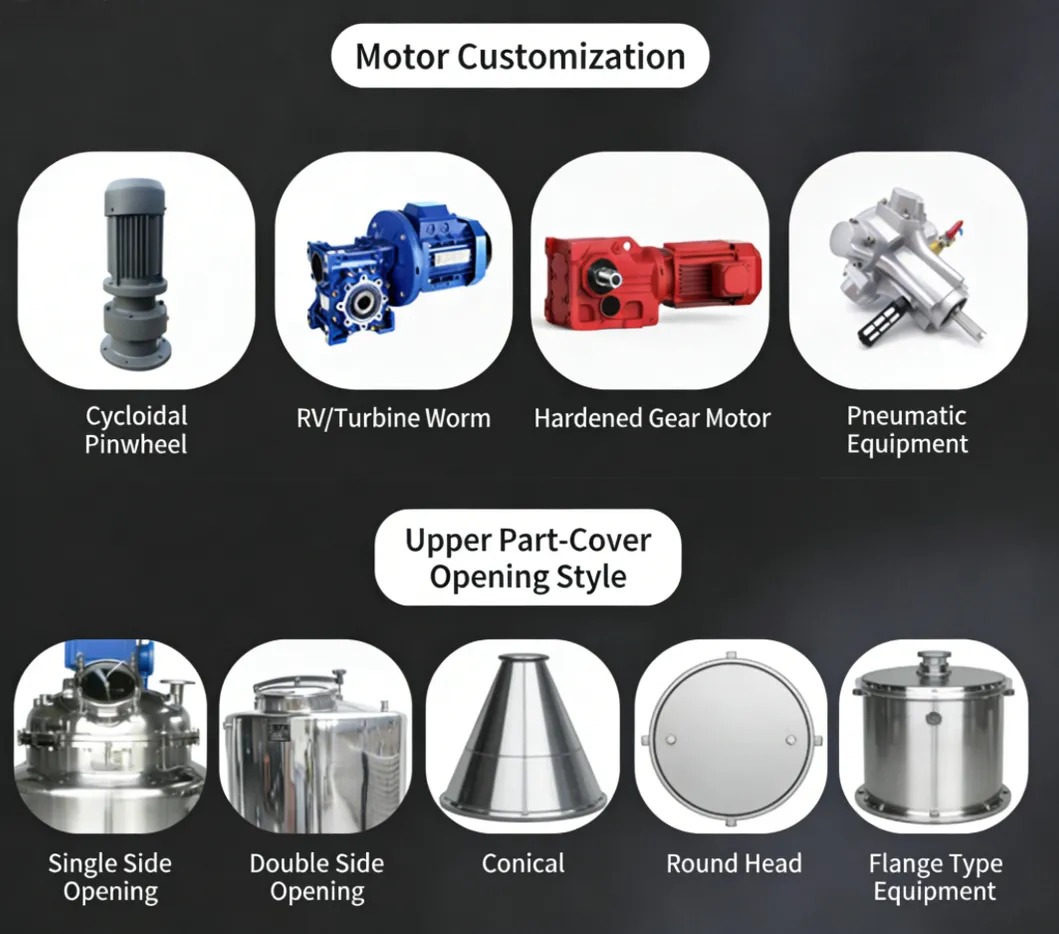
We offer a full range of industrial mixing tanks fitted with stainless-steel motors and gearboxes suitable for corrosive environments. Our premium heavy-duty blenders are equipped with high-torque gear drives, enabling agitators to evenly disperse high-viscosity concentrates, powders and slurries within liquid media.
Low-speed agitators deliver low-shear mixing. Compared with high-speed propeller-type agitators, low-speed agitators deliver more robust performance. Built with 316 stainless-steel shafts and heavy-gauge formed blades, they easily handle heavy-duty mixing tasks. Variable-frequency drives and tank baffles are also available to boost mixing efficiency. Powder-coated steel supports hold conical-bottom mixing tanks, while optional stainless-steel frames for agitator mounting are offered for food-grade applications.
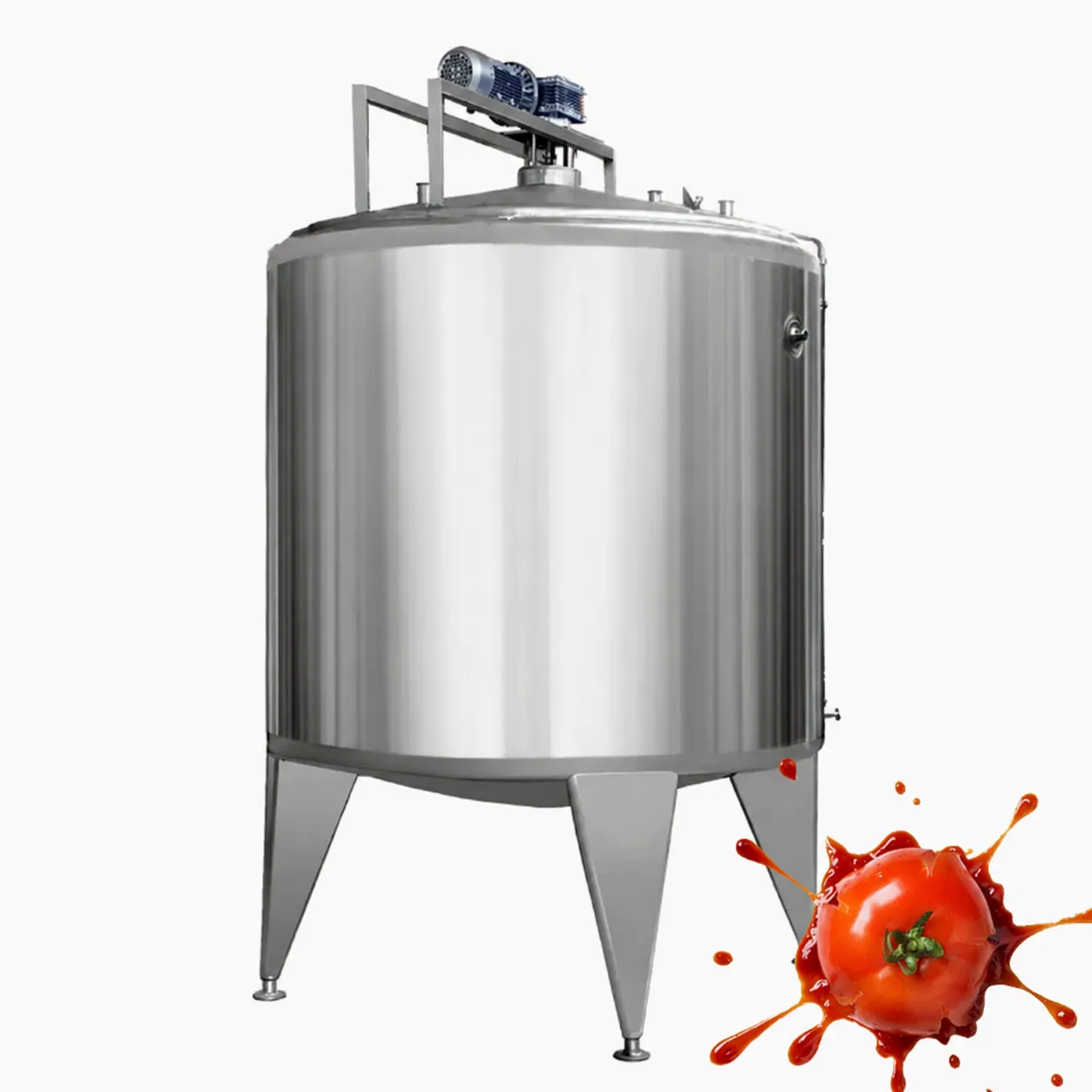
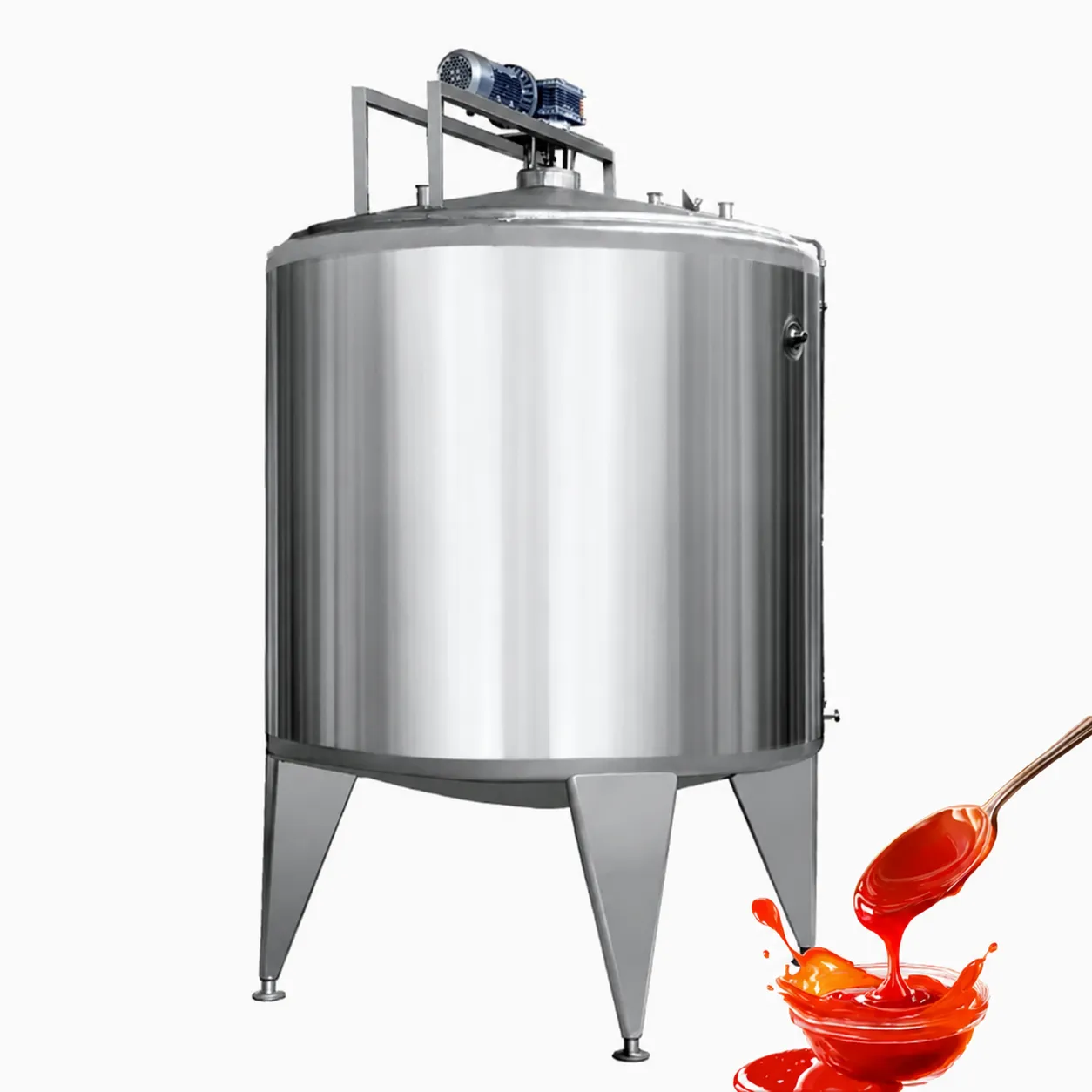
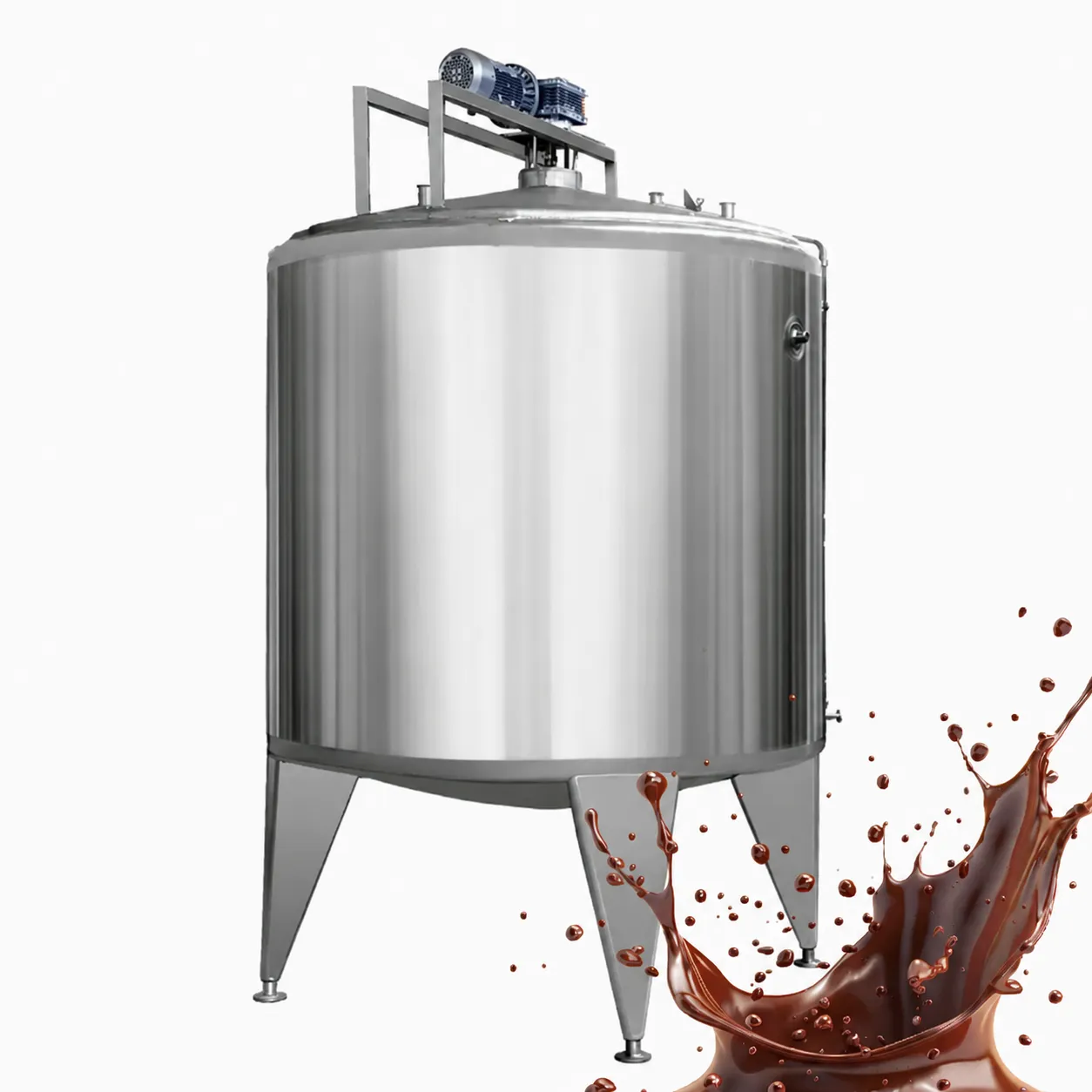
Related Products Display
FAQ
Q: How about payment term, payment safety and delivery time?
A: We accept 40% deposit, balance before shipment. And Irrevocable L/C at sight.Delivery time is 7 to 30 days. It is according to order quantity.
Q: How could we confirm the products?
A: Our professional engineers will follow up all the designs and ajustments according to your requirement.OEM and ODM available.
Q: What services can we provide?
A:Accepted Delivery Terms: FOB,CFR,CIF,EXW,DDP,DDU,Express Delivery;
Accepted Payment Currency:USD,EUR,CNY;
Accepted Payment Type: T/T,L/C,Credit Cardl,Western Union,Alipay;
Q: How can I know your machine works well?
A: Before delivery, we shall test the machine working condition for you.
Q: What's your MOQ?
A: 1 set.
Sanitary Stainless Steel Fruit Pulp Jam Mixing Tank: Complete Guide to Hygienic Fruit Processing and Industrial Jam Production
Meta Description
Discover everything about Sanitary Stainless steel Fruit Pulp Jam Mixing Tanks, including features, benefits, specifications, applications, design options, maintenance, and buying considerations. Learn how hygienic mixing tanks improve fruit pulp processing, jam production, and food manufacturing efficiency.
Introduction
A Sanitary Stainless Steel Fruit Pulp Jam Mixing Tank is one of the most important pieces of equipment in modern food processing facilities. Whether producing fruit jam, fruit puree, fruit fillings, fruit concentrates, sauces, toppings, preserves, or blended fruit products, manufacturers require reliable and hygienic mixing systems that ensure consistent quality while complying with strict food safety standards.
As consumer demand for natural fruit products continues to grow, food manufacturers are investing in advanced sanitary mixing equipment that improves productivity, enhances product consistency, and minimizes contamination risks. Stainless steel mixing tanks have become the preferred solution due to their corrosion resistance, durability, ease of cleaning, and compatibility with hygienic food processing requirements.
A fruit pulp jam mixing tank is specifically designed to handle viscous materials such as fruit pulp, fruit puree, fruit concentrates, marmalade, jelly mixtures, fruit fillings, and various semi-liquid food products. The equipment combines efficient mixing technology with sanitary construction to ensure optimal processing conditions throughout production.
This comprehensive guide explains everything about sanitary stainless steel fruit pulp jam mixing tanks, including design principles, working mechanisms, technical specifications, advantages, applications, maintenance practices, and selection criteria.
What Is a Sanitary Stainless Steel Fruit Pulp Jam Mixing Tank?
A Sanitary Stainless Steel Fruit Pulp Jam Mixing Tank is a food-grade processing vessel equipped with an agitator or mixing system designed to blend fruit-based products uniformly while maintaining hygienic conditions.
The tank is typically manufactured from stainless steel grades such as SS304 or SS316 and incorporates smooth surfaces, sanitary welds, hygienic fittings, and easy-clean designs.
The primary purpose of the tank is to:
·
Mix fruit pulp evenly
·
·
Blend ingredients consistently
·
·
Prevent ingredient separation
·
·
Improve texture uniformity
·
·
Facilitate heating or cooling processes
·
·
Ensure food safety compliance
·
·
Enhance production efficiency
·
These tanks are commonly used in:
·
Jam production
·
·
Jelly manufacturing
·
·
Fruit puree processing
·
·
Sauce production
·
·
Beverage preparation
·
·
Dairy fruit blending
·
·
Bakery filling production
·
Importance of Hygienic Mixing in Fruit Processing
Fruit-based products are highly susceptible to contamination because they contain natural sugars, moisture, and nutrients that support microbial growth.
Hygienic processing is therefore essential for:
·
Product safety
·
·
Shelf-life extension
·
·
Regulatory compliance
·
·
Brand reputation
·
·
Product consistency
·
A sanitary mixing tank minimizes contamination risks through:
·
Smooth internal surfaces
·
·
Dead-zone-free design
·
·
Polished stainless steel construction
·
·
Sanitary fittings
·
·
CIP cleaning capability
·
Proper hygienic design significantly reduces bacterial accumulation and simplifies sanitation procedures.
Working Principle of a Fruit Pulp Jam Mixing Tank
The operation of a fruit pulp jam mixing tank is relatively straightforward but highly effective.
Step 1: Ingredient Loading
Fruit pulp, sugar, pectin, flavorings, stabilizers, and other ingredients are introduced into the tank through sanitary inlet ports.
Step 2: Mixing Process
The agitator rotates at a predetermined speed, creating controlled fluid movement throughout the vessel.
The mixing system:
·
Disperses ingredients uniformly
·
·
Eliminates lumps
·
·
Improves texture
·
·
Maintains product consistency
·
Step 3: Heating or Cooling
Many tanks include jacketed walls that allow:
·
Steam heating
·
·
Hot water heating
·
·
Chilled water cooling
·
Temperature control is critical for preserving flavor, color, and nutritional value.
Step 4: Product Homogenization
Continuous agitation ensures homogeneous blending and prevents ingredient settling.
Step 5: Discharge
The finished product exits through a sanitary bottom outlet valve for further processing or packaging.
Main Components of a Sanitary Fruit Pulp Jam Mixing Tank
Tank Body
The vessel serves as the primary container for ingredients.
Features include:
·
Stainless steel construction
·
·
Polished interior
·
·
Rounded corners
·
·
Hygienic welds
·
Agitator System
The mixing mechanism may consist of:
·
Paddle agitators
·
·
Anchor agitators
·
·
Ribbon mixers
·
·
Scraper agitators
·
·
High-shear mixers
·
Motor and Drive Unit
The motor provides rotational force for the agitator.
Benefits include:
·
Adjustable speed
·
·
Energy efficiency
·
·
Stable operation
·
Heating Jacket
The jacket surrounds the tank body and enables temperature control.
Common heating media:
·
Steam
·
·
Hot water
·
·
Thermal oil
·
Insulation Layer
Insulation helps maintain process temperatures and reduce energy consumption.
Control Panel
Modern tanks often feature:
·
Digital displays
·
·
PLC controls
·
·
Temperature monitoring
·
·
Variable speed drives
·
Discharge Valve
Allows controlled product discharge while maintaining sanitary conditions.
Advantages of Sanitary Stainless Steel Fruit Pulp Jam Mixing Tanks
Superior Hygiene
Food-grade stainless steel prevents contamination and supports food safety compliance.
Corrosion Resistance
Stainless steel withstands acidic fruit products without degradation.
Long Service Life
The robust construction ensures years of reliable operation.
Efficient Mixing
Advanced agitators provide uniform blending even with high-viscosity products.
Easy Cleaning
Smooth surfaces simplify sanitation procedures.
High Productivity
Automated controls improve process efficiency and reduce labor requirements.
Versatile Applications
Suitable for numerous food processing industries.
Temperature Control
Integrated heating and cooling systems support precise processing conditions.
Why Stainless Steel Is the Preferred Material
Stainless steel is widely recognized as the ideal material for food processing equipment.
SS304 Stainless Steel
Advantages:
·
Excellent corrosion resistance
·
·
Affordable cost
·
·
Easy fabrication
·
·
Food-grade compliance
·
Applications:
·
Standard jam production
·
·
Fruit pulp processing
·
·
Beverage manufacturing
·
SS316 Stainless Steel
Advantages:
·
Superior corrosion resistance
·
·
Better acid resistance
·
·
Enhanced durability
·
Applications:
·
High-acid fruit products
·
·
Premium food processing
·
·
Specialized formulations
·
Common Tank Capacities
Manufacturers offer tanks in various sizes to accommodate different production requirements.
Capacity | Typical Application |
100L | Laboratory Production |
200L | Small Batch Processing |
500L | Small Commercial Production |
1000L | Medium Scale Manufacturing |
2000L | Industrial Production |
3000L | Large Batch Processing |
5000L | High-Volume Manufacturing |
10000L | Continuous Industrial Production |
Typical Technical Specifications
Parameter | Specification |
Material | SS304 / SS316 |
Capacity | 100L-10000L |
Surface Finish | Mirror Polish |
Mixing Speed | 20-300 RPM |
Heating Type | Steam/Hot Water |
Cooling Type | Water Jacket |
Voltage | 220V/380V/415V |
Control System | Manual/PLC |
Insulation Thickness | 50-100 mm |
Outlet Type | Sanitary Valve |
Types of Agitators Used in Jam Mixing Tanks
Selecting the correct agitator significantly affects mixing performance.
Paddle Agitator
Suitable for:
·
Low viscosity products
·
·
Fruit juices
·
·
Liquid concentrates
·
Benefits:
·
Simple design
·
·
Low energy consumption
·
Anchor Agitator
Suitable for:
·
Thick jams
·
·
Marmalade
·
·
Fruit fillings
·
Benefits:
·
Excellent wall scraping
·
·
Uniform mixing
·
Ribbon Agitator
Suitable for:
·
Medium viscosity products
·
·
Fruit pulp mixtures
·
Benefits:
·
Efficient circulation
·
Scraper Agitator
Suitable for:
·
Heated processing
·
Benefits:
·
Prevents product burning
·
·
Improves heat transfer
·
Applications Across Food Industries
Jam Manufacturing
One of the primary applications.
The tank ensures:
·
Uniform sugar distribution
·
·
Consistent texture
·
·
Stable product quality
·
Fruit Puree Production
Used for:
·
Mango puree
·
·
Apple puree
·
·
Strawberry puree
·
·
Peach puree
·
Jelly Production
Provides consistent mixing for gel formation.
Sauce Manufacturing
Suitable for:
·
Fruit sauces
·
·
Dessert sauces
·
·
Sweet toppings
·
Bakery Industry
Used for preparing:
·
Pie fillings
·
·
Fruit fillings
·
·
Toppings
·
Dairy Processing
Fruit preparations for:
·
Yogurt
·
·
Ice cream
·
·
Dairy desserts
·
Popular Fruits Processed in Mixing Tanks
Fruit Type | Product |
Strawberry | Jam |
Blueberry | Preserves |
Raspberry | Filling |
Mango | Puree |
Peach | Jam |
Apricot | Marmalade |
Apple | Sauce |
Pineapple | Fruit Base |
Cherry | Filling |
Mixed Fruits | Blended Products |
Heating Systems in Jam Mixing Tanks
Heating is essential for cooking fruit products and improving shelf life.
Steam Heating
Advantages:
·
Rapid heating
·
·
High efficiency
·
·
Uniform temperature distribution
·
Hot Water Heating
Advantages:
·
Gentle heating
·
·
Reduced risk of scorching
·
Thermal Oil Heating
Advantages:
·
High temperature capability
·
·
Stable operation
·
Cooling Systems
Cooling preserves flavor and prevents overcooking.
Common methods:
·
Water jacket cooling
·
·
Glycol cooling
·
·
Refrigerated circulation systems
·
Benefits:
·
Improved product quality
·
·
Reduced microbial growth
·
·
Faster packaging readiness
·
Importance of Surface Finish
The interior finish directly affects hygiene.
Mirror Polished Surface
Advantages:
·
Easy cleaning
·
·
Reduced bacterial attachment
·
·
Improved product flow
·
Recommended Roughness
Finish Type | Roughness |
Standard Food Grade | Ra ≤ 0.8 μm |
High Sanitary Grade | Ra ≤ 0.4 μm |
Clean-In-Place (CIP) Systems
Modern sanitary tanks often include CIP functionality.
Benefits
·
Faster cleaning
·
·
Reduced labor
·
·
Improved hygiene
·
·
Consistent sanitation
·
CIP Process
00001.
Pre-rinse
00002.
00003.
Alkaline wash
00004.
00005.
Intermediate rinse
00006.
00007.
Acid wash
00008.
00009.
Final rinse
00010.
00011.
Sanitization
00012.
Automation Features
Modern systems increasingly utilize automation.
PLC Control Systems
Capabilities include:
·
Recipe management
·
·
Temperature control
·
·
Speed adjustment
·
·
Process monitoring
·
HMI Touch Screens
Advantages:
·
User-friendly operation
·
·
Real-time data display
·
Energy Efficiency Considerations
Efficient systems reduce operating costs.
Strategies include:
·
Insulated tanks
·
·
Variable frequency drives
·
·
Optimized agitator designs
·
·
Efficient heating systems
·
Food Safety Standards
Sanitary mixing tanks are designed to support compliance with food industry regulations.
Common standards include:
·
GMP principles
·
·
HACCP requirements
·
·
Food-grade material regulations
·
·
Hygienic design standards
·
Installation Requirements
Proper installation ensures optimal performance.
Foundation Requirements
·
Stable floor
·
·
Adequate load capacity
·
·
Level positioning
·
Utility Connections
·
Electrical supply
·
·
Water supply
·
·
Steam connection
·
·
Drainage system
·
Routine Maintenance Guide
Preventive maintenance extends equipment lifespan.
Daily Checks
·
Inspect seals
·
·
Check agitator operation
·
·
Verify temperature readings
·
Weekly Checks
·
Examine valves
·
·
Inspect motor condition
·
Monthly Checks
·
Lubricate moving components
·
·
Verify control system performance
·
Annual Maintenance
·
Comprehensive inspection
·
·
Component replacement if necessary
·
Common Operational Challenges and Solutions
Issue | Possible Cause | Solution |
Uneven Mixing | Incorrect agitator | Upgrade mixing system |
Product Burning | Poor scraping | Install scraper agitator |
Slow Heating | Jacket scaling | Clean heating jacket |
Leakage | Damaged seal | Replace gasket |
Excess Foam | High speed | Reduce RPM |
Selection Guide for Buyers
Choosing the right tank requires evaluating several factors.
Capacity Requirements
Match production volume to tank size.
Product Viscosity
Higher viscosity products require stronger agitators.
Heating Requirements
Determine required temperature ranges.
Cleaning Needs
Consider CIP compatibility.
Automation Level
Select manual, semi-automatic, or fully automatic systems.
Future Trends in Fruit Processing Mixing Technology
The industry continues to evolve.
Emerging trends include:
·
Smart manufacturing
·
·
IoT monitoring
·
·
AI-assisted process control
·
·
Energy-efficient systems
·
·
Advanced sanitary designs
·
These innovations improve productivity while reducing operational costs.
Frequently Asked Questions
What is the best material for fruit jam mixing tanks?
Food-grade stainless steel SS304 and SS316 are the most commonly used materials due to their corrosion resistance and hygienic properties.
Can the tank process high-viscosity jam?
Yes. Anchor and scraper agitators are specifically designed for high-viscosity products.
Is heating necessary?
Most jam production processes require heating to achieve proper texture, flavor development, and microbial stability.
What capacity should I choose?
The appropriate capacity depends on your production volume and future expansion plans.
Can the tank be customized?
Yes. Capacity, agitator type, heating system, insulation, and automation level can typically be customized.
Is CIP cleaning important?
Absolutely. CIP systems improve hygiene, reduce labor costs, and ensure consistent sanitation.
Conclusion
The Sanitary Stainless Steel Fruit Pulp Jam Mixing Tank plays a critical role in modern food processing operations. Designed to deliver hygienic, efficient, and reliable mixing performance, these tanks support the production of high-quality fruit jams, purees, sauces, fillings, and related products.
With food-grade stainless steel construction, advanced agitation systems, optional heating and cooling capabilities, and modern automation features, sanitary mixing tanks help manufacturers achieve superior product consistency while maintaining strict food safety standards.
Whether operating a small fruit processing facility or a large industrial production plant, investing in a properly designed sanitary stainless steel fruit pulp jam mixing tank can significantly improve productivity, product quality, operational efficiency, and long-term profitability.
 +86 29-87031531





 Phone
Phone