Stainless steel Pharmaceutical Chemical Mixing Tank for Pharmaceutical Biotech
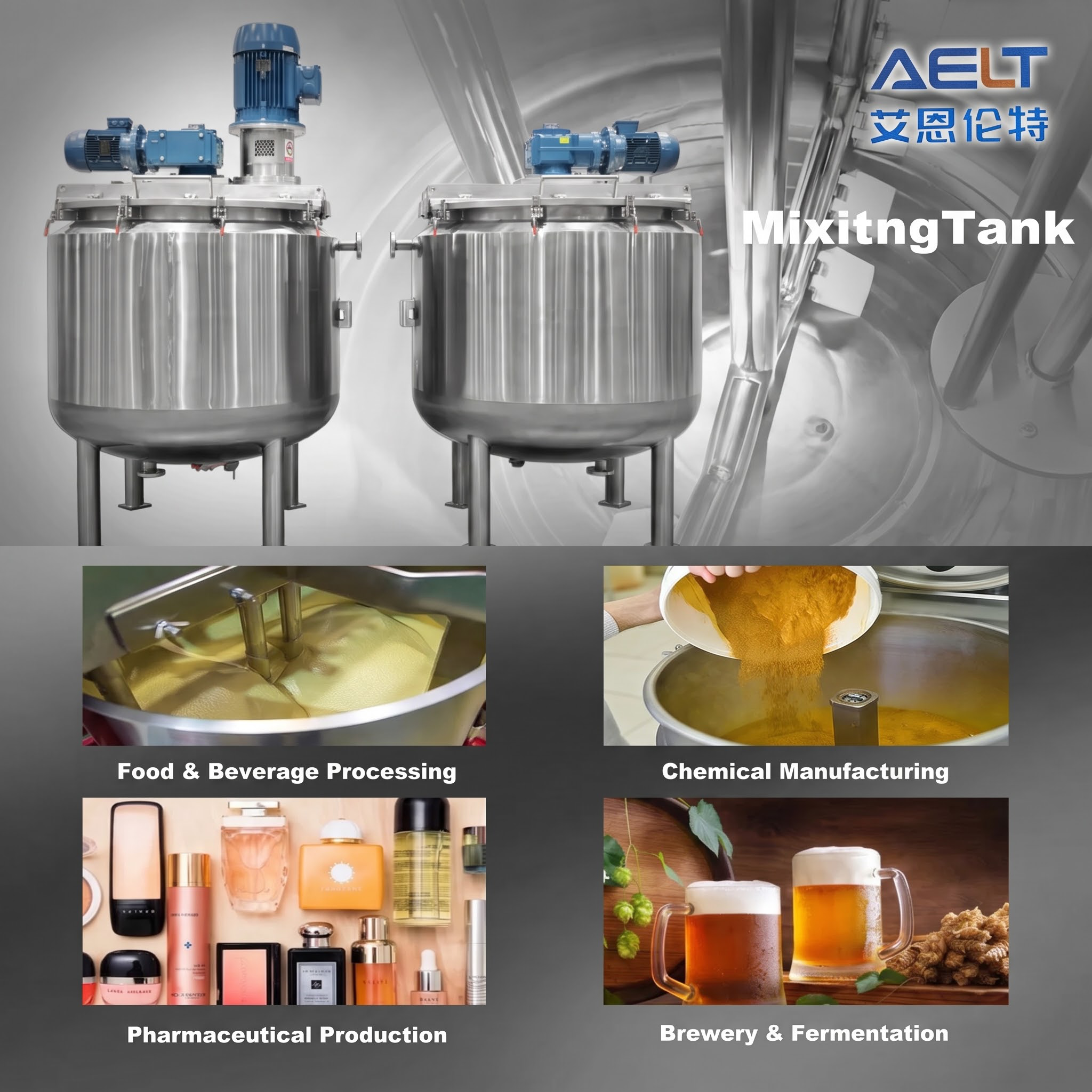
A mixing tank is an industrial vessel for blending liquids, slurries or powders. It is commonly fabricated from stainless steel (304/316L) to guarantee chemical compatibility and durability. Key specifications include capacities ranging from 50 liters up to over 17,000 gallons, top-mounted or bottom-feed agitation systems, heating/cooling jackets, and CIP (Clean-in-Place) compatibility. Widely adopted in food, pharmaceutical and chemical industries for homogeneous mixing performance.
PRODUCT DESCRIPTION
Description
Specifications
The pharmaceutical mixing tank is a specialized vessel, generally constructed of stainless steel. It is designed for precise mixing of liquids, powders and other ingredients (active pharmaceutical ingredients and excipients) to produce uniform, high-quality pharmaceuticals, ointments, suspensions or solutions. Featuring automated agitation, heating/cooling functions and easy-to-clean properties (CIP/COP), it ensures safety, sterility and batch consistency to meet stringent regulatory standards.
-Product Structure
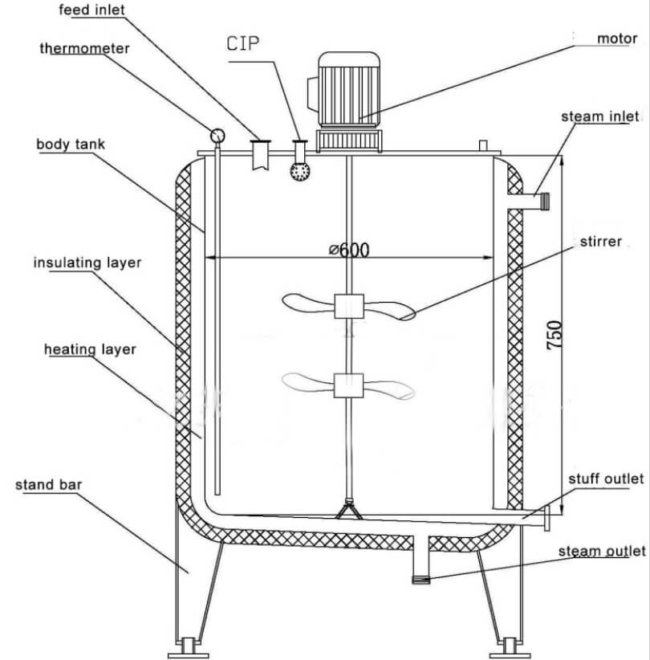
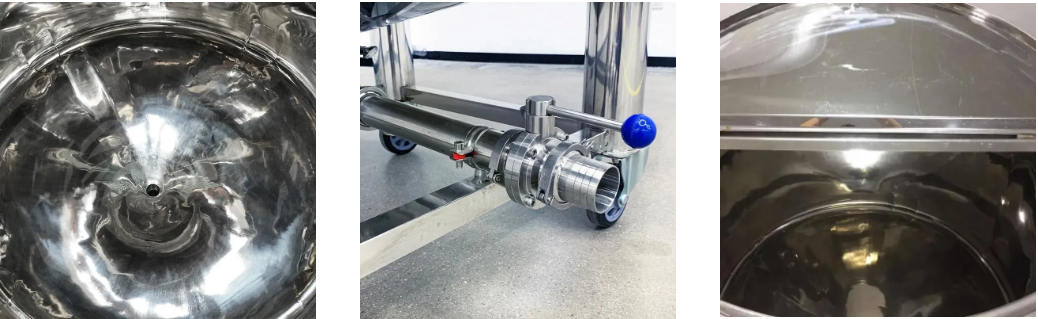
The pharmaceutical mixing tank is made of 316L stainless steel with polished internal surfaces. It is fitted with a heating/cooling jacket and equipped with a motor-driven top-mounted agitator (propeller-type, anchor-type or high-shear type). Sealing is achieved via mechanical seal or packing seal. Additional components include CIP/SIP systems, vent ports, sight glasses, sampling ports and sanitary tri-clamp flanges. All components are engineered for easy cleaning and aseptic operation, complying with rigorous quality standards.
Mixing tank parameters can be customized according to customer requirements.
-Core Functions
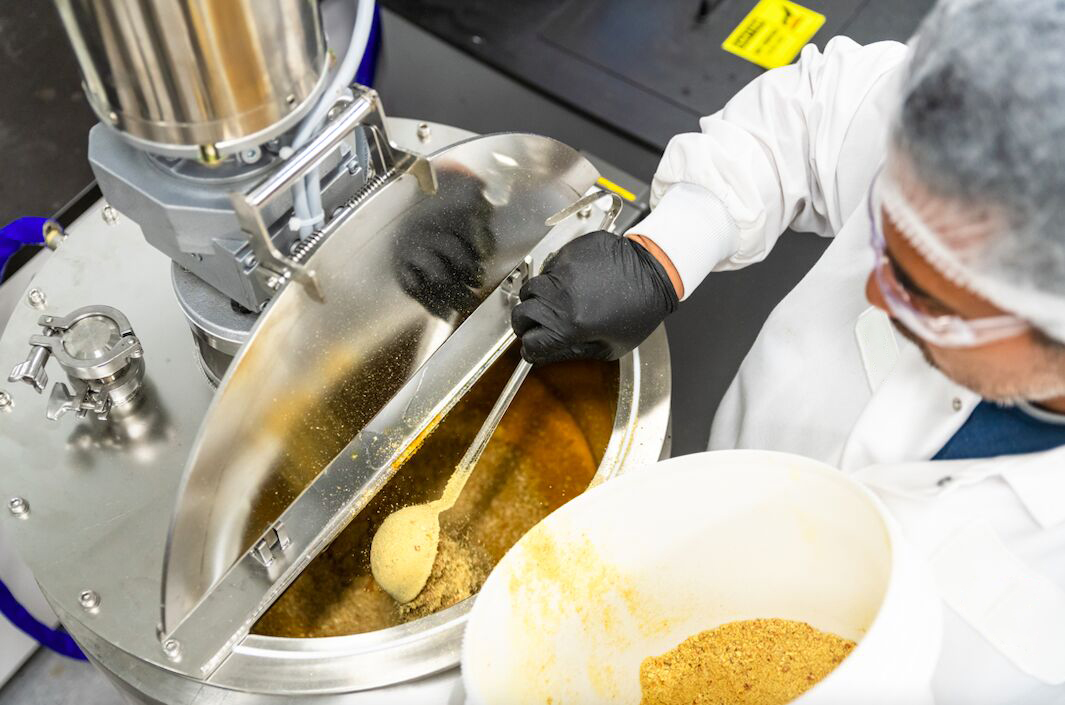
Homogenization: Achieve uniform mixing to guarantee consistent product quality
Temperature Control: Heat or cool to target temperatures for sensitive reactions or raw-material stability (jacketed vessel applied)
Sterilization: Maintain an aseptic environment and perform aseptic processing
Dissolution: Efficiently dissolve solids into liquids
Suspension: Disperse solid particles evenly within liquid media
-Main Applications of Mixing Tanks
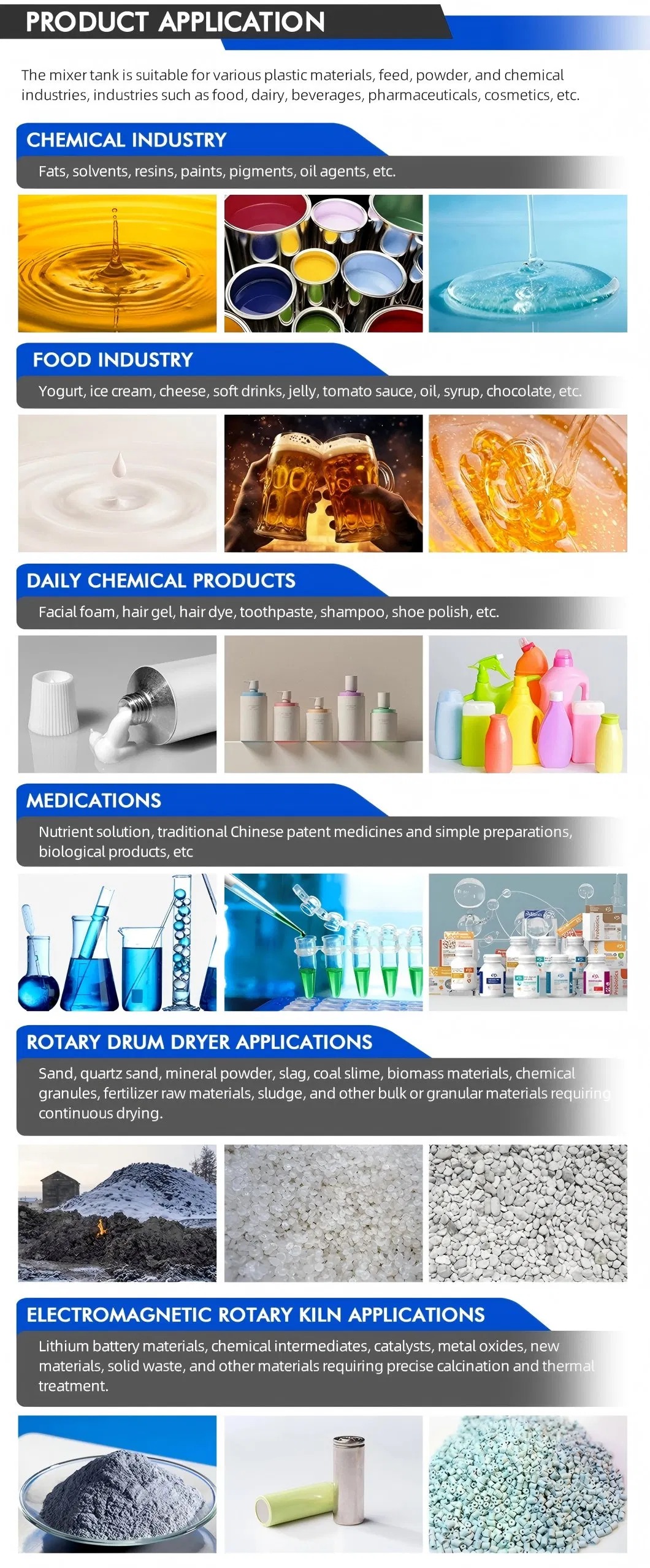
Food & Beverage: Mix salad dressings, mayonnaise, sauces, fruit juice and dairy products such as yogurt.
Pharmaceutical: Homogenize active ingredients, formulate IV solutions, and prepare emulsions or creams.
Chemical Processing: Blend chemical compounds, mix polymers for plastics, and formulate emulsions for paints & coatings.
Cosmetics: Blend ingredients for shampoo, conditioner and lotions.
Water Treatment: Mix additives for disinfection, flocculation and pH adjustment.
Agriculture: Mix soluble fertilizers and pesticides.
Product Advantages
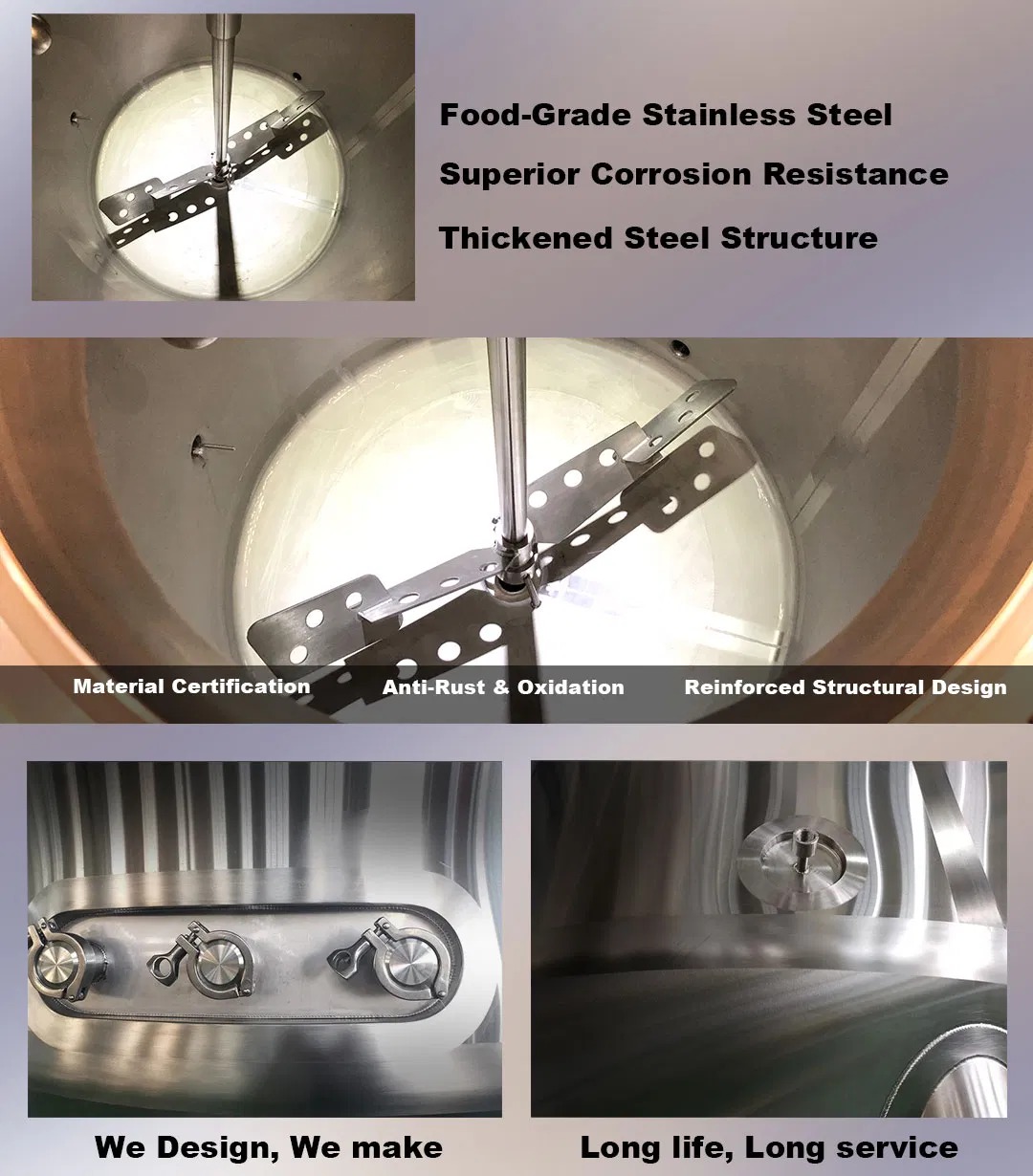
1.Food-Grade Stainless Steel
Constructed from food-grade stainless steel to ensure safety, hygiene and superior quality.
2. Excellent Corrosion Resistance
Superior corrosion resistance for reliable performance even under harsh acidic or alkaline conditions.
3. Reinforced Steel Structure
Built with thickened steel material for enhanced strength and durability.
4. Material Certification
Fully certified materials: traceable, verifiable and trustworthy.
5. Rust & Oxidation Resistance
Advanced anti-rust and anti-oxidation properties for long-term stable performance.
6. Reinforced Structural Design
Optimized reinforced structural design for improved stability and reliability.
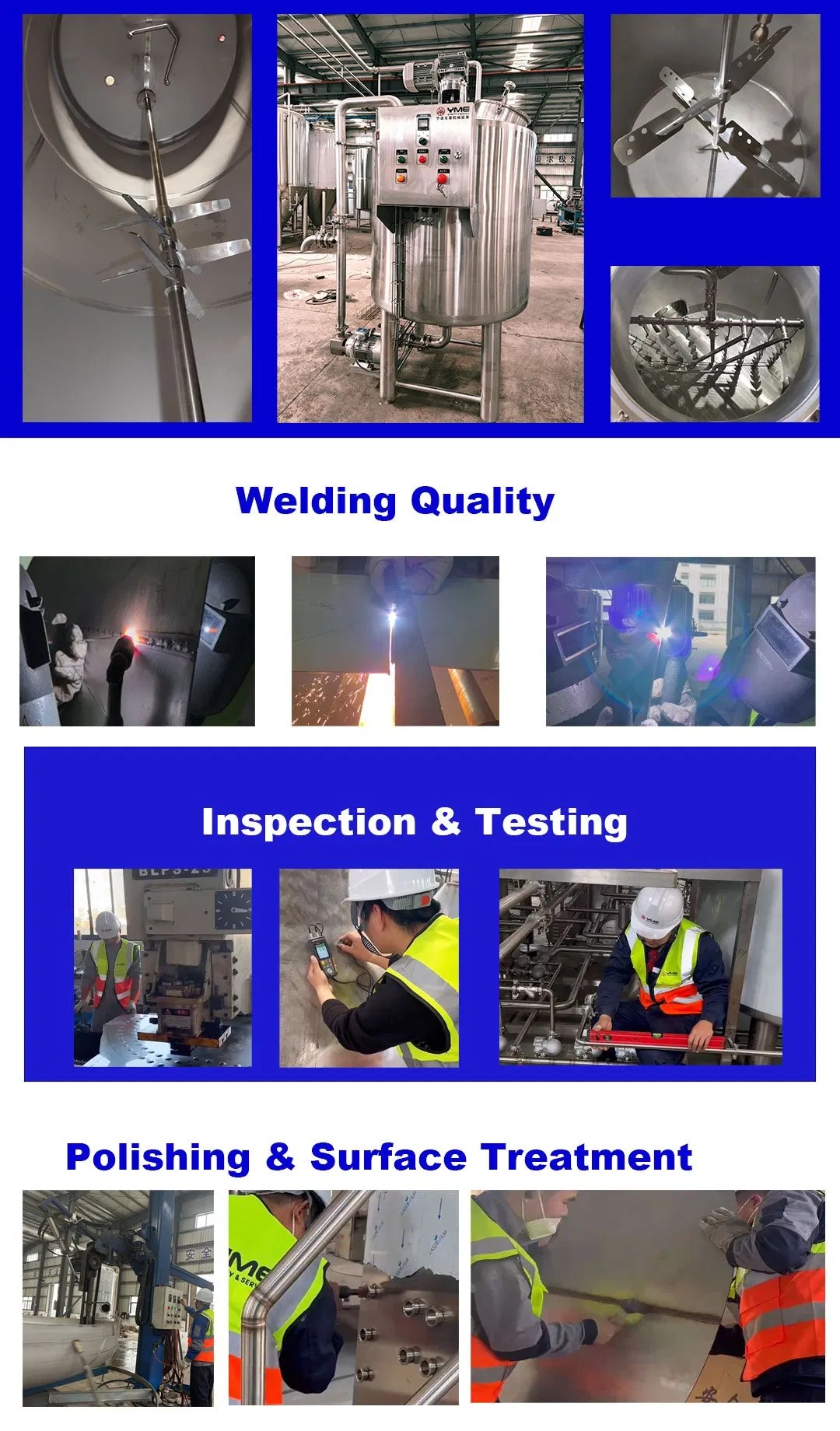
7. In-house Design & Manufacturing
Designed and manufactured in-house to achieve full quality control.
8. Long Service Life
Extended service life with minimal maintenance requirements.
Key Technical Specifications
Capacity: From small-batch sizes (50L-1000L) up to large-scale volumes (17,600+ gallons max).
Material: Primarily AISI 304 or 316L stainless steel for high durability and corrosion resistance.
Agitator / Mixer: Electric motor (1.5KW to 55KW), fitted with impellers suitable for low to high-viscosity media, including paddle or high-shear options.
Tank Geometry: Generally cylindrical with dished or conical bottom for complete drainage; typical diameter-to-height ratio of 1:1.
Temperature Control: Optional jacket (steam / hot oil) for heating or cooling, with insulation layer available.
Pressure Rating: Designed for atmospheric or pressurized service according to application requirements.
Surface Finish: Mirror-polished internal surface (BA / 3D) for hygienic food / pharmaceutical applications.
Features: Manhole, sight glass, CIP spray ball, inlet & outlet nozzles and baffles to boost mixing efficiency.
Design Considerations
Viscosity: Low-viscosity fluids require high-speed mixing, while high-viscosity materials demand high-torque, low-speed mixing.
Safety: Large elevated storage tanks are normally equipped with OSHA-compliant stairways and handrails.
Mobility: Smaller tanks (up to 1500L) can be supplied with wheeled base for easy relocation.
Main Features & Functions
Agitation: Uniform blending via agitators, propellers or paddles.
Temperature Control: Built-in heating or cooling jacket for thermal treatment processes.
High-Shear Mixing: For emulsion production and mixing thick, viscous liquids.
Material Construction: Commonly built from high-grade stainless steel, offering hygienic performance and chemical resistance.
FAQ
Q: How about payment term, payment safety and delivery time?
A: We accept 40% deposit, balance before shipment. And Irrevocable L/C at sight.Delivery time is 7 to 30 days. It is according to order quantity.
Q: How could we confirm the products?
A: Our professional engineers will follow up all the designs and ajustments according to your requirement.OEM and ODM available.
Q: What services can we provide?
A:Accepted Delivery Terms: FOB,CFR,CIF,EXW,DDP,DDU,Express Delivery;
Accepted Payment Currency:USD,EUR,CNY;
Accepted Payment Type: T/T,L/C,Credit Cardl,Western Union,Alipay;
Q: How can I know your machine works well?
A: Before delivery, we shall test the machine working condition for you.
Q: What's your MOQ?
A: 1 set.
Chemical Mixing Tank : Complete Technical Guide to Design, Applications, Features, and Benefits
Overview
Chemical mixing tanks represent critical process equipment across numerous industries, including pharmaceutical, biotechnology, cosmetic, food & beverage, and chemical manufacturing.
Description
Chemical mixing tanks are essential equipment to achieve thorough blending of chemical substances. Proper mixing guarantees homogeneous distribution of various materials and prevents undesired chemical reactions between components.
Agitation tanks are standard widely-used chemical equipment, available for chemical enterprises of all sizes. The following factors shall be considered when selecting a suitable agitation tank.
How to Select a Chemical Mixing Tank
First, determine tank dimensions based on working volume and available workshop space to achieve neat and unified plant layout.
Second, select tank material according to the medium inside the vessel. Enamel tanks are generally recommended for acidic media, while stainless-steel tanks suit alkaline media. Special materials such as titanium alloy and Hastelloy are also available upon customers’ special requirements.
Third is agitator selection, the most core and technically demanding part of a mixing tank. Agitation style is determined by mixing performance requirements: axial-flow agitation delivers sufficient material blending, dissolution, heat transfer and gas absorption; radial-flow agitation fits dispersion-mixing applications. Agitator power shall be calculated according to tank size, material density, viscosity, solid content, as well as agitator type, impeller diameter and rotational speed.
Fourth is the selection of tank manufacturer. Agitation tank suppliers can be found nationwide with inconsistent product quality and price. Choosing a qualified manufacturer is critical to guarantee one-time qualified delivery.
Main Features of Chemical Mixing Tank
1. Vessel equipped with high-temperature insulating material, anti-aging polyurethane foam or EPE foam.
2. Connections adopt international-standard ISO quick-clamp fittings; liners are made of imported SUS316L or SUS304 Stainless steel. Internal surface is mirror-polished to Ra ≤0.4 μm; external surface options include matte finish, bright polish, matte sandblasting or cool-toned treatment.
3. Agitator sealing adopts imported hygienic mechanical seal or magnetic stirring sealing unit; stirring speed is configurable.
4. Nozzle ports cover connections for level gauges (hydrostatic, capacitive, non-contact ultrasonic, glass-tube type), vent port, thermometer (digital display or pointer type), CIP cleaning port (with or without sight glass), integrated endoscopic lamp (for light-shielding requirement), SIP sterilization port, liquid inlet and hygienic manhole.
Main components
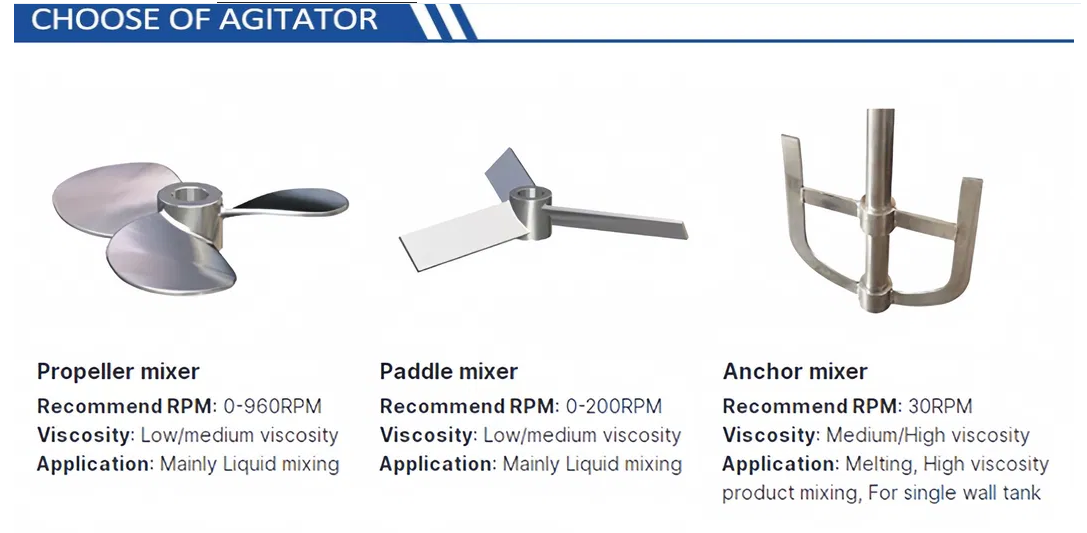
Agitator System
The agitator creates mixing action.
Common types include:
Agitator Type | Application |
Paddle Mixer | General blending |
Propeller Mixer | Low viscosity liquids |
Anchor Mixer | High viscosity materials |
Turbine Mixer | Intensive mixing |
High Shear Mixer | Emulsification |
Motor and Gearbox
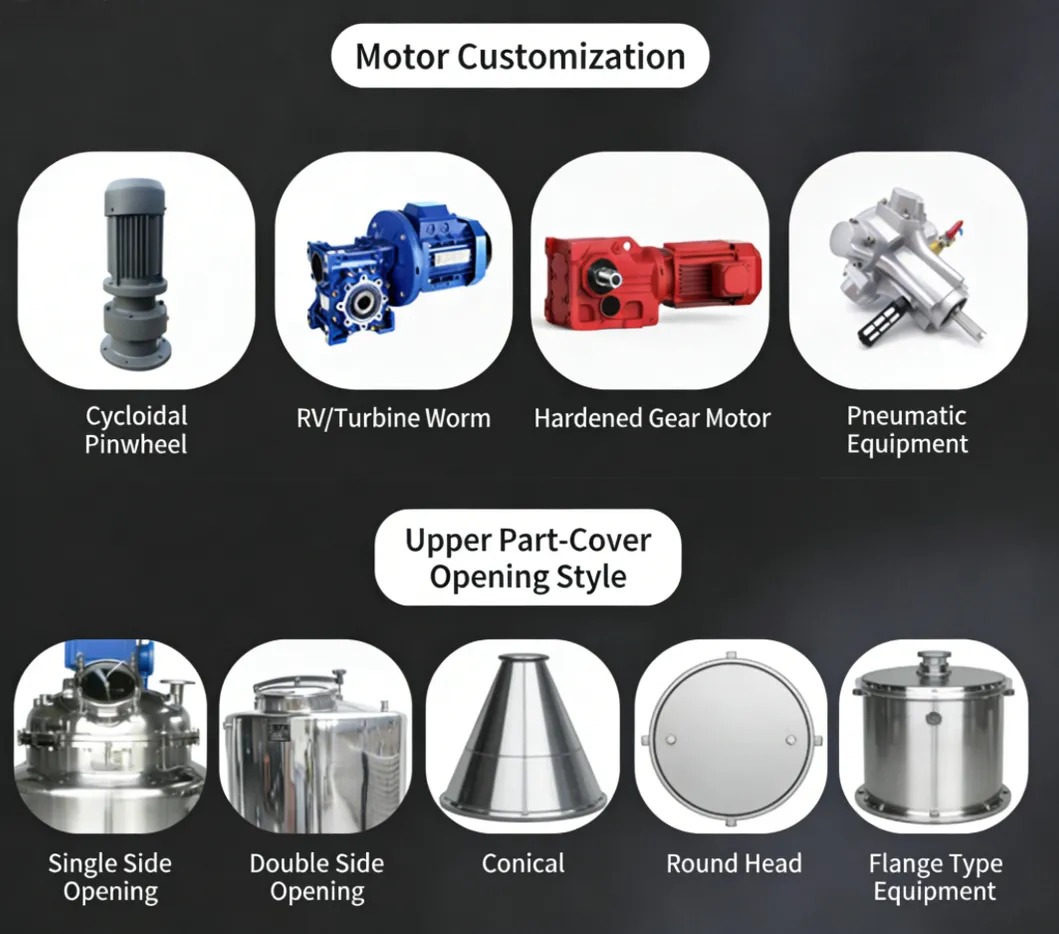
Provides rotational power to the agitator.
Features:
·
Variable speed control
·
·
Energy-efficient motors
·
·
Explosion-proof options
Inlet Ports
Used for adding ingredients.
May include:
·
Powder feeding port
·
·
Liquid inlet
·
·
CIP connection
·
·
Steam inlet
·
Outlet System
Allows controlled product discharge.
Options:
·
Butterfly valves
·
·
Ball valves
·
·
Diaphragm valves
·
·
Automatic control valves
Inspection Manway
Provides access for:
·
Inspection
·
·
Cleaning
·
·
Maintenance
·
Level Measurement System
Monitors tank volume.
Technologies include:
·
Float sensors
·
·
Radar level sensors
·
·
Ultrasonic sensors
·
·
Load cells
·
Tank Construction Materials
Material selection significantly impacts performance and service life.
Advantages:
·
Corrosion resistance
·
·
Cost-effective
·
·
Easy cleaning
·
Applications:
·
Food
·
·
Beverage
·
·
Water treatment
·
Stainless Steel 316L
Advantages:
·
Superior corrosion resistance
·
·
Sanitary finish
·
·
Chemical compatibility
·
Applications:
·
Pharmaceutical production
·
·
Cosmetics
·
·
Biotechnology
·
Carbon Steel
Advantages:
·
Lower initial cost
·
·
High structural strength
·
Applications:
·
Industrial chemicals
·
·
Non-corrosive products
·
Typical Material Comparison
Property | SS304 | SS316L | Carbon Steel |
Corrosion Resistance | Good | Excellent | Moderate |
Sanitary Performance | Excellent | Excellent | Limited |
Food Grade | Yes | Yes | No |
Chemical Resistance | Good | Excellent | Moderate |
Cost | Medium | Higher | Lower |
Types of Raw Material Buffer Blending Prep Tanks
Atmospheric Buffer Tank
Operates under normal atmospheric pressure.
Used for:
·
Water
·
·
Juice
·
·
Dairy products
·
·
Food ingredients
·
Pressure Buffer Tank
Designed for elevated pressure applications.
Suitable for:
·
Carbonated beverages
·
·
Chemical processing
·
·
Gas-liquid mixing
·
Vacuum Blending Tank
Supports vacuum processing.
Benefits:
·
Reduced oxidation
·
·
Improved product quality
·
·
Better deaeration
·
Heated Preparation Tank
Includes jacket heating systems.
Used for:
·
Syrup production
·
·
Chocolate preparation
·
·
Cosmetic creams
·
Cooling Buffer Tank
Maintains low product temperatures.
Applications:
·
Dairy products
·
·
Fermentation feed
·
·
Sensitive ingredients
·
Key Features
Modern Raw Material Buffer Blending Prep Tanks offer numerous advanced features.
Hygienic Design
·
Smooth internal surfaces
·
·
Dead-zone-free construction
·
·
Sanitary welds
·
·
CIP compatibility
·
Efficient Mixing
·
Uniform blending
·
·
Reduced segregation
·
·
Fast preparation cycles
·
Flexible Capacity
Available from:
·
100 liters
·
·
500 liters
·
·
1,000 liters
·
·
5,000 liters
·
·
10,000 liters
·
·
50,000 liters
·
and larger.
Automation Ready
Supports:
·
PLC systems
·
·
HMI touchscreens
·
·
SCADA integration
·
·
Remote monitoring
·
Technical Specifications
Parameter | Typical Range |
Capacity | 100L – 50,000L |
Material | SS304 / SS316L |
Surface Finish | Mirror Polish / Matte |
Mixing Speed | 20–300 RPM |
Power | 0.55–75 kW |
Pressure | Atmospheric to 10 Bar |
Temperature | -20°C to 150°C |
Insulation Thickness | 50–150 mm |
Voltage | Customized |
Control Mode | Manual / Automatic |
Capacity Range Options
Small Scale
Suitable for:
·
Laboratories
·
·
Pilot production
·
Medium Scale
Capacity |
1000L |
2000L |
3000L |
5000L |
Suitable for:
·
Medium manufacturing plants
·
·
Batch production
·
Large Scale
Capacity |
10,000L |
20,000L |
30,000L |
50,000L |
Suitable for:
·
Industrial processing facilities
·
·
Continuous production lines
·
Agitation and Mixing Systems
Mixing quality directly influences final product consistency.
Top Entry Agitators
Advantages:
·
Simple installation
·
·
Cost-effective
·
Applications:
·
Low viscosity liquids
·
Side Entry Agitators
Advantages:
·
Efficient circulation
·
·
Reduced tank height
·
Applications:
·
Large storage tanks
·
Bottom Entry Mixers
Advantages:
·
Superior sanitary performance
·
·
Easy cleaning
·
Applications:
·
Pharmaceutical processing
·
Heating and Cooling Functions
Many buffer blending prep tanks include thermal control systems.
Steam Jacket Heating
Benefits:
·
Fast heat transfer
·
·
High efficiency
·
Applications:
·
Syrups
·
·
Sauces
·
·
Dairy products
·
Electric Heating
Benefits:
·
Precise temperature control
·
·
Easy installation
·
Applications:
·
Small production systems
·
Glycol Cooling Jacket
Benefits:
·
Stable cooling
·
·
Energy efficiency
·
Applications:
·
Beverage processing
·
·
Fermentation preparation
·
Automation and Control Systems
Automation improves reliability and repeatability.
PLC Control
Functions:
·
Recipe management
·
·
Process control
·
·
Alarm handling
·
HMI Touchscreen
Provides:
·
User-friendly operation
·
·
Real-time monitoring
·
·
Data logging
·
Sensor Integration
Includes:
·
Temperature sensors
·
·
Pressure transmitters
·
·
Flow meters
·
·
Level sensors
·
Industrial Applications
Food Industry
Applications:
·
Sauce preparation
·
·
Soup mixing
·
·
Sugar solution preparation
·
·
Flavor blending
·
Benefits:
·
Consistent recipes
·
·
Hygienic production
·
Beverage Industry
Used for:
·
Juice blending
·
·
Syrup preparation
·
·
Soft drink processing
·
Advantages:
·
Uniform flavor distribution
·
·
Stable production flow
·
Dairy Industry
Applications:
·
Milk buffering
·
·
Yogurt preparation
·
·
Cream blending
·
Benefits:
·
Improved product consistency
·
Pharmaceutical Industry
Used for:
·
Solution preparation
·
·
Active ingredient blending
·
·
Intermediate storage
·
Requirements:
·
GMP compliance
·
·
Sanitary construction
·
Cosmetic Industry
Applications:
·
Lotion production
·
·
Shampoo preparation
·
·
Cream blending
·
Benefits:
·
Smooth texture
·
·
Uniform composition
·
Chemical Industry
Applications:
·
Chemical blending
·
·
Intermediate storage
·
·
Reaction preparation
·
Advantages:
·
Process stability
·
·
Enhanced safety
·
Benefits of Using Raw Material Buffer Blending Prep Tanks
Improved Production Efficiency
Continuous material availability minimizes downtime.
Better Product Quality
Uniform mixing ensures consistent formulation.
Reduced Waste
Accurate blending lowers material loss.
Increased Flexibility
Supports multiple product recipes.
Enhanced Hygiene
Sanitary designs reduce contamination risks.
Lower Labor Costs
Automation reduces manual intervention.
Higher Throughput
Stable material supply increases production capacity.
Design Considerations
When selecting a Raw Material Buffer Blending Prep Tank, consider:
Factor | Importance |
Capacity | Match production demand |
Material | Ensure compatibility |
Mixing Type | Suit product viscosity |
Temperature Control | Meet process requirements |
Pressure Rating | Ensure safe operation |
Cleaning Method | Maintain hygiene |
Automation Level | Improve efficiency |
Sanitary Requirements
Food and pharmaceutical industries require strict hygiene standards.
Important features include:
·
Mirror-polished surfaces
·
·
Sanitary welds
·
·
Drainable design
·
·
CIP Cleaning Systems
·
·
Sterile connections
·
·
FDA-compliant gaskets
·
Installation Guidelines
Foundation Requirements
The tank should be installed on:
·
Reinforced concrete bases
·
·
Steel support structures
·
Utility Connections
Required utilities may include:
·
Electricity
·
·
Water
·
·
Steam
·
·
Compressed air
·
·
Cooling media
·
Space Requirements
Allow sufficient clearance for:
·
Maintenance
·
·
Cleaning
·
·
Inspection
·
Maintenance Procedures
Routine maintenance extends service life.
Daily Inspection
Check:
·
Agitator operation
·
·
Sensor readings
·
·
Valve condition
·
Weekly Inspection
Verify:
·
Motor performance
·
·
Seal integrity
·
·
Fastener tightness
·
Monthly Maintenance
Inspect:
·
Gearboxes
·
·
Bearings
·
·
Instrument calibration
·
Annual Service
Perform:
·
Full system inspection
·
·
Preventive replacement of wear parts
·
·
Structural integrity evaluation
·
Safety Features
Modern tanks incorporate numerous safety systems.
Pressure Relief Devices
Protect against overpressure conditions.
Emergency Stop Systems
Allow immediate shutdown.
Level Alarms
Prevent overflow situations.
Temperature Protection
Avoid overheating.
Explosion-Proof Components
Available for hazardous environments.
Industry Trends
The buffer blending tank market continues evolving toward smarter and more efficient solutions.
Smart Manufacturing
Integration with Industry 4.0 platforms.
Benefits:
·
Real-time monitoring
·
·
Predictive maintenance
·
·
Production optimization
·
Energy Efficiency
Manufacturers increasingly seek:
·
Efficient motors
·
·
Improved insulation
·
·
Reduced utility consumption
·
Advanced Automation
Features include:
·
Automated recipes
·
·
Batch tracking
·
·
Remote diagnostics
·
Sustainable Production
Focus areas:
·
Reduced waste
·
·
Lower energy use
·
·
Water conservation
·
Frequently Asked Questions
What is the purpose of a Raw Material Buffer Blending Prep Tank?
It provides temporary storage, blending, and preparation of raw materials before production processing.
What industries use these tanks?
Common industries include:
·
Food processing
·
·
Beverage manufacturing
·
·
Dairy production
·
·
Pharmaceuticals
·
·
Cosmetics
·
·
Chemicals
·
·
Biotechnology
·
Which material is best?
For sanitary applications, stainless steel 316L is often preferred due to superior corrosion resistance and cleanability.
Can these tanks be customized?
Yes. Capacity, material, agitator type, heating system, cooling system, and automation level can all be customized.
Are CIP systems available?
Most modern tanks support Clean-In-Place (CIP) systems for efficient cleaning and sanitation.
What capacity should be selected?
Capacity depends on:
·
Production volume
·
·
Batch size
·
·
Process requirements
·
·
Future expansion plans
·
Conclusion
A Raw Material Blending Prep Tank is a critical piece of equipment in modern manufacturing operations. By combining temporary storage, material homogenization, process preparation, and production buffering into a single system, these tanks significantly improve operational efficiency and product consistency.
Whether used in food processing, beverage production, pharmaceuticals, cosmetics, biotechnology, or chemical manufacturing, a well-designed buffer blending preparation tank helps maintain stable production flow, reduce downtime, improve quality control, and support automation initiatives.
With options ranging from small pilot-scale vessels to large industrial processing systems exceeding 50,000 liters, Raw Material Buffer Blending Prep Tanks remain one of the most versatile and valuable assets in industrial production environments. Their ability to integrate mixing, storage, temperature control, and automation makes them indispensable for facilities seeking higher productivity, improved product quality, and long-term operational success.
 +86 29-87031531



 Phone
Phone