High Quality Large Capacity Agricultural Grain Silo
A silo is a large-scale container for bulk materials. It is designed to provide a safe, dry and controllable storage environment for materials. Despite the term “grain” in its name, silos are not limited to the grain sector and are widely applied across various industrial fields.
PRODUCT DESCRIPTION
Description
Grain Galvanized steel silos are manufactured using specialized technology and assembly lines, assembled with high-strength galvanized bolts.
A rigid frame, composed of multiple C-shaped or Z-shaped steel bars connected to a roof-type steel structure beam by high-strength bolts, enhances the overall seismic resistance, wind resistance, and stability of the prefabricated steel silo.
The silo walls are reinforced and can be machined with various process holes.
Steel silos are widely used in grain processing and transshipment due to their high land utilization rate, high degree of automation, short construction period, and low investment cost.
With the needs of economic development, a clear trend in the use of steel silos is the increasing capacity of individual silos.
Advantage & Feature
As a leading silo manufacturer, our silos are well-sealed to prevent leakage and moisture ingress.The wall panels and folded edges are joined using high-strength galvanized bolts, with embedded sealing strips or sealing strips, ensuring a tight seal and guaranteeing airtightness within the silo.
Especially after internal insulation and heat treatment, this ensures ventilation and disinfection of the grain, facilitating storage.
Production practice has proven that through reasonable process design, a sound auxiliary system, and safe and efficient grain reserve management, the quality of grain stored in steel silos can be ensured.
Prefabricated steel silos are easier to construct and have lower construction costs.
They are also simpler to manufacture, thus their use in modern construction is gradually increasing.
High-quality silos, Better service
Silo material: galvanized steel sheet. National standard 275g/m2, silo design life: at least 25 years of service life
Applicable Materials
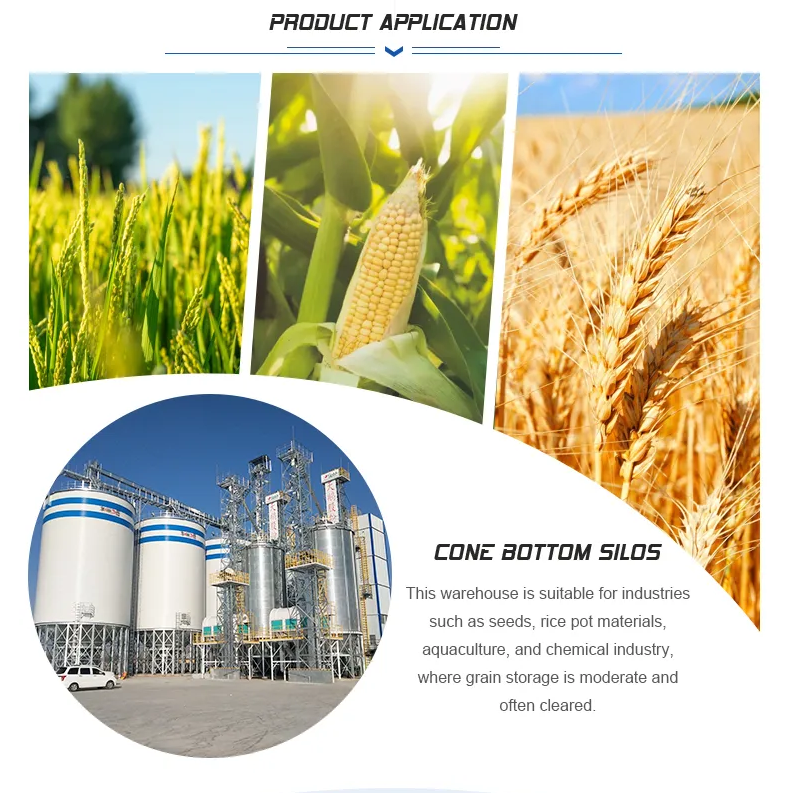
Storage of grain and agricultural products
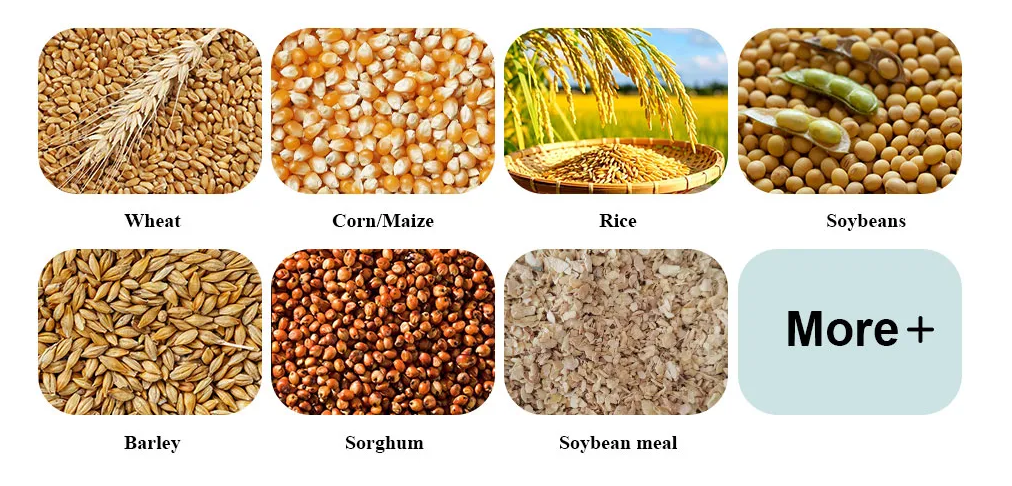
The most common application of silos is storing bulk agricultural products, including:
- Grain crops such as wheat, corn and rice
- Oil-bearing crops like soybeans, rapeseeds and sunflower seeds
- Feed raw materials and granular agricultural goods
Thanks to favorable sealing performance, silos can effectively block external moisture and pests, preserve grain quality, minimize losses, and improve storage & transportation efficiency.
Storage of Industrial Bulk Materials
In various industrial scenarios, enterprises also rely on silos to store a wide range of granular or powdery materials, such as:
- Coal and ores
- Sand, gravel and cement
- Chemical granules and resin raw materials
- By-products and recyclable materials from processing plants
Materials of this kind generally require large-volume storage as well as stable automatic discharging. The silo structure perfectly meets these requirements.
Customer Groups
The main customer groups for grain silos include flour mills, corn processing plants, rice mills, feed mills, wineries, food factories, ports and docks, grain traders, and government projects.
Silo Capacity
Silo capacity can be customized. The capacity of a single grain silo ranges from 50 tons to 15,000 tons.
Depending on customer needs, customers can choose multiple silos to store different grains. For example, if a customer needs to store 10,000 tons of corn for a certain period, they can choose a single 10,000-ton silo or two 5,000-ton silos.
Technical Parameters
Popular Flat Bottom Steel Silo Technical Specifications |
Capacity | 1500Ton | 2000Ton | 2500Ton | 3000Ton | 5000Ton | 8000Ton | 10000Ton |
Model | ALT
11915 | ALT
13715 | ALT
15514 | ALT
15518 | ALT
18321 | ALT
24718 | ALT
25621 |
Diameter(m) | 11.918 | 13.750 | 15.584 | 15.584 | 18.334 | 24.751 | 25.668 |
Total Height(m) | 20.34 | 20.87 | 24.78 | 24.78 | 28.60 | 26.99 | 30.60 |
Volume(m³)
Density: 0.75ton/m³ | 2009 | 2701 | 4145 | 6693 | 6693 | 10879 | 13484 |
Popular Conical Bottom Steel Silo Technical Specifications |
Capacity | 100Ton | 150Ton | 200Ton | 300Ton | 500Ton | 1000Ton | 1500Ton |
Model | ALT
04507 | ALT
05507 | ALT
06406 | ALT
07307 | ALT
07313 | ALT
11010 | ALT
12811 |
Diameter(m) | 4.584 | 5.500 | 6.417 | 7.334 | 7.334 | 11.000 | 12.834 |
Total Height(m) | 12.53 | 13.25 | 12.85 | 14.70 | 21.42 | 20.95 | 23.51 |
Volume(m³)
Density:0.75ton/m³ | 150 | 222 | 273 | 415 | 699 | 1346 | 2039 |
FAQ
Q1: What grain do you want to store? one or different grain?
A1: Wheat, corn, rice, soybeans, barley, sorghum, and soybean meal for animal feed,etc.
Q2: What storage volume for silo ?
A2: Silo capacity can be customized. The capacity of a single grain silo ranges from 50 tons to 15,000 tons.
Q3:What material is the silo made of ?
A3: Galvanized steel sheet. National standard 275g/m2.
Q4: What is the lifespan of Agrise silo?
A4: At least 25 years of service life.
Grain Silo: Comprehensive Guide for Storage and Handling of Grains
1. Introduction to Grain Silos
Grain silos are essential storage facilities used to store large quantities of grains, cereals, and other agricultural products. They play a critical role in the agricultural and food processing industry by maintaining the quality of stored grains, preventing spoilage, and ensuring an efficient supply chain. In addition to storage, grain silos often integrate advanced handling systems to facilitate loading, unloading, and inventory management.
Efficient grain storage reduces losses due to pests, moisture, and temperature fluctuations, thus contributing to food security and economic efficiency.
2. Definition and Purpose
A grain silo is a tall structure or container specifically designed for bulk storage of grain and similar granular products. Silos enable:
·
Long-term preservation of grain quality
·
·
Protection from environmental factors such as rain, wind, and pests
·
·
Efficient handling and transportation of grains
·
·
Inventory management through controlled loading and unloading
·
The main purpose of a grain silo is not only storage but also the prevention of spoilage and loss, which is crucial for both commercial and subsistence farming operations.
3. Types of Grain Silos
Grain silos are classified based on their design, storage method, and material. The major types include:
3.1 Tower Silos
Tower silos are vertical structures, often cylindrical, designed for storing large volumes of grains. They are commonly used in industrial-scale farms and grain processing facilities.
Key Features:
·
High storage capacity
·
·
Gravity-assisted unloading
·
·
Suitable for long-term storage
·
Advantages:
·
Space-efficient
·
·
Easy integration with automated handling systems
·
·
Reduced grain spoilage due to airtight design
·
3.2 Bin Silos
Bin silos, also known as steel grain bins, are cylindrical structures with conical bottoms that facilitate easy discharge. They are widely used for medium to large-scale grain storage.
Advantages:
·
Modular and easy to expand
·
·
Compatible with aeration systems to maintain grain quality
·
·
Durable and weather-resistant
·
3.3 Bunker Silos
Bunker silos are horizontal, trench-like storage structures often covered with plastic or tarpaulins. They are used for silage and grains where cost-efficiency is a priority.
Advantages:
·
Cost-effective for large storage volumes
·
·
Easy construction and maintenance
·
·
Suitable for temporary or seasonal storage
·
3.4 Hopper Silos
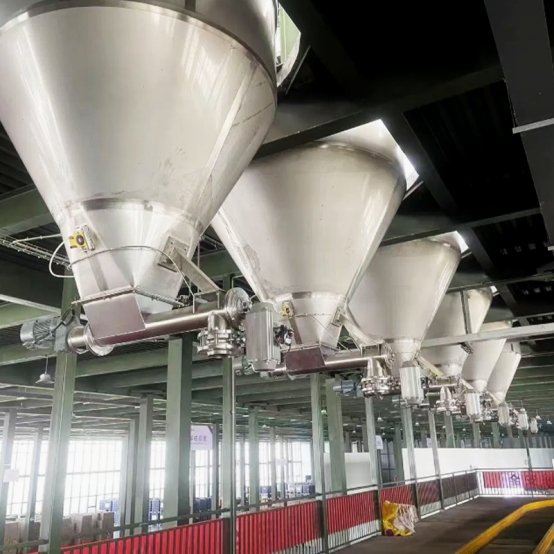
Hopper silos feature a conical bottom that allows easy gravity discharge. They are suitable for both grains and bulk feed.
Advantages:
·
Efficient unloading
·
·
Reduces manual handling
·
·
Ideal for feed mills and poultry farms
·
4. Materials Used in Grain Silos
The choice of silo material affects durability, maintenance, and cost. Common materials include:
4.1 Steel Silos
Steel silos are highly durable, weather-resistant, and commonly used in commercial storage. Galvanized steel is preferred for corrosion resistance.
Benefits:
·
Long lifespan
·
·
Strong structural integrity
·
·
Easy to integrate with automation systems
·
4.2 Concrete Silos
Concrete silos are typically used for very large storage volumes. They provide excellent insulation against temperature changes and are highly durable.
Benefits:
·
Resistant to fire and pests
·
·
Long-term storage capability
·
·
Low maintenance
·
4.3 Fiberglass and Composite Silos
Fiberglass and composite materials are lightweight alternatives for smaller storage needs. They are corrosion-resistant and ideal for specialized applications.
Benefits:
·
Lightweight and easy to install
·
·
Resistant to corrosion
·
·
Suitable for remote or mobile operations
·
5. Advantages of Grain Silos
Grain silos offer multiple operational and economic advantages:
·
Protection from Spoilage: Airtight and weatherproof designs prevent mold, insects, and contamination.
·
·
Efficiency in Handling: Facilitates automated loading/unloading, reducing labor costs.
·
·
Space Optimization: Vertical designs save land space while offering large storage capacity.
·
·
Inventory Management: Integration with sensors and monitoring systems helps manage stock levels.
·
·
Economic Benefits: Reduces post-harvest losses, contributing to higher profitability.
·
6. Design Considerations
Designing a grain silo requires attention to multiple factors:
·
Capacity Requirements: Determine daily storage needs and seasonal variations.
·
·
Grain Type: Different grains have unique flow characteristics, moisture content, and density.
·
·
Aeration: Proper ventilation prevents spoilage and maintains grain quality.
·
·
Structural Integrity: Must withstand external forces such as wind, seismic activity, and snow load.
·
·
Accessibility: Ensure easy loading, unloading, and inspection.
·
7. Grain Handling and Storage Systems
Grain silos are often integrated with grain handling systems to optimize operations:
·
Conveyors: Belt or Screw Conveyors transport grain efficiently.
·
·
Elevators: Bucket elevators move grain vertically into silos.
·
·
Aeration Systems: Circulate air to maintain moisture and temperature levels.
·
·
Monitoring Systems: Sensors track moisture, temperature, and fill levels.
·
8. Grain Silo Maintenance and Safety
Regular maintenance ensures longevity and safety:
·
Inspection: Routine checks for corrosion, cracks, and structural stability.
·
·
Cleaning: Remove residual grain and debris to prevent infestation.
·
·
Pest Control: Ensure seals and barriers prevent rodent and insect intrusion.
·
·
Safety Measures: Include ladders, handrails, and fall protection for personnel.
·
9. Common Applications
Grain silos serve multiple sectors:
·
Agriculture: Storage of wheat, corn, rice, soybeans, and other grains.
·
·
Food Processing: Supply chain storage for flour mills, feed mills, and cereal factories.
·
·
Biofuel Industry: Storage of corn and other grains for ethanol production.
·
·
Export & Logistics: Ports and terminals use silos for bulk grain storage and shipping.
·
10. Global Trends in Grain Storage
·
Automation: Smart silos with sensors and IoT connectivity improve efficiency.
·
·
Climate Control: Advanced aeration systems to maintain optimal temperature and moisture.
·
·
Sustainability: Use of energy-efficient designs and eco-friendly materials.
·
·
Modular Silos: Prefabricated structures allow rapid installation and expansion.
·
11. Grain Silo Specifications Table
Type of Silo | Material | Capacity (tons) | Height (m) | Diameter (m) | Unloading Method | Applications |
Tower Silo | Steel | 500–5000 | 10–40 | 4–12 | Gravity | Long-term storage, large farms |
Bin Silo | Steel | 50–1000 | 6–15 | 3–10 | Gravity/Conveyor | Medium farms, feed mills |
Bunker Silo | Concrete/Steel | 100–5000 | 2–6 | 8–20 | Front loader | Silage, temporary storage |
Hopper Silo | Steel/Fiberglass | 10–500 | 3–12 | 2–8 | Gravity | Feed mills, poultry farms |
Note: The specifications above are indicative. Actual dimensions may vary depending on grain type, storage period, and local standards.
12. Conclusion
Grain silos are a critical infrastructure for the agricultural industry, ensuring safe and efficient storage of grains. Modern silos combine durability, automation, and climate control, optimizing operations while reducing post-harvest losses. With proper design, maintenance, and integration with handling systems, grain silos provide long-term economic and operational benefits for farms, food processing facilities, and supply chain management.
By understanding different types of silos, materials, and design considerations, stakeholders can select the best storage solution for their needs. The global trend toward smart and sustainable storage solutions is shaping the future of grain silo design and usage.
 +86 29-87031531



 Phone
Phone