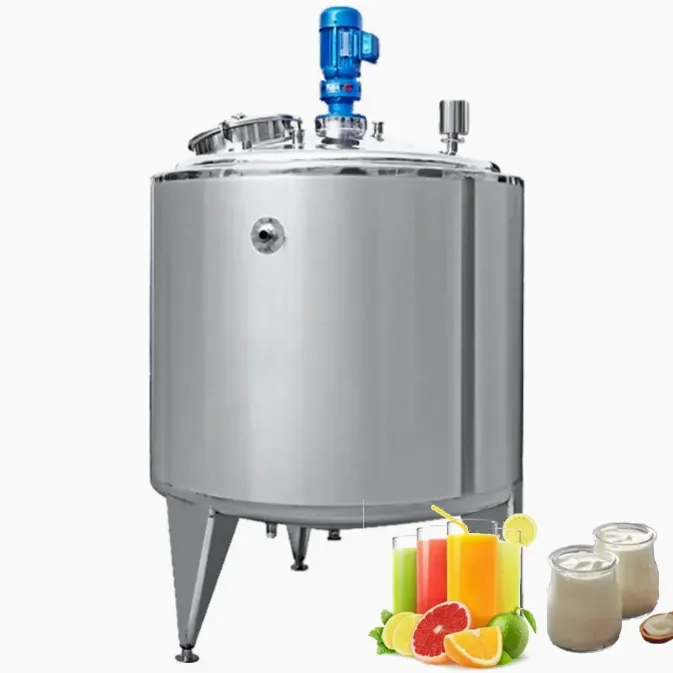
Stainless steel Wine Beer Water Milk Chocolate Vertical Jacketed Square Dissolving Holding Balance Storage Bulk Heating Cooling Buffer Melting Tank
PRODUCT DESCRIPTION
Description
Storage tanks are engineered vessels designed for the safe containment and management of liquids, semi-liquids, or gases across sanitary and industrial environments.
They are commonly manufactured from stainless steel to ensure hygiene, corrosion resistance, and long-term durability.
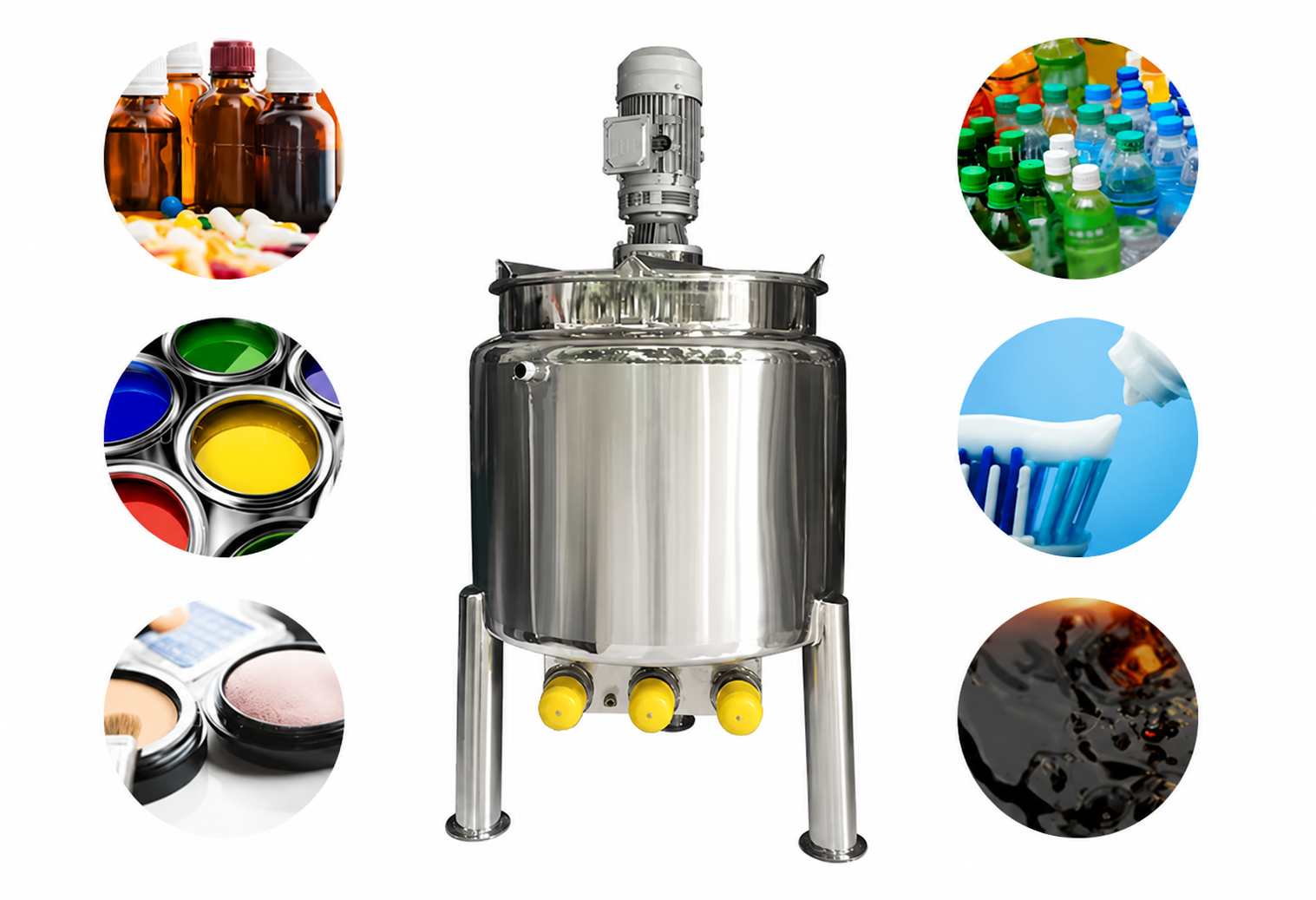
These tanks are widely used in food and beverage processing, pharmaceuticals, chemicals, cosmetics, and water treatment systems.
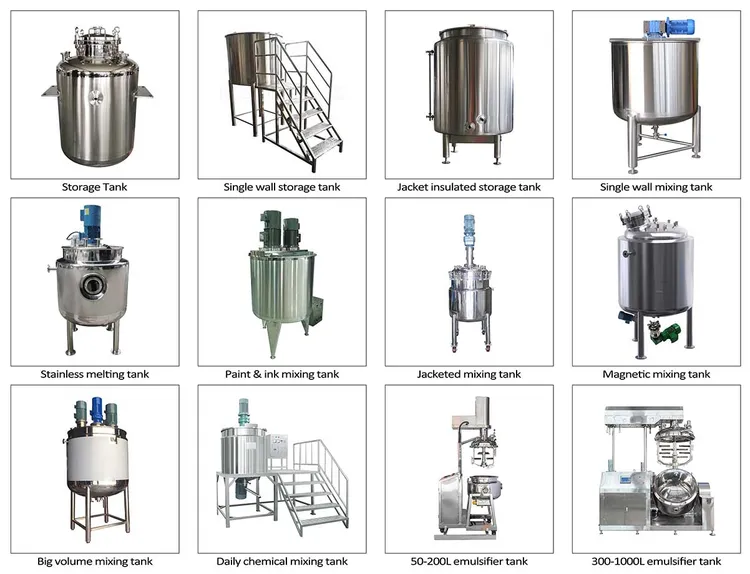
Their designs can include vertical or horizontal configurations, insulated or non-insulated structures, and optional features such as agitators, level indicators, and manways.
By providing controlled, hygienic storage, storage tanks help maintain product stability, prevent contamination, and support efficient production workflows.
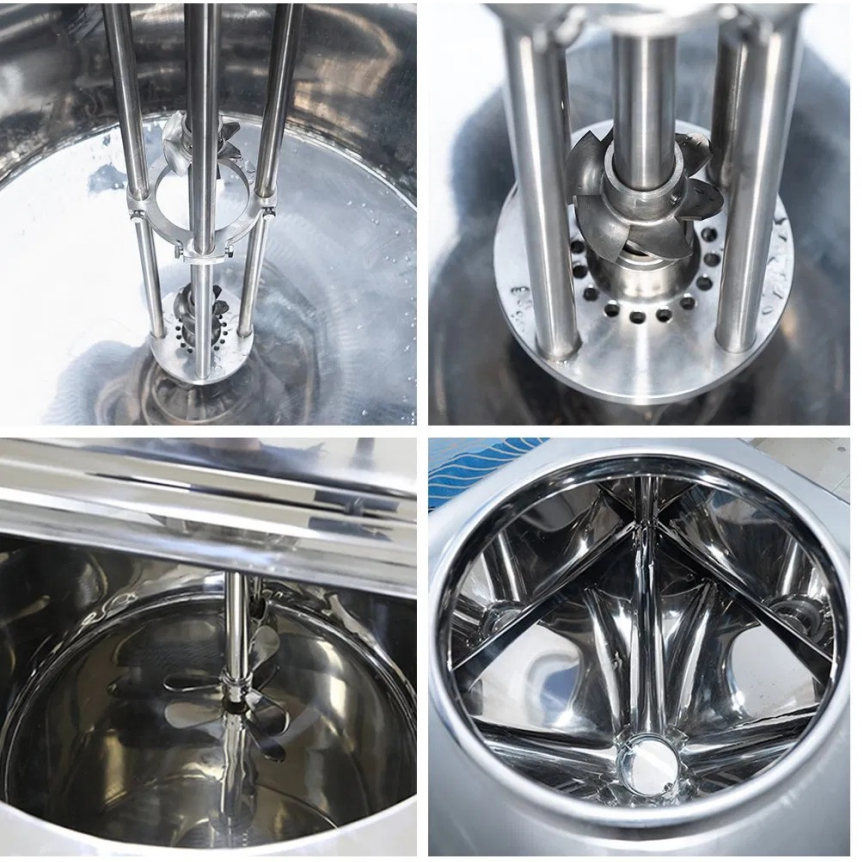
Have different kinds of agitators:
1, Bottom magnetic agitator with propeller impeller, speed from 50-400rpm or 50-800rpm. this kind of agitator is mixing thin viscosity , such as eyedrop, injection, CIP liquid, water, etc.
2, Top mechancial agitator with propeller impeller, speed at fix 71rpm or adjustable 20-200rpm or special requirement. this kind of agitator is mixing syrup, injection, blood, oral liquid, culture media, etc.
3, Top mechanical agitator with anchor or frame impeller, speed is from 10-70rpm. it is mixing higher viscosity , such as sediment or viscosity oral liquid, etc.
4, Top emusification homogenizer, speed max 2900rpm for small vessel, 1480rpm for bigger tank. this kind of agitator is mixing most high viscosity , such as suspension, oil, fat emulsification , etc.
5, Bottom emusification homogenizer, speed max 2900rpm for small vessel, 1480rpm for bigger tank. this kind of agitator is mixing most high viscosity , such as suspension, oil, fat emulsification , etc.
Working Principle
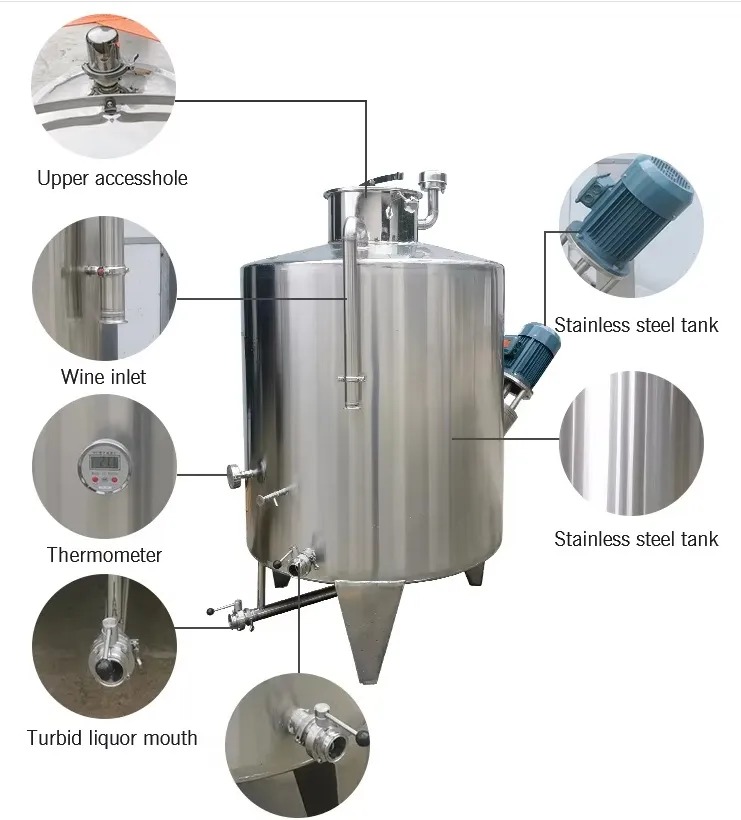
The working principle of storage tanks focuses on secure containment combined
with controlled handling of stored media. Fluids enter the tank through inlet connections and
are held under stable pressure and temperature conditions suited to the process requirements.
Depending on application needs, tanks may integrate mixing, heating, cooling,
or circulation systems to maintain uniform composition.
Outlets allow controlled discharge for downstream processing,
while venting and sealing components ensure safety and cleanliness.
Through precise structural design and process control, storage tanks enable reliable material management,
reduced losses, and consistent product quality throughout industrial and sanitary operations.
Capacity: 100 L – 10,000 L
Material Finish: Ra ≤ 0.6–0.8 μm
Agitator Type: Top-mounted / Bottom-mounted / Magnetic / None
Mixing Speed: 5 – 120 rpm (VFD adjustable)
Temperature Range: -20 °C to 150 °C
Pressure: Atmospheric,Vacuum (≤ -0.098 MPa),Pressurized (≤ 0.3 MPa)
Jacket Type: Single jacket / Dimple jacket / Coil jacket / No jacket
Standards: 3A / FDA / GMP / ASME
Quality guarantee of 3 years
ISO 9001, FDA, SGS approved materials
7-10 days fast delivery on urgent requirements
20 years' Rich exporting experience to make you easy and happy with custom work
Stainless steel sanitary tanks are widely used in high-cleanliness industries and have the following significant feature:
1.High hygienic performance ensures safe storage of sensitive liquids,
effectively preventing contamination while maintaining product purity,
stability, and compliance with strict food, pharmaceutical,
and cosmetic processing standards throughout long-term storage cycles.
2.Excellent corrosion resistance allows storage tanks to handle aggressive
or high-purity media reliably, extending service life, reducing maintenance frequency,
and ensuring consistent performance under demanding sanitary and industrial operating conditions.
3.Flexible capacity and design options support customized process integration,
enabling efficient storage, buffering, and material management for batch
or continuous production lines across diverse processing environments.
4.Stable structural strength enables safe operation under controlled pressure
and temperature, ensuring reliable containment, minimizing leakage risks,
and supporting consistent downstream process performance in industrial applications.
5.Efficient thermal compatibility allows integration with heating or cooling systems,
helping maintain optimal material conditions, improve energy utilization,
and support precise temperature control during storage and transfer operations.
Related Product Display
FAQ
Q: How about payment term, payment safety and delivery time?
A: We accept 40% deposit, balance before shipment. And Irrevocable L/C at sight.Delivery time is 7 to 30 days. It is according to order quantity.
Q: How could we confirm the products?
A: Our professional engineers will follow up all the designs and ajustments according to your requirement.OEM and ODM available.
Q: What services can we provide?
A:Accepted Delivery Terms: FOB,CFR,CIF,EXW,DDP,DDU,Express Delivery;
Accepted Payment Currency:USD,EUR,CNY;
Accepted Payment Type: T/T,L/C,Credit Cardl,Western Union,Alipay;
Q: How can I know your machine works well?
A: Before delivery, we shall test the machine working condition for you.
Q: What's your MOQ?
A: 1 set.
Buffer & Intermediate Blending Storage Tank: Complete Guide to Design, Applications, Features, and Benefits
Introduction
A Buffer & Intermediate Blending Storage Tank is an essential piece of equipment used in modern processing industries to ensure smooth production flow, stable product quality, and efficient material handling. Whether in food and beverage manufacturing, pharmaceutical production, dairy processing, biotechnology, cosmetics, or chemical industries, these tanks play a critical role in storing, blending, and maintaining intermediate products between different stages of production.
As production systems become increasingly automated and continuous, manufacturers require reliable storage and blending solutions that can balance process fluctuations, maintain product consistency, and prevent downtime. buffer blending tanks are specifically designed to fulfill these requirements by acting as temporary holding vessels while simultaneously providing mixing and homogenization capabilities.
This comprehensive guide explores the working principles, design characteristics, applications, technical specifications, advantages, and selection criteria of Buffer & Intermediate Blending Storage Tanks.
What Is a Buffer & Intermediate Blending Storage Tank?
A Buffer & Intermediate Blending Storage Tank is a specialized vessel used to temporarily store, mix, homogenize, and stabilize liquids or semi-liquid materials during industrial processing operations.
The term "buffer" refers to the tank's ability to absorb production fluctuations between upstream and downstream equipment. The term "intermediate blending" refers to its role in mixing ingredients, additives, concentrates, or process liquids before the next manufacturing stage.
These tanks are commonly installed between:
·
Raw material preparation systems
·
·
Mixing stations
·
·
Pasteurization systems
·
·
Fermentation equipment
·
·
Filling lines
·
·
Packaging systems
·
·
Chemical processing units
·
The primary purpose is to maintain continuous production while ensuring uniform product quality.
Main Functions of Buffer & Intermediate Blending Storage Tanks
Temporary Product Storage
The tank provides short-term storage for liquids waiting to enter the next processing stage.
Benefits include:
·
Production balancing
·
·
Reduced downtime
·
·
Stable product flow
·
·
Improved process flexibility
·
Product Homogenization
Integrated agitators continuously mix the product to maintain consistency.
Applications include:
·
Beverage concentrates
·
·
Dairy products
·
·
Pharmaceutical solutions
·
·
Chemical formulations
·
Process Buffering
Production rates often vary between equipment. Buffer tanks compensate for these differences by serving as an intermediate reservoir.
Advantages include:
·
Continuous production
·
·
Equipment protection
·
·
Reduced bottlenecks
·
·
Improved line efficiency
·
Ingredient Blending
Many manufacturing processes require accurate blending of multiple ingredients.
Examples include:
·
Flavor additions
·
·
Sugar syrup mixing
·
·
Chemical additives
·
·
Pharmaceutical ingredients
·
Industries Using Buffer & Intermediate Blending Storage Tanks
Food Processing Industry
Food manufacturers use blending storage tanks for:
·
Fruit juice production
·
·
Sauce manufacturing
·
·
Dairy processing
·
·
Edible oil blending
·
·
Beverage preparation
·
Food-grade Stainless steel construction ensures compliance with hygiene standards.
Beverage Industry
The beverage sector relies heavily on buffer tanks for:
·
Soft drink production
·
·
Energy drink manufacturing
·
·
Mineral water processing
·
·
Tea beverage preparation
·
·
Functional beverage blending
·
Continuous agitation prevents ingredient separation and maintains product uniformity.
Dairy Industry
Dairy applications include:
·
Milk storage
·
·
Yogurt preparation
·
·
Cream blending
·
·
Ice cream ingredient mixing
·
·
Cheese processing
·
Temperature-controlled tanks help maintain product freshness.
Pharmaceutical Industry
Pharmaceutical manufacturers use intermediate blending tanks for:
·
Buffer solutions
·
·
Liquid medicines
·
·
Syrup formulations
·
·
Sterile product preparation
·
·
Active ingredient blending
·
Sanitary design and high surface finish standards are critical in these applications.
Cosmetic Industry
Common cosmetic applications include:
·
Lotion blending
·
·
Shampoo preparation
·
·
Cream production
·
·
Serum mixing
·
·
Personal care product manufacturing
·
Precise mixing ensures product texture and stability.
Chemical Industry
Chemical plants utilize these tanks for:
·
Intermediate chemical storage
·
·
Reagent blending
·
·
Solvent mixing
·
·
Process buffering
·
·
Specialty chemical preparation
·
Corrosion-resistant materials ensure long service life.
Construction Materials
Stainless Steel 304
Features:
·
Excellent corrosion resistance
·
·
Affordable cost
·
·
Food-grade compatibility
·
·
Easy cleaning
·
Suitable for:
·
Water
·
·
Juice
·
·
Milk
·
·
Beverage products
·
Stainless Steel 316L
Features:
·
Superior corrosion resistance
·
·
Higher chemical compatibility
·
·
Better pharmaceutical performance
·
·
Enhanced durability
·
Suitable for:
·
Pharmaceutical products
·
·
High-salt liquids
·
·
Acidic products
·
·
Chemical solutions
·
Typical Structural Components
A standard Buffer & Intermediate Blending Storage Tank consists of:
Component | Function |
Tank Body | Product storage |
Agitator | Product mixing |
Motor Reducer | Agitator drive |
Manway | Inspection access |
Inlet Port | Material entry |
Outlet Valve | Product discharge |
CIP Spray Ball | Automatic cleaning |
Level Sensor | Product monitoring |
Temperature Sensor | Process control |
Support Legs | Structural stability |
Agitation Systems
Efficient mixing is one of the most important functions of a blending tank.
Propeller Agitator
Advantages:
·
High circulation
·
·
Energy efficient
·
·
Suitable for low-viscosity liquids
·
Applications:
·
Water
·
·
Juice
·
·
Milk
·
Paddle Agitator
Advantages:
·
Gentle mixing
·
·
Reduced foaming
·
·
Uniform blending
·
Applications:
·
Dairy products
·
·
Syrups
·
·
Cosmetic products
·
Anchor Agitator
Advantages:
·
Handles high-viscosity materials
·
·
Scrapes tank walls
·
·
Improves heat transfer
·
Applications:
·
Creams
·
·
Gels
·
·
Thick sauces
·
Heating and Cooling Systems
Many products require precise temperature control.
Jacketed Tanks
A jacket surrounds the tank body and allows circulation of:
·
Steam
·
·
Hot water
·
·
Chilled water
·
·
Glycol
·
Benefits:
·
Uniform temperature
·
·
Product quality protection
·
·
Improved process control
·
Insulated Tanks
Insulation minimizes heat loss and energy consumption.
Common insulation materials:
·
Polyurethane foam
·
·
Rock wool
·
·
Mineral wool
·
Surface Finish Requirements
Surface finish significantly affects hygiene performance.
Industry | Surface Roughness |
Food Processing | Ra ≤ 0.8 μm |
Beverage Production | Ra ≤ 0.8 μm |
Dairy Processing | Ra ≤ 0.6 μm |
Pharmaceutical Industry | Ra ≤ 0.4 μm |
Benefits include:
·
Easier cleaning
·
·
Reduced bacterial growth
·
·
Improved product safety
·
Typical Capacity Range
Buffer & Intermediate Blending Storage Tanks are available in various sizes.
Capacity | Application |
500 L | Laboratory production |
1,000 L | Small factories |
2,000 L | Beverage processing |
5,000 L | Dairy production |
10,000 L | Industrial processing |
20,000 L | Large-scale manufacturing |
50,000 L | Continuous production plants |
Custom capacities can also be manufactured.
Technical Specification Example
Parameter | Specification |
Capacity | 5,000 L |
Material | SS304 / SS316L |
Mixing Speed | 20-120 RPM |
Motor Power | 2.2-7.5 kW |
Surface Finish | Mirror Polish |
Temperature Range | 0-150°C |
Pressure | Atmospheric |
Insulation | Optional |
CIP System | Available |
Control System | PLC Optional |
Advantages of Buffer & Intermediate Blending Storage Tanks
Improved Product Quality
Continuous mixing ensures uniform distribution of ingredients.
Results include:
·
Better taste consistency
·
·
Uniform texture
·
·
Stable product appearance
·
Enhanced Production Efficiency
Buffer tanks reduce downtime by maintaining continuous material flow.
Benefits:
·
Higher productivity
·
·
Reduced waiting time
·
·
Better equipment utilization
·
Flexible Manufacturing
Manufacturers can process multiple product batches more efficiently.
Advantages include:
·
Quick recipe changes
·
·
Reduced production interruptions
·
·
Improved scheduling flexibility
·
Lower Operating Costs
Efficient blending reduces:
·
Product waste
·
·
Labor costs
·
·
Energy consumption
·
Improved Hygiene
Sanitary design features include:
·
Polished surfaces
·
·
CIP Cleaning Systems
·
·
Hygienic fittings
·
·
Dead-zone-free construction
·
Clean-in-Place (CIP) Compatibility
Modern blending tanks are designed for automatic cleaning.
Typical CIP process:
1.
Pre-rinse
2.
3.
Alkaline cleaning
4.
5.
Water rinse
6.
7.
Acid cleaning
8.
9.
Final rinse
10.
11.
Sanitization
12.
Benefits:
·
Reduced labor
·
·
Faster cleaning
·
·
Improved hygiene
·
·
Consistent cleaning results
·
Automation and Control Systems
Advanced tanks may include:
·
PLC control systems
·
·
Touchscreen interfaces
·
·
Temperature monitoring
·
·
Level control
·
·
Agitator speed control
·
·
Remote monitoring
·
Automation improves process consistency and operational efficiency.
Factors to Consider When Selecting a Tank
Production Capacity
Choose a tank capable of handling peak production demand.
Product Characteristics
Consider:
·
Viscosity
·
·
Temperature
·
·
Acidity
·
·
Density
·
Material Compatibility
Select appropriate stainless steel grades for the product being processed.
Cleaning Requirements
Food and pharmaceutical applications require sanitary designs.
Future Expansion
Consider future production increases when sizing equipment.
Maintenance Requirements
Routine maintenance includes:
·
Agitator inspection
·
·
Seal replacement
·
·
Sensor calibration
·
·
Valve maintenance
·
·
Surface inspection
·
Preventive maintenance improves equipment lifespan and reliability.
Environmental Benefits
Modern blending tanks contribute to sustainable manufacturing through:
·
Reduced product waste
·
·
Lower energy consumption
·
·
Efficient cleaning systems
·
·
Water conservation
·
·
Longer equipment life
·
Future Trends
The industry continues to evolve with:
·
Smart manufacturing integration
·
·
Industrial IoT connectivity
·
·
Automated cleaning systems
·
·
Energy-efficient designs
·
·
Advanced process monitoring
·
·
Digital maintenance management
·
These innovations help manufacturers achieve higher productivity and improved product quality.
Conclusion
Buffer & Intermediate Blending Storage Tanks have become indispensable in modern manufacturing environments. Their ability to provide temporary storage, process buffering, product homogenization, and ingredient blending significantly improves production efficiency and product consistency.
From food and beverage processing to pharmaceutical manufacturing and chemical production, these versatile tanks help maintain continuous operation while meeting increasingly strict quality and hygiene requirements. By selecting the appropriate tank design, material, mixing system, and automation level, manufacturers can optimize production performance, reduce operational costs, and ensure long-term reliability.
As industrial automation and quality standards continue to advance, Buffer & Intermediate Blending Storage Tanks will remain a critical component in efficient, high-performance production systems worldwide.
 +86 29-87031531





 Phone
Phone