Jacketed Conical Beer Fermenter
Dimple Jacketed Conical 500 Litre 1000 Litre 2000 Litre 5000L Beer Fermentation Tank.
PRODUCT DESCRIPTION
Description
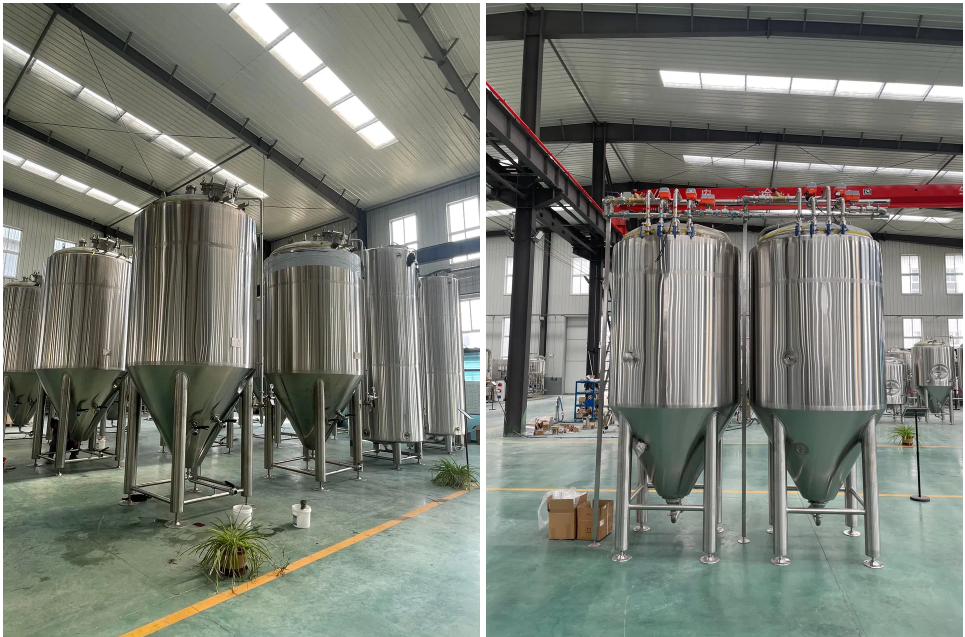
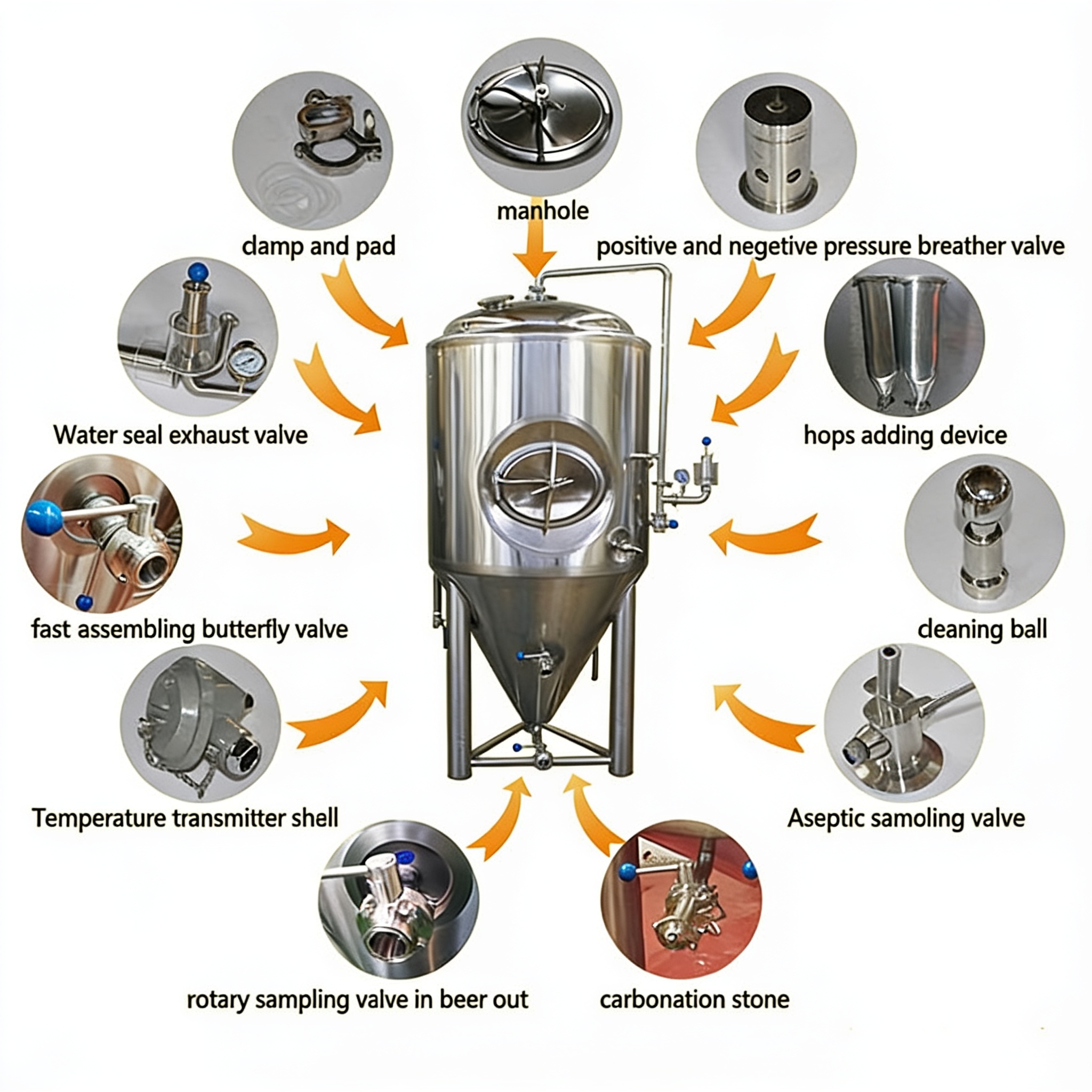
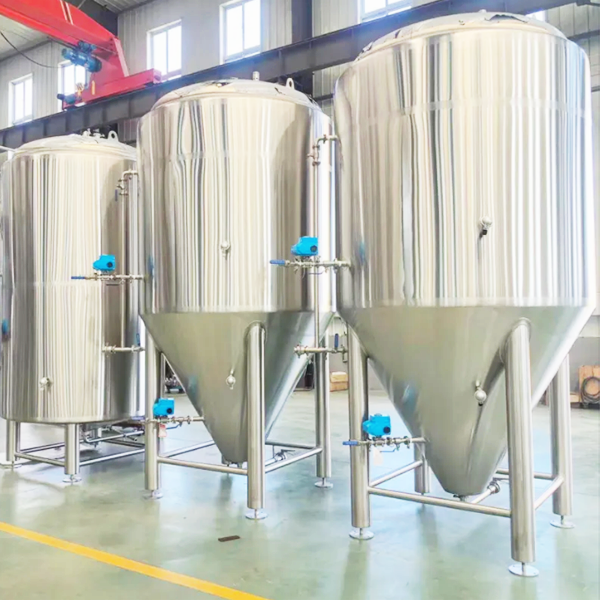
Conical fermentation tanks are special containers used in the Brewing industry for the fermentation and maturation of beer and other alcoholic beverages. They are called "cones" because of their unique shape: they have a conical base with tapered corners. Conical fermentation tanks are commonly used in breweries and distilleries and are available in a variety of sizes to suit different production volumes. Aelt Craft will provide custom-designed conical fermentation tanks based on the specific needs of a brewery or winery. It is made of food-grade 304 or 316 Stainless steel, which is durable, corrosion-resistant, and easy to clean. The conical fermentation tank contains a cooling jacket, sampling valve, and pressure relief system to meet different brewing needs.
Structure and Features
· Conical tanks facilitate the settling of sediment, improve product clarity, and reduce the need for additional filtration or clarifiers, thus enhancing the visual appeal of the final product.
· The tank can be equipped with a cooling jacket and temperature control system, allowing winemakers and winemakers to maintain precise temperature conditions during fermentation.
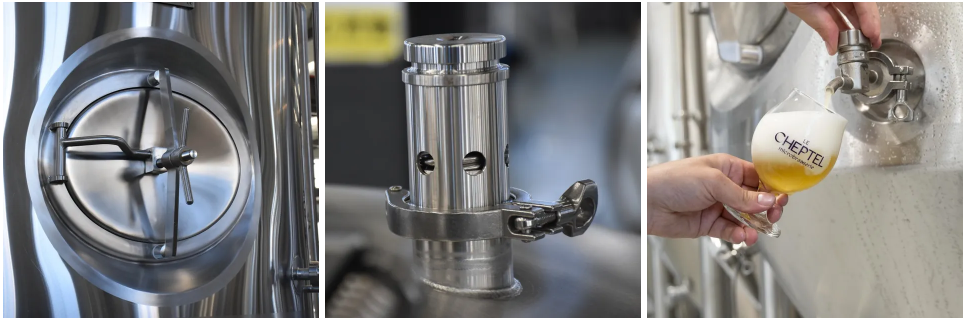
· Conical tanks typically have a sampling port or valve at the tip of the cone, allowing winemakers and distillers to easily draw samples for quality control and monitoring to accurately assess the progress and quality of the product.
· The tank allows for easy and efficient Harvesting of yeast and other solids that settle at the bottom of the tank, reducing the need to purchase new yeast strains and ensuring consistent flavor and fermentation performance.
Technical advantages
1)Our Fermentation tanks/tun available from 100L to 20000L (1 gallon to 20 gallon) and average 25% Head Space.
2) All tanks have a Dish top.
3)Cylinder body & 60/70° Cone Bottom.
4)Certified stainless steel(304,316) material for all tanks, with 100% TIG welded joints and seams with sanitary interior polish.
5) Dimple Plate jacket for Glycol cooling & high efficient Polyurethane foam insulated.
6)All tanks use Tri-clamp connections, are designed for up to 14.7 PSI and tested at 30 PSI.
7) We can customize fabricate any tank to meet your brewery's space and height restrictions.
Related Products
Project cases
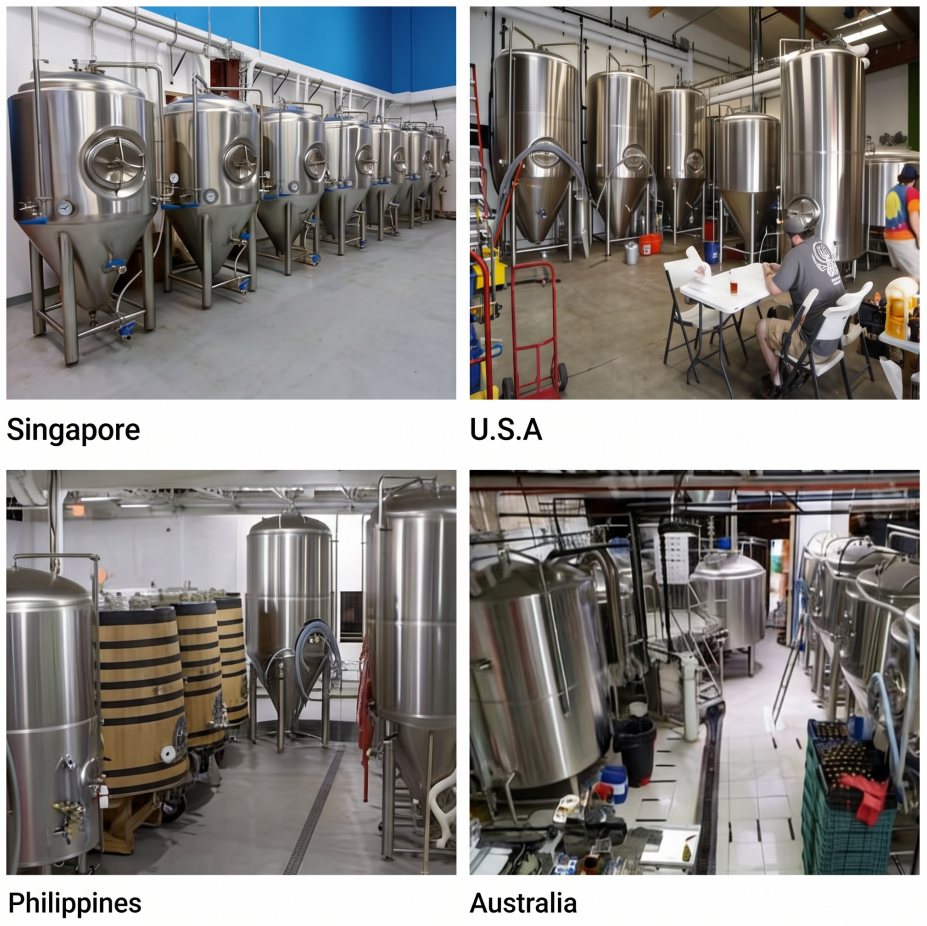
we have customer cases in the United States, Japan, South Korea, Australia, Philippines, Malaysia,Thailand,the United Kingdom, Mexico, Spain, Singapore and Canada.
FAQ
Q: How about payment term, payment safety and delivery time?
A: We accept 40% deposit, balance before shipment. And Irrevocable L/C at sight.Delivery time is 7 to 30 days. It is according to order quantity.
Q: How could we confirm the products?
A: Our professional engineers will follow up all the designs and ajustments according to your requirement.OEM and ODM available.
Q: What services can we provide?
A:Accepted Delivery Terms: FOB,CFR,CIF,EXW,DDP,DDU,Express Delivery;
Accepted Payment Currency:USD,EUR,CNY;
Accepted Payment Type: T/T,L/C,Credit Cardl,Western Union,Alipay;
Q: How can I know your machine works well?
A: Before delivery, we shall test the machine working condition for you.
Q: What's your MOQ?
A: 1 set.
Beer Fermentation Tank: The Complete Guide to Stainless steel Beer fermentation Tanks for Modern Breweries
Introduction to Beer Fermentation Tanks
A beer fermentation tank is one of the most important pieces of equipment in the Brewing industry. It serves as the primary vessel where yeast converts sugars into alcohol, carbon dioxide, and a wide range of flavor compounds that define the final beer product. Whether used in a microbrewery, craft brewery, commercial brewery, brewpub, or industrial beer production facility, a high-quality beer fermentation tank directly impacts product consistency, taste, aroma, production efficiency, and profitability.
Modern beer fermentation tanks are typically manufactured from food-grade stainless steel and designed to provide precise temperature control, sanitary operation, pressure management, and efficient cleaning. As global demand for craft beer, lager beer, ale, wheat beer, IPA, stout, and specialty beverages continues to increase, breweries are investing in advanced fermentation systems that improve production capacity while maintaining exceptional product quality.
This comprehensive guide explores everything related to beer fermentation tanks, including design, construction materials, specifications, applications, advantages, working principles, maintenance requirements, and selection criteria.
What Is a Beer Fermentation Tank?
A beer fermentation tank is a sealed vessel specifically designed to support the fermentation process during beer production. Inside the tank, brewer's yeast consumes fermentable sugars derived from malted grains and converts them into ethanol and carbon dioxide.
The fermentation stage determines many critical beer characteristics:
Alcohol content
Flavor profile
Aroma complexity
Carbonation level
Clarity
Mouthfeel
Shelf stability
Modern breweries commonly use cylindrical-conical fermentation tanks because they allow fermentation, maturation, yeast collection, and cleaning within a single vessel.
Importance of Beer Fermentation Tanks in Brewing
The fermentation tank acts as the heart of the brewing process. Without proper fermentation control, even the highest-quality ingredients cannot produce premium beer.
Key Functions
| Function | Description |
|---|
| Fermentation | Converts sugar into alcohol |
| Temperature Control | Maintains ideal yeast activity |
| Pressure Management | Controls CO₂ production |
| Yeast Collection | Allows yeast Harvesting and reuse |
| Beer Conditioning | Improves flavor maturation |
| Carbonation | Supports natural carbonation |
| Sanitary Storage | Prevents contamination |
Proper fermentation equipment helps breweries achieve:
Consistent product quality
Reduced contamination risks
Higher production efficiency
Better yeast performance
Increased profitability
How Beer Fermentation Tanks Work
The beer fermentation process begins after wort production and cooling.
Step 1: Wort Transfer
Brewers transfer cooled wort into the fermentation tank.
Typical temperature ranges:
| Beer Style | Pitching Temperature |
|---|
| Lager | 7°C – 13°C |
| Ale | 16°C – 24°C |
| Wheat Beer | 17°C – 22°C |
| IPA | 18°C – 22°C |
Step 2: Yeast Addition
Selected brewing yeast is introduced into the tank.
Common yeast categories include:
Ale yeast
Lager yeast
Wheat beer yeast
Specialty yeast strains
Step 3: Active Fermentation
Yeast consumes fermentable sugars.
Chemical reaction:
Sugar → Alcohol + Carbon Dioxide + Heat
During active fermentation:
CO₂ is released
Alcohol develops
Flavor compounds form
Temperature rises
Step 4: Maturation
After primary fermentation, beer undergoes conditioning.
Benefits include:
Improved flavor balance
Reduced off-flavors
Enhanced clarity
Stabilized carbonation
Step 5: Yeast Collection
The conical bottom allows yeast to settle naturally.
Collected yeast can be:
Reused
Analyzed
Removed for cleaning
Step 6: Transfer or Packaging
Finished beer moves to:
Bright beer tanks
Carbonation tanks
Packaging lines
Keg filling systems
Types of Beer Fermentation Tanks
Several fermentation tank designs exist for different brewing requirements.
Cylindrical-Conical Fermentation Tank
The most widely used modern Fermentation vessel.
Features
Advantages
Open Fermentation Tank
Traditional fermentation vessel.
Characteristics
Advantages
Limitations
Horizontal Fermentation Tank
Commonly used in lager production.
Benefits
Larger yeast contact area
Improved lager fermentation
Enhanced flavor development
Unitank Fermentation System
A multifunctional vessel combining:
Fermentation
Conditioning
Carbonation
Storage
Benefits include:
Main Components of a Beer Fermentation Tank
Modern beer fermenters contain several engineered components.
Tank Shell
The primary vessel body.
Usually manufactured from:
SUS304 stainless steel
SUS316 stainless steel
Cone Bottom
The cone section collects:
Typical cone angle:
| Cone Type | Angle |
|---|
| Standard | 60° |
| Specialized | 70° |
Cooling Jacket
Maintains fermentation temperature.
Cooling methods include:
Pressure Relief Valve
Provides safety protection.
Functions:
Prevents overpressure
Protects tank structure
Sample Valve
Allows brewers to:
Carbonation Port
Supports controlled carbonation processes.
CIP Spray Ball
Provides automated cleaning.
Benefits:
Reduced labor
Improved hygiene
Consistent sanitation
Manway
Allows:
Inspection
Maintenance
Internal access
Stainless Steel Beer Fermentation Tanks
Stainless steel is the preferred material throughout the brewing industry.
Why Stainless Steel?
Corrosion Resistance
Beer contains:
Organic acids
Carbon dioxide
Alcohol
Stainless steel withstands these conditions effectively.
Sanitary Surface
Smooth surfaces prevent:
Bacterial growth
Product contamination
Long Service Life
Expected lifespan:
20–30 years or more with proper maintenance.
Stainless Steel Grades
SUS304
Most commonly used.
Advantages
SUS316
Premium option.
Advantages
Higher corrosion resistance
Better chloride protection
Suitable for aggressive cleaning chemicals
Material Comparison
| Feature | SUS304 | SUS316 |
|---|
| Corrosion Resistance | Excellent | Superior |
| Cost | Lower | Higher |
| Brewery Applications | Standard | Premium |
| Service Life | Long | Very Long |
Beer Fermentation Tank Capacity Options
Fermentation tanks are available in numerous sizes.
Small Brewery Tanks
| Capacity | Suitable For |
|---|
| 100L | Pilot brewing |
| 200L | Nano brewery |
| 300L | Research |
| 500L | Small brewpub |
Medium Brewery Tanks
| Capacity | Application |
|---|
| 1000L | Craft brewery |
| 2000L | Regional brewery |
| 3000L | Growing brewery |
| 5000L | Commercial brewery |
Large Brewery Tanks
| Capacity | Use |
|---|
| 10000L | Industrial production |
| 20000L | Large brewery |
| 30000L | Mass production |
| 50000L+ | Industrial scale |
Beer Fermentation Tank Technical Specifications
Typical Specifications
| Parameter | Range |
|---|
| Capacity | 100L–100,000L |
| Material | SUS304/SUS316 |
| Thickness | 2mm–6mm |
| Insulation | 50–100mm |
| Working Pressure | 0.1–0.3 MPa |
| Test Pressure | 0.2–0.5 MPa |
| Surface Finish | Mirror polished |
| Cooling Medium | Glycol |
| Cone Angle | 60° |
| Temperature Range | -5°C to 35°C |
Temperature Control in Beer Fermentation
Temperature control is critical to brewing success.
Why Temperature Matters
Improper temperature can cause:
Cooling Jacket Design
Modern tanks feature:
Dimple jackets
Laser-welded jackets
Glycol circulation zones
Temperature Zones
| Tank Area | Function |
|---|
| Upper Zone | Active fermentation |
| Lower Zone | Yeast management |
| Cone Zone | Sediment control |
Pressure Fermentation Technology
Pressure fermentation has become increasingly popular.
Advantages
Faster production cycles
Reduced ester formation
Improved carbonation
Lower oxygen exposure
Typical Pressure Ranges
| Style | Pressure |
|---|
| Ale | 5–15 PSI |
| Lager | 10–20 PSI |
| Specialty Beer | Custom |
Insulation Systems
Insulation improves temperature stability.
Common Materials
Polyurethane Foam
Benefits:
Insulation Thickness
| Capacity | Thickness |
|---|
| Small Tanks | 50mm |
| Medium Tanks | 80mm |
| Large Tanks | 100mm |
Surface Finishing Standards
Surface quality directly impacts sanitation.
Interior Finish
Typical roughness:
Ra ≤ 0.4 μm
Benefits:
Easier cleaning
Reduced bacterial growth
Better product quality
Exterior Finish
Options include:
Brushed finish
Mirror polish
Matte finish
Cleaning and Sanitization
Sanitation is critical in brewing operations.
CIP Cleaning Process
CIP stands for Clean-In-Place.
Typical Cleaning Steps
| Step | Function |
|---|
| Pre-rinse | Remove residue |
| Caustic Wash | Dissolve organics |
| Intermediate Rinse | Remove chemicals |
| Acid Wash | Remove mineral deposits |
| Final Rinse | Prepare for use |
Advantages of Modern Beer Fermentation Tanks
Improved Product Consistency
Automated controls reduce variability.
Enhanced Hygiene
Closed systems minimize contamination.
Better Yeast Management
Conical designs simplify yeast harvesting.
Reduced Labor Costs
Automation decreases manual intervention.
Higher Production Efficiency
Faster turnover increases output.
Improved Energy Efficiency
Advanced insulation reduces cooling demand.
Applications of Beer Fermentation Tanks
Beer fermentation tanks are widely used across multiple industries.
Craft Breweries
Craft breweries rely heavily on Stainless steel fermenters.
Benefits include:
Recipe flexibility
Small-batch production
Product innovation
Commercial Breweries
Large-scale breweries require:
Brewpubs
On-site brewing operations use compact fermentation systems.
Pilot Brewing Facilities
Research institutions utilize smaller tanks for:
Product development
Yeast testing
Process optimization
Beverage Production
Fermentation tanks can also support:
Hard cider
Kombucha
Fruit wine
Malt beverages
Selecting the Right Beer Fermentation Tank
Several factors should be evaluated before purchasing a fermentation tank.
Production Volume
Determine annual output goals.
Example
| Annual Production | Suggested Tank Size |
|---|
| Under 100 KL | 500L–1000L |
| 100–500 KL | 1000L–3000L |
| 500–2000 KL | 3000L–10000L |
| Above 2000 KL | 10000L+ |
Beer Styles
Different styles require different fermentation characteristics.
Lager Production
Requirements:
Ale Production
Requirements:
Faster turnover
Moderate cooling demands
Available Floor Space
Consider:
Ceiling height
Access pathways
Expansion plans
Automation Level
Available options:
Manual
Semi-automatic
Fully automatic
Common Beer Fermentation Tank Configurations
Single-Wall Tank
Advantages:
Applications:
Double-Wall Tank
Advantages:
Better thermal control
Improved efficiency
Most common industry choice.
Jacketed Fermentation Tank
Features:
Vertical vs Horizontal Fermentation Tanks
Comparison Table
| Feature | Vertical Tank | Horizontal Tank |
|---|
| Space Efficiency | Excellent | Moderate |
| Yeast Collection | Excellent | Limited |
| Cleaning | Easy | Moderate |
| Cost | Moderate | Higher |
| Lager Production | Good | Excellent |
Beer Fermentation Process Timeline
Typical Ale Fermentation
| Day | Activity |
|---|
| Day 1 | Yeast Pitching |
| Day 2–4 | Active Fermentation |
| Day 5–7 | Gravity Reduction |
| Day 8–14 | Conditioning |
Typical Lager Fermentation
| Stage | Duration |
|---|
| Primary Fermentation | 7–14 Days |
| Conditioning | 2–6 Weeks |
| Cold Storage | 1–4 Weeks |
Energy Efficiency in Beer Fermentation Tanks
Energy costs represent a significant brewery expense.
Efficiency Features
Polyurethane Insulation
Reduces heat transfer.
Zoned Cooling
Allows targeted temperature control.
Automated Controllers
Optimize cooling cycles.
Automation and Smart Brewery Integration
Modern fermentation tanks increasingly include digital technologies.
Automation Features
PLC control systems
Touchscreen interfaces
Remote monitoring
Data logging
Alarm systems
Recipe management
Benefits
| Feature | Advantage |
|---|
| Automation | Consistency |
| Monitoring | Quality Control |
| Data Collection | Process Optimization |
| Remote Access | Operational Flexibility |
Maintenance of Beer Fermentation Tanks
Routine maintenance ensures long-term performance.
Daily Inspection
Check:
Temperature readings
Pressure gauges
Valves
Fittings
Weekly Maintenance
Inspect:
Cooling systems
CIP performance
Sensor accuracy
Annual Maintenance
Evaluate:
Weld integrity
Pressure testing
Surface condition
Safety components
Common Problems and Solutions
Temperature Fluctuation
Causes
Cooling system failure
Sensor malfunction
Solution
Poor Fermentation Performance
Causes
Yeast health issues
Oxygen deficiency
Solution
Improve yeast management
Optimize aeration
Contamination
Causes
Inadequate sanitation
Damaged seals
Solution
Future Trends in Beer Fermentation Tank Technology
The brewing industry continues to evolve rapidly.
Smart Fermentation Systems
Advanced sensors enable:
Real-time monitoring
Predictive maintenance
Automated adjustments
Sustainable Brewing Equipment
New designs focus on:
Reduced water usage
Lower energy consumption
Improved heat recovery
Advanced Stainless Steel Technologies
Innovations include:
Enhanced corrosion resistance
Superior surface finishing
Longer equipment lifespan
Frequently Asked Questions About Beer Fermentation Tanks
What is the ideal material for a beer fermentation tank?
Food-grade SUS304 stainless steel is the industry standard due to its durability, corrosion resistance, and sanitary properties.
How long does beer fermentation take?
Ale fermentation generally requires 7–14 days, while lager fermentation may require several weeks of conditioning.
Why are conical fermentation tanks popular?
Conical tanks simplify yeast collection, improve sanitation, and support efficient brewing operations.
What pressure can a beer fermentation tank handle?
Most modern tanks operate between 0.1 MPa and 0.3 MPa, depending on design specifications.
How often should fermentation tanks be cleaned?
A complete CIP cleaning cycle should be performed after every production batch.
Conclusion
A Beer Fermentation Tank is a fundamental component of Modern brewing systems, playing a crucial role in transforming wort into high-quality beer. From small craft breweries to large industrial brewing facilities, stainless steel fermentation tanks provide the controlled environment necessary for yeast activity, flavor development, carbonation, and product consistency.
Modern beer fermentation tanks offer numerous advantages, including precise temperature control, pressure management, automated cleaning, energy efficiency, superior sanitation, and long service life. Available in capacities ranging from 100 liters to more than 100,000 liters, these tanks can be customized to meet the needs of virtually any brewing operation.
As brewing technology continues to advance, intelligent fermentation systems, automated controls, sustainable designs, and high-performance stainless steel construction will remain key factors driving brewery productivity and beer quality. Investing in the right fermentation tank is essential for achieving reliable fermentation performance, maximizing production efficiency, and producing premium beer that meets the expectations of today's competitive beverage market.
 +86 29-87031531



 Phone
Phone