Steam-Heated Mash Lauter & Boiling Tank
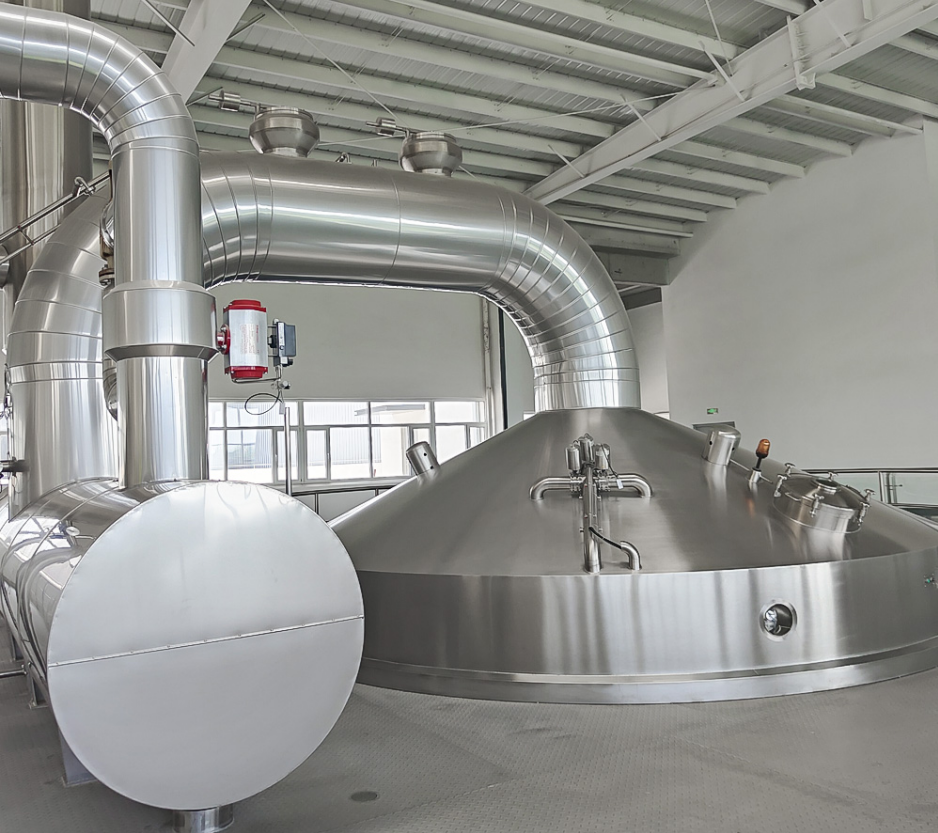
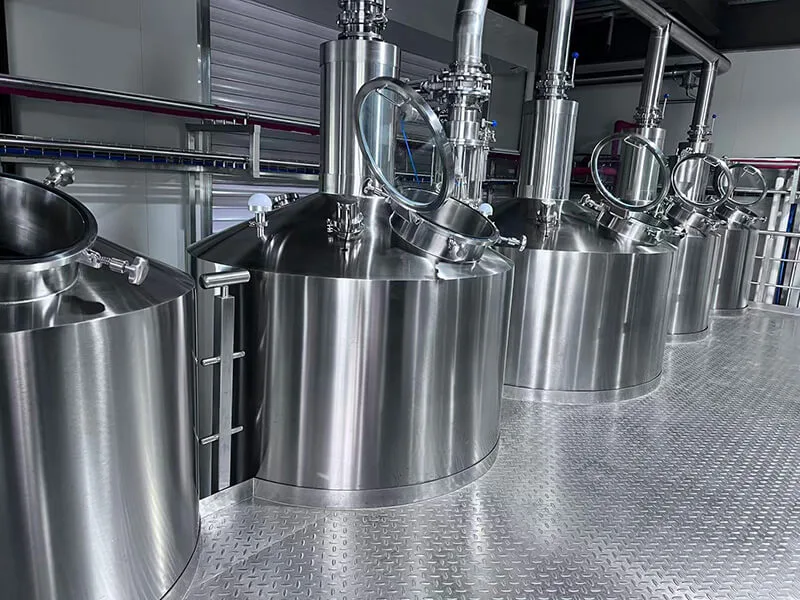
This steam-heated mash lauter & boiling tank integrates mashing, lautering and wort boiling in one vessel. Malt starch is converted to fermentable sugar during saccharification. After lautering to separate spent grain, sweet wort is boiled directly in the same tank with steam heating for sterilization and hopping.
PRODUCT DESCRIPTION
Description
The combined Mash/Lauter Tank integrates all functions of the mash tun and lauter tun, two key components of a brewhouse, within a single vessel assembly, where the entire mashing process takes place.
Combining the functions of the mash tun and lauter tun into one vessel unit improves efficiency and reduces the cost of brewing equipment.
The combined mash/lauter tun integrates all functions of the mash tun and lauter tun in one tank: Grains are pre-crushed in the mill and then mixed with metered hot water. Complex starches are converted into fermentable monosaccharides. The wort is recirculated over the grain bed in a process known as vorlauf. During sparging, sugars are rinsed and extracted from the grains. The false bottom screen separates the spent grain from the wort before transferring the sweet wort to the brew kettle.
Main Component & Process Flow
1. Beer Brewing Process
1. Malt Production: First of all, we carefully select premium raw materials from local farmers. Grains (barley) are steeped and germinated to convert insoluble starch into fermentable sugars that yeast can turn into alcohol. The resulting "green malt" is then dried at varying temperatures to develop different malt colours and flavours. We are the only brewery in the region with in-house malt production equipment. This allows us full control over the whole process and guarantees optimal quality for our distinctive Cascade beer.
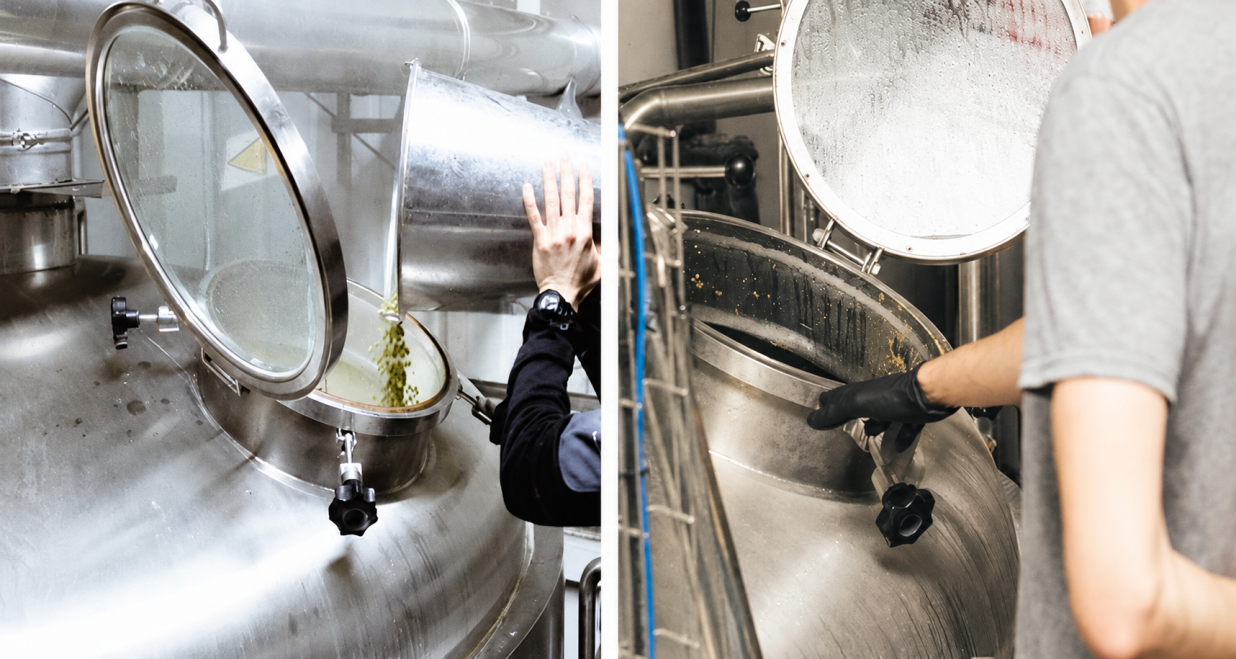
2. Saccharification: Inside the mash tun, water at the appropriate temperature is added to malt, converting starch in malt into natural fermentable sugars that yeast can “feed on”. The water we use is not ordinary water — it is sourced from a special zone directly behind the brewery. It is reputed to be one of the purest water sources in the world, originating directly from rain clouds over unpolluted southern regions.
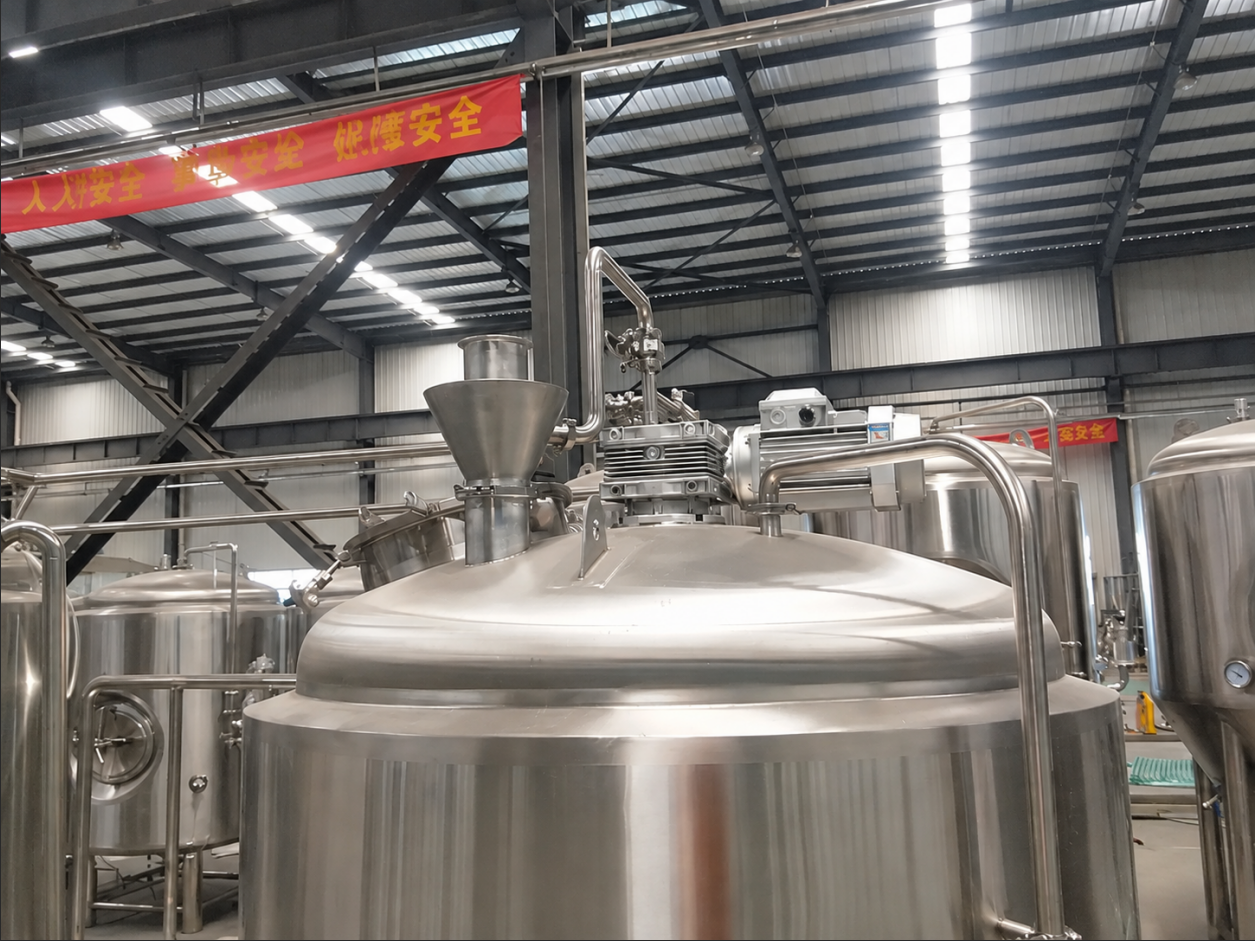
3. Lautering: Lautering is the process of separating sweet wort from spent grain husks. The spent grain generated in this step is recycled as livestock feed for local farms, which is essential before starting a new brewing cycle.
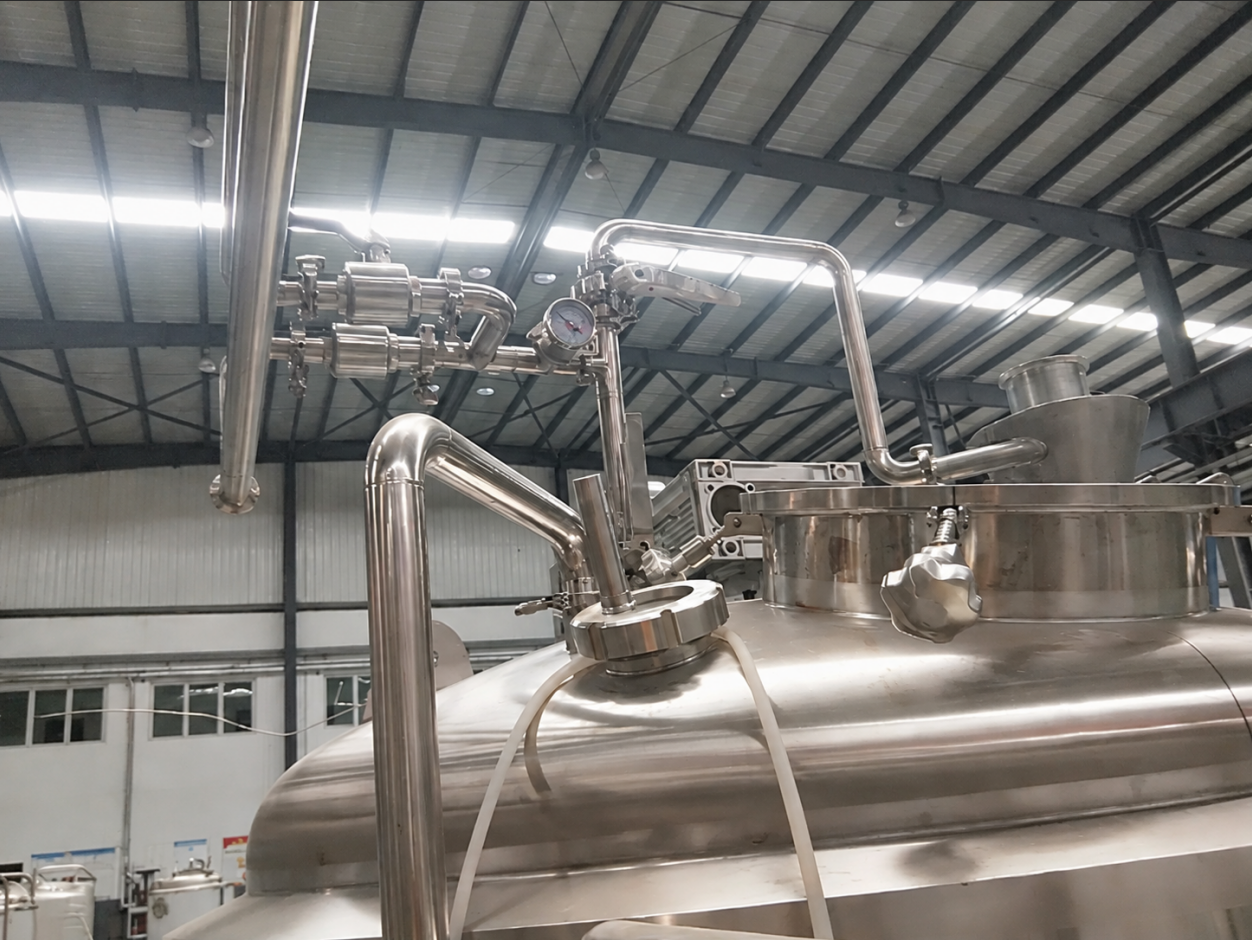
4. Boiling: The wort is then transferred to the brew kettle. Fresh local hops are manually added during boiling. This stage takes around one hour for concentration, sterilisation and multiple biochemical reactions. Alpha acids in hops contribute bitterness to beer, while hop oils deliver the unique hop aroma. You may think of this step as “seasoning the beer”.
2. Brewing
Brewing is a complex chemical reaction carried out at controlled temperatures. Starch is converted into soluble sugars. After boiling together with hops, fermentation commences once sufficient yeast is added, converting sugars into alcohol, carbon dioxide and other metabolites. After filtration and sterilisation, fresh beer is ready for consumption.
These tanks are used for saccharification: to enable starch reaction and produce soluble sugars. The mixture is then boiled in the brew kettle, followed by fermentation. Hot wort is obtained at this stage. For this process, we require a mash/lauter tun, a brew kettle for wort boiling, and a hot water tank capable of continuous hot water supply.
3. Fermenter
We now have a liquid with balanced malt flavour and bitterness; however, one key component is still missing: alcohol. Yeast acts as the fermentation medium. Without yeast, no alcohol can be produced. That is why we favour Cascade yeast. This yeast strain has been repeatedly tested and proven reliable, unchanged since the 1820s. It perfectly matches our raw materials and brewing process and remains one of our core secrets.
Maturation: “Green beer” is stored at low temperature for maturation. This step is especially critical for lager beer, whose delicate flavour requires time to develop complex layers. The beer continues fermenting here, which takes approximately 2–3 weeks or longer.
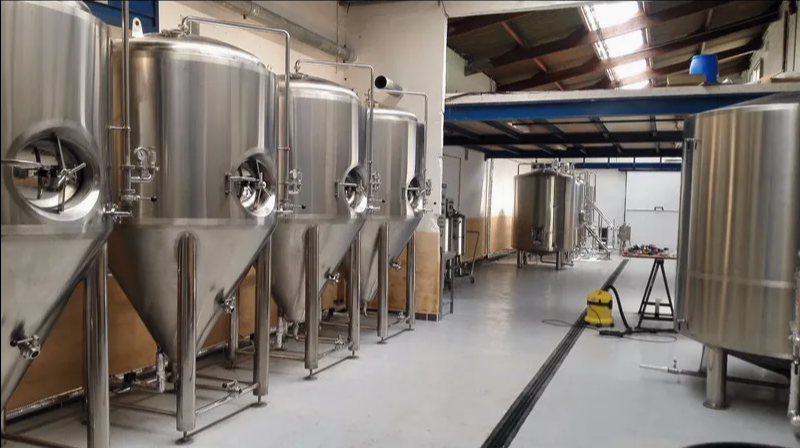
You may select the number of Conical fermenters according to actual output. Cooling is achieved via dimple jackets surrounding the tank. If your mash tun and brew kettle have a working volume of 1000 L, fermenters can be sized at 1000 L or 2000 L. A ratio of 1:1 or 1:2 is recommended.
4. Bright Beer Tank (BBT)
Proper maturation is vital to beer taste. Beer can be transferred from fermenters into bright beer tanks for final conditioning. Bright beer tank (BBT) has a similar structure to fermenters, but it holds finished beer ready for direct consumption. BBTs are usually connected to bottle fillers, keg fillers or canning lines. A complete brewing line for most large breweries is equipped with bright beer tanks.
5. Ice Water Tank
Ice water tanks are generally used for rapid beer cooling. Ice channel jackets are fitted around the tank body.
6. Other Essential Equipment
1. Control System — Equipped with PLC touch screen or digital display, supporting fully automatic or semi-automatic brewing. Multiple design styles available.
2. Mill — Used to grind malt into fine particles.
3. Refrigeration System — Plate heat exchanger and chiller to cool hot wort in the ice water tank.
4. CIP Cleaning System — Cleans and sanitises the inner surface of all tanks.
5. Filtration System — Beer is filtered to remove unwanted proteins and yeast. The beer at this stage is called bright beer, including golden ale.
6. Filling & Cleaning System — Beer tastes freshest when filled into bottles, cans or kegs. Therefore we deliver promptly to bars and liquor stores across regions. After all, the secret of beer is simple: “Drink fresh for best quality.”
7. Water pump and yeast dosing unit
8. Brewing Equipment Accessories: Relevant pipelines and various valves / Food-grade hose No.25 / Steel wire reinforced hose No.38 Iron-shell thermometer / Platinum resistance thermometer / Butterfly gasket / Saccharometer / Aeration stone / Graduated cylinder
Main Equipment Parameters
Item | Description | Specification |
Milling System | Mill | Double roller, noise<60 dB |
Heating System | Boiler (steam heating) | Electric or steam |
Brewing System | Mash/Lauter Tun | Heating jacket; Material: 304/316 Stainless steel or red copper; 1 thermometer per tank |
| Boiling/Whirlpool Tank | Heat exchanger |
| License Plate Type | — |
Fermentation System | Fermenter | Top manhole / side manhole, dimple jacket |
| Yeast Dosing Tank | SS304 stainless steel |
Refrigeration System | Chiller | With control system |
| Pump/Valve | Adjustable |
| Ice Water Tank | Fluorine charged |
CIP Cleaning System | Acid Tank | SS304 fully welded |
| Alkali Tank | — |
| Pump | Adjustable |
Control System | Control Cabinet | Semi-automatic |
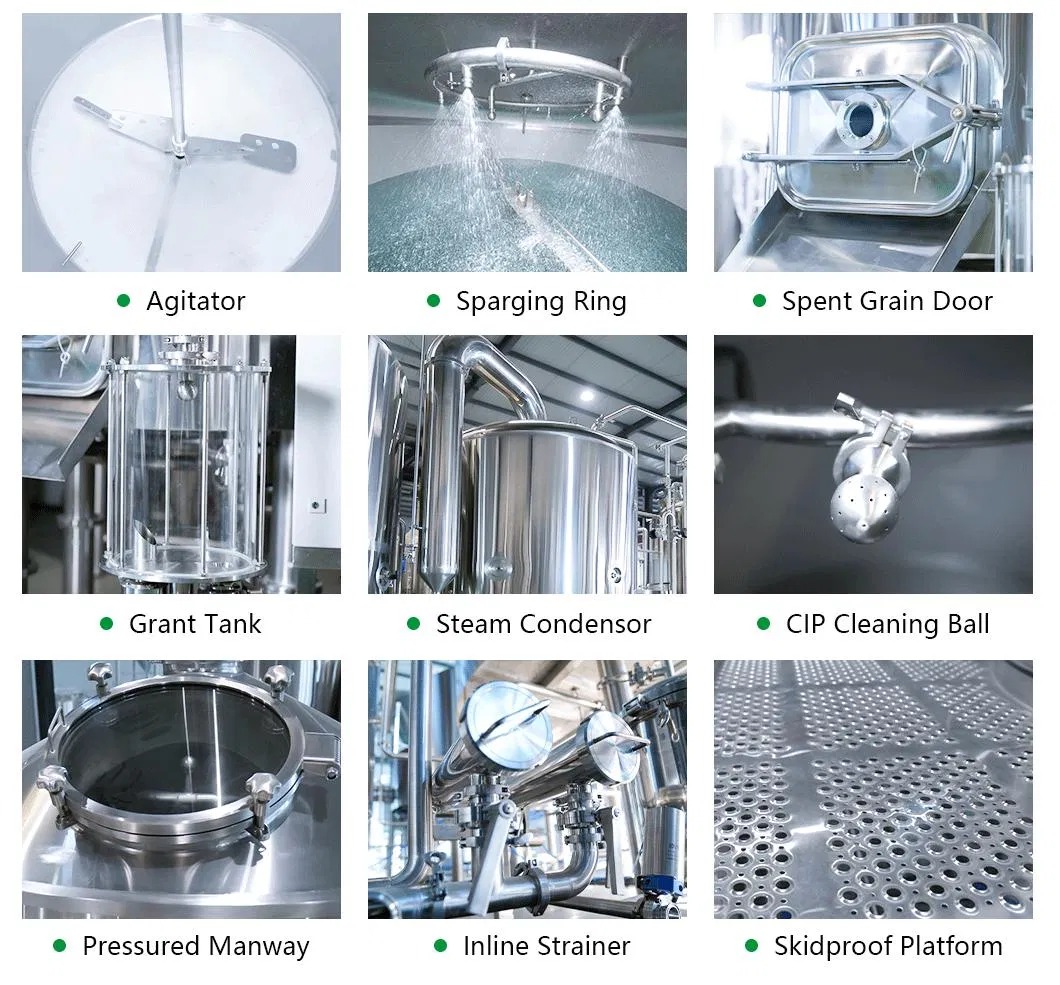
The combination is different, but the requirements are the same
1. The shape of the bottom of the pot s conducive to the circulation of the
2. There is sufficient heating area and reasonable heating device;
3. The structure of the riser is reasonable;
4. The shape of the bottom of the pot s conducive o the circulation of the
liquid, has a good heat transfer effect, and saves stirring power, liquid, has a good heat transfer effect, and saves stirring power;
5. There is sufficient heating area and reasonable heating device
6. The structure of the riser is reasonable;
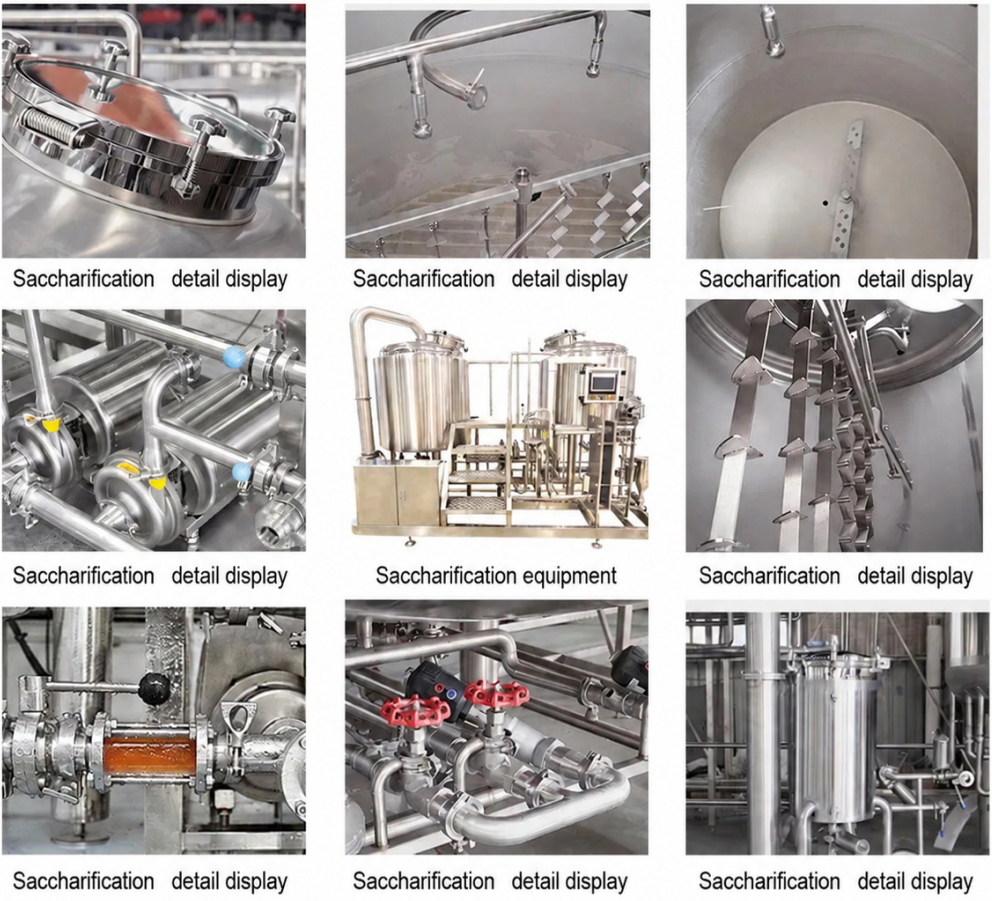
FAQ
Q: How about payment term, payment safety and delivery time?
A: We accept 40% deposit, balance before shipment. And Irrevocable L/C at sight.Delivery time is 7 to 30 days. It is according to order quantity.
Q: How could we confirm the products?
A: Our professional engineers will follow up all the designs and ajustments according to your requirement.OEM and ODM available.
Q: What services can we provide?
A:Accepted Delivery Terms: FOB,CFR,CIF,EXW,DDP,DDU,Express Delivery;
Accepted Payment Currency:USD,EUR,CNY;
Accepted Payment Type: T/T,L/C,Credit Cardl,Western Union,Alipay;
Q: How can I know your machine works well?
A: Before delivery, we shall test the machine working condition for you.
Q: What's your MOQ?
A: 1 set.
Steam Heating Saccharification & Fermentation Tank: Complete Guide for Modern Craft Brewing
Introduction
The Steam Heating Saccharification & Fermentation Tank is one of the most important pieces of equipment in modern breweries, Craft beer production facilities, brewpubs, and commercial fermentation operations. Designed to combine efficient mash conversion, precise temperature control, and reliable fermentation performance, this brewing vessel helps brewers produce high-quality beer with consistency and efficiency.
As the global craft beer industry continues to expand, breweries are increasingly seeking equipment that offers excellent thermal efficiency, automated control capabilities, hygienic construction, and scalable production. A steam-heated saccharification and fermentation tank meets these requirements by integrating advanced brewing technology with durable Stainless steel construction.
This comprehensive guide explores the design, working principles, advantages, technical specifications, applications, maintenance requirements, and selection criteria of 15BBL steam heating saccharification and fermentation tanks.
What Is a Steam Heating Saccharification & Fermentation Tank?
A 15BBL Steam Heating Saccharification & Fermentation Tank is a specialized brewing vessel designed for both mashing (saccharification) and fermentation processes. The tank uses steam-generated heat transferred through a jacket system to maintain precise temperatures throughout brewing operations.
The term "15BBL" refers to a capacity of approximately:
Measurement | Value |
US Barrels | 15 BBL |
Liters | 1,760–1,800 L |
Gallons | 465–475 Gal |
Cubic Meters | 1.76–1.80 m³ |
These tanks are commonly found in:
·
Craft breweries
·
·
Microbreweries
·
·
Brewpubs
·
·
Pilot brewing facilities
·
·
Commercial beverage plants
·
·
Experimental brewing centers
·
Understanding the 15BBL Capacity
The 15BBL size is considered a medium-scale brewery solution.
Production Advantages
A 15BBL brewing system allows breweries to:
·
Produce commercial quantities efficiently
·
·
Maintain consistent product quality
·
·
Reduce labor costs
·
·
Scale operations gradually
·
·
Support multiple beer styles
·
Typical Production Output
Brewing Frequency | Monthly Output |
1 Batch/Day | 450 BBL |
2 Batches/Day | 900 BBL |
3 Batches/Day | 1,350 BBL |
This production level makes the tank ideal for growing breweries.
Importance of Steam Heating Technology
Steam heating remains one of the most efficient heating methods in the Brewing industry.
Why Steam Heating?
Steam provides:
·
Uniform heat distribution
·
·
Fast heating speed
·
·
Precise temperature control
·
·
Reduced scorching risk
·
·
Lower operating costs
·
·
Better mash quality
·
Steam Heating Benefits Table
Feature | Benefit |
Even Heat Transfer | Consistent mash conversion |
Rapid Heating | Faster production cycles |
Temperature Stability | Improved beer quality |
Energy Efficiency | Reduced utility costs |
Gentle Heating | Protects flavor compounds |
Saccharification Process Explained
Saccharification is the process of converting starches from malted grains into fermentable sugars.
Process Stages
Step 1: Milling
Malted grains are crushed to expose starch content.
Step 2: Mashing
Water and grains are mixed inside the saccharification tank.
Step 3: Enzymatic Conversion
Enzymes convert starch into sugars.
Step 4: Temperature Control
Steam heating maintains ideal enzyme activity.
Typical Saccharification Temperatures
Stage | Temperature |
Protein Rest | 45–55°C |
Beta-Amylase Rest | 60–65°C |
Alpha-Amylase Rest | 68–72°C |
Mash Out | 76–78°C |
Fermentation Process Overview
After wort production, fermentation begins.
Fermentation Functions
The fermentation section of the tank supports:
·
Yeast propagation
·
·
Alcohol production
·
·
Flavor development
·
·
Carbon dioxide generation
·
·
Maturation
·
Fermentation Conditions
Parameter | Typical Range |
Temperature | 8–25°C |
Pressure | 0.5–3 Bar |
Duration | 7–30 Days |
Yeast Addition | Controlled |
Main Components of the Tank
A modern 15BBL steam-heated brewing tank typically includes:
Vessel Body
The main stainless steel structure.
Steam Jacket
Provides indirect heating.
Cooling Jacket
Supports fermentation cooling.
Manway
Allows inspection and maintenance.
Temperature Sensor
Provides real-time monitoring.
Pressure Relief Valve
Protects equipment safety.
CIP Spray Ball
Supports automatic cleaning.
Sampling Valve
Allows quality testing.
Construction Materials
Material selection directly impacts hygiene and service life.
Common Materials
Component | Material |
Inner Shell | SUS304 Stainless Steel |
Outer Shell | SUS304 Stainless Steel |
Optional Upgrade | SUS316L |
Insulation | Polyurethane |
Gaskets | Food Grade Silicone |
Advantages of Stainless Steel
·
Corrosion resistance
·
·
Food safety compliance
·
·
Long service life
·
·
Easy cleaning
·
·
High mechanical strength
·
Technical Specifications
Typical 15BBL Steam Heating Saccharification & Fermentation Tank Specifications
Item | Specification |
Capacity | 15BBL |
Working Volume | 1,760–1,800L |
Material | SS304 / SS316L |
Heating Method | Steam Jacket |
Cooling Method | Glycol Jacket |
Insulation Thickness | 80–100 mm |
Internal Finish | ≤0.4 μm Ra |
Operating Pressure | 0.2–0.3 MPa |
Design Pressure | 0.4 MPa |
Temperature Range | 0–100°C |
Control Mode | Automatic / Semi-Automatic |
Working Principle
Steam Heating Stage
Steam enters the jacket surrounding the tank.
Heat transfers through the stainless steel wall.
The mash temperature rises evenly.
Fermentation Cooling Stage
Cold glycol circulates through cooling jackets.
Heat generated by yeast activity is removed.
Fermentation temperature remains stable.
Advantages of Steam Heating
Steam heating offers significant operational advantages.
Faster Heating
Steam transfers heat much more rapidly than electric elements.
Improved Temperature Accuracy
Precise temperature management improves brewing consistency.
Better Product Quality
Uniform heat prevents localized overheating.
Reduced Maintenance
Steam systems generally have fewer heating element failures.
Benefits for Craft Breweries
Improved Production Efficiency
Breweries can complete more batches each week.
Better Flavor Control
Stable temperatures improve beer characteristics.
Scalability
15BBL systems provide growth potential.
Professional Production Standards
Supports commercial-level beer production.
Energy Efficiency Features
Modern tanks include several energy-saving technologies.
Energy Saving Components
Component | Energy Benefit |
Polyurethane Insulation | Heat Retention |
Steam Jacket Design | Efficient Transfer |
Automated Controls | Reduced Waste |
Variable Speed Pumps | Lower Consumption |
Heat Recovery Systems | Energy Recycling |
Temperature Control Systems
Precise temperature control is essential.
Common Control Features
·
PLC control
·
·
Touchscreen interface
·
·
Digital sensors
·
·
Automatic alarms
·
·
Remote monitoring
·
Temperature Accuracy
Control Type | Accuracy |
Basic Controller | ±1°C |
Advanced PLC | ±0.5°C |
Premium Automation | ±0.2°C |
CIP Cleaning System
Clean-In-Place systems simplify sanitation.
Components
·
CIP spray balls
·
·
Cleaning pumps
·
·
Chemical dosing systems
·
·
Return pipelines
·
Benefits
·
Reduced labor
·
·
Better hygiene
·
·
Faster cleaning
·
·
Consistent sanitation
·
Safety Features
Safety remains a priority in brewery operations.
Essential Safety Components
Component | Function |
Pressure Relief Valve | Prevents Overpressure |
Temperature Alarm | Prevents Overheating |
Emergency Stop | Immediate Shutdown |
Insulation Layer | Personnel Protection |
Level Sensor | Prevents Overflow |
Brewing Applications
The versatility of these tanks supports multiple beverages.
Beer Types
·
Lager
·
·
Ale
·
·
IPA
·
·
Stout
·
·
Porter
·
·
Wheat Beer
·
·
Sour Beer
·
Additional Applications
·
Kombucha
·
·
Hard Seltzer
·
·
Cider
·
·
Mead
·
·
Fruit Wine
·
·
Specialty Fermented Beverages
·
Installation Requirements
Proper installation ensures reliable operation.
Facility Requirements
Requirement | Recommendation |
Floor Strength | Reinforced Concrete |
Water Supply | Food Grade |
Steam Source | Boiler System |
Drainage | CIP Compatible |
Electrical Supply | Industrial Grade |
Maintenance Guidelines
Regular maintenance maximizes service life.
Daily Maintenance
·
Visual inspection
·
·
Temperature verification
·
·
Pressure checks
·
Weekly Maintenance
·
Valve inspection
·
·
Sensor testing
·
·
Cleaning verification
·
Monthly Maintenance
·
Jacket inspection
·
·
Gasket replacement checks
·
·
PLC diagnostics
·
Annual Maintenance
·
Pressure testing
·
·
Safety valve certification
·
·
Structural inspection
·
Common Operational Challenges
Temperature Fluctuation
Possible causes:
·
Sensor failure
·
·
Steam pressure variation
·
·
Control system malfunction
·
Incomplete Fermentation
Potential reasons:
·
Poor yeast health
·
·
Temperature instability
·
·
Oxygen deficiency
·
Excessive Energy Consumption
Possible issues:
·
Damaged insulation
·
·
Steam leaks
·
·
Poor maintenance
·
Comparison with Electric Heating Systems
Feature | Steam Heating | Electric Heating |
Heating Speed | Fast | Moderate |
Energy Efficiency | High | Medium |
Scalability | Excellent | Limited |
Operating Cost | Lower | Higher |
Heat Uniformity | Excellent | Moderate |
Maintenance | Lower | Higher |
Comparison with Direct Fire Heating
Feature | Steam Heating | Direct Fire |
Product Protection | Excellent | Moderate |
Heat Uniformity | Excellent | Lower |
Temperature Control | Precise | Less Precise |
Safety | Higher | Moderate |
Automation | Easier | More Complex |
Factors to Consider Before Purchasing
Capacity Requirements
Determine expected production volume.
Heating Source
Evaluate available steam generation systems.
Material Grade
Choose SS304 or SS316L based on process requirements.
Automation Level
Select between manual, semi-automatic, and fully automatic systems.
Future Expansion
Consider brewery growth plans.
Purchasing Checklist
Factor | Importance |
Capacity | High |
Material Quality | High |
Temperature Control | High |
Cleaning System | High |
Safety Features | High |
Automation | Medium |
Energy Efficiency | High |
Future Trends in Brewing Tank Technology
The brewing industry continues evolving rapidly.
Emerging Innovations
Smart Sensors
Real-time monitoring improves consistency.
IoT Integration
Remote equipment management becomes easier.
AI Process Optimization
Automated brewing adjustments increase efficiency.
Sustainable Brewing
Reduced energy and water consumption.
Advanced CIP Systems
Lower chemical and water usage.
Frequently Asked Questions
What does 15BBL mean?
15BBL equals approximately 1,760–1,800 liters of brewing capacity.
Why use steam heating?
Steam provides uniform heating, excellent temperature control, and high energy efficiency.
Is stainless steel necessary?
Yes. Food-grade stainless steel ensures hygiene, corrosion resistance, and durability.
Can the tank ferment multiple beverage types?
Yes. These tanks are suitable for beer, cider, kombucha, mead, fruit wine, and other fermented beverages.
How long does a brewing tank last?
With proper maintenance, a Stainless steel brewing tank can operate effectively for 20–30 years or more.
What insulation thickness is recommended?
Most professional systems use 80–100 mm polyurethane insulation.
Does the tank support automation?
Modern systems can be equipped with PLC and touchscreen control systems for automated operation.
Conclusion
A Steam Heating Saccharification & Fermentation Tank represents an efficient, reliable, and scalable solution for modern brewing operations. By combining advanced steam heating technology, precise temperature management, hygienic stainless steel construction, and versatile brewing functionality, these tanks play a critical role in producing consistent, high-quality beverages.
Whether used in a growing craft brewery, commercial beer production facility, brewpub, or specialty beverage plant, a properly designed steam-heated saccharification and fermentation tank can significantly improve production efficiency, product quality, and operational profitability. Its durability, energy efficiency, and adaptability make it one of the most valuable investments in contemporary brewing infrastructure.
 +86 29-87031531



 Phone
Phone