 +86 29-87031531


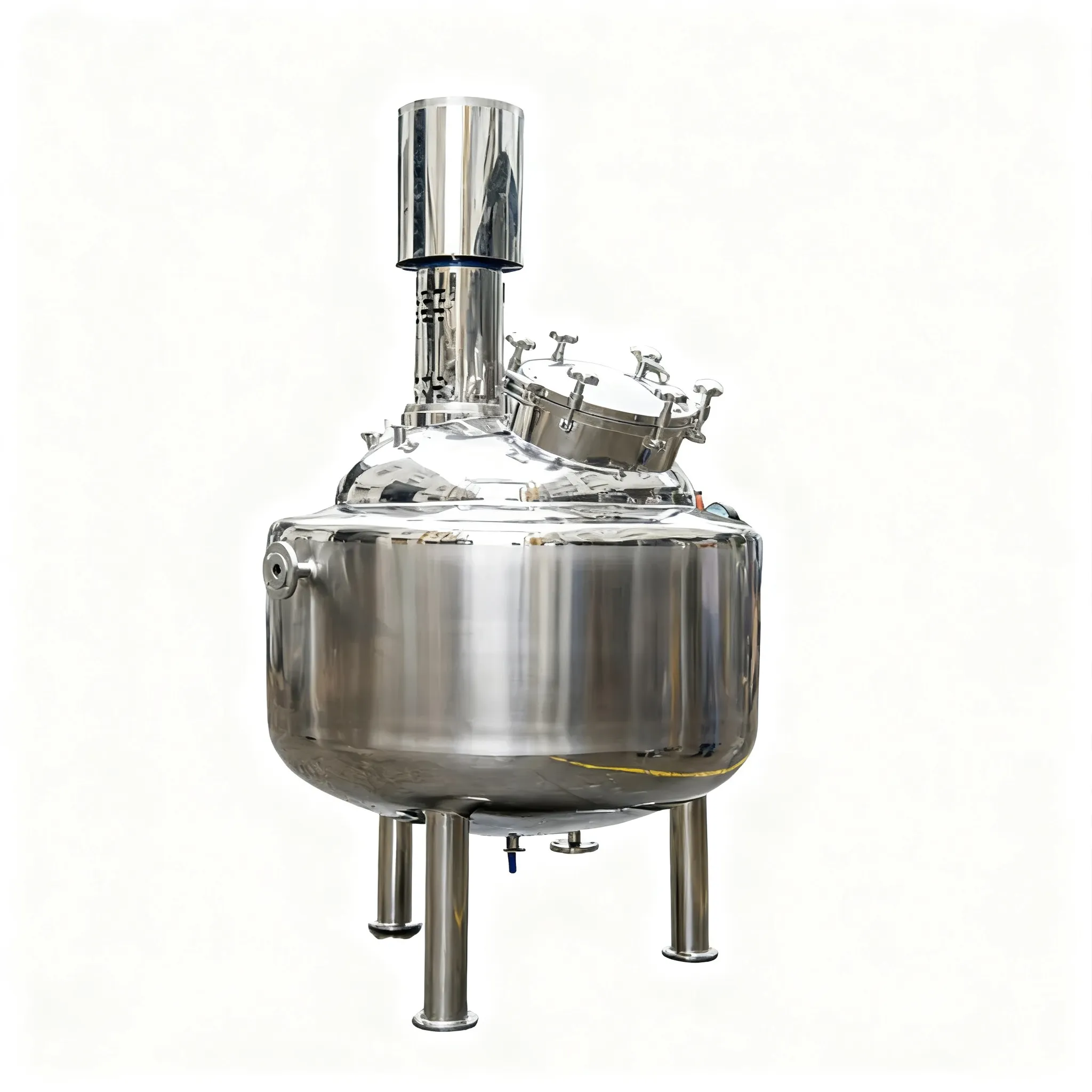
Bulk Stainless steel Buffer Melting Tank
Basic Info.
| Model NO. | ALT-F1009 |
| Process | Mild Processing |
| Power Source | Electric |
| Certification | ISO9001 |
| Automatic Grade | Semi-Automatic |
| Application | Milk, Yogurt, Milk Powder, Cheese |
| Customized | Customized |
| Body Material | SS304, SS316L |
| Sealing Material | Silicone, EPDM, Viton, PTFE, or NBR |
| Qualified Certificate for Seal | FDA |
| MOQ | 1PCS |
| Acting Mode | Manual or Pneumatic or Electrical |
| Inner Surface Finish | Ra 0.5 |
| External Surface Finish | Ra0.8 |
| Connection | Weld, Clamp, Male, Female, Union, Flange |
| Transport Package | Wooden Case |
| Specification | 5L-2000L |
| Trademark | Aelt |
| Origin | Yangling, China |
| HS Code | 8479820090 |
| Production Capacity | 200PCS/Month |
Product Description
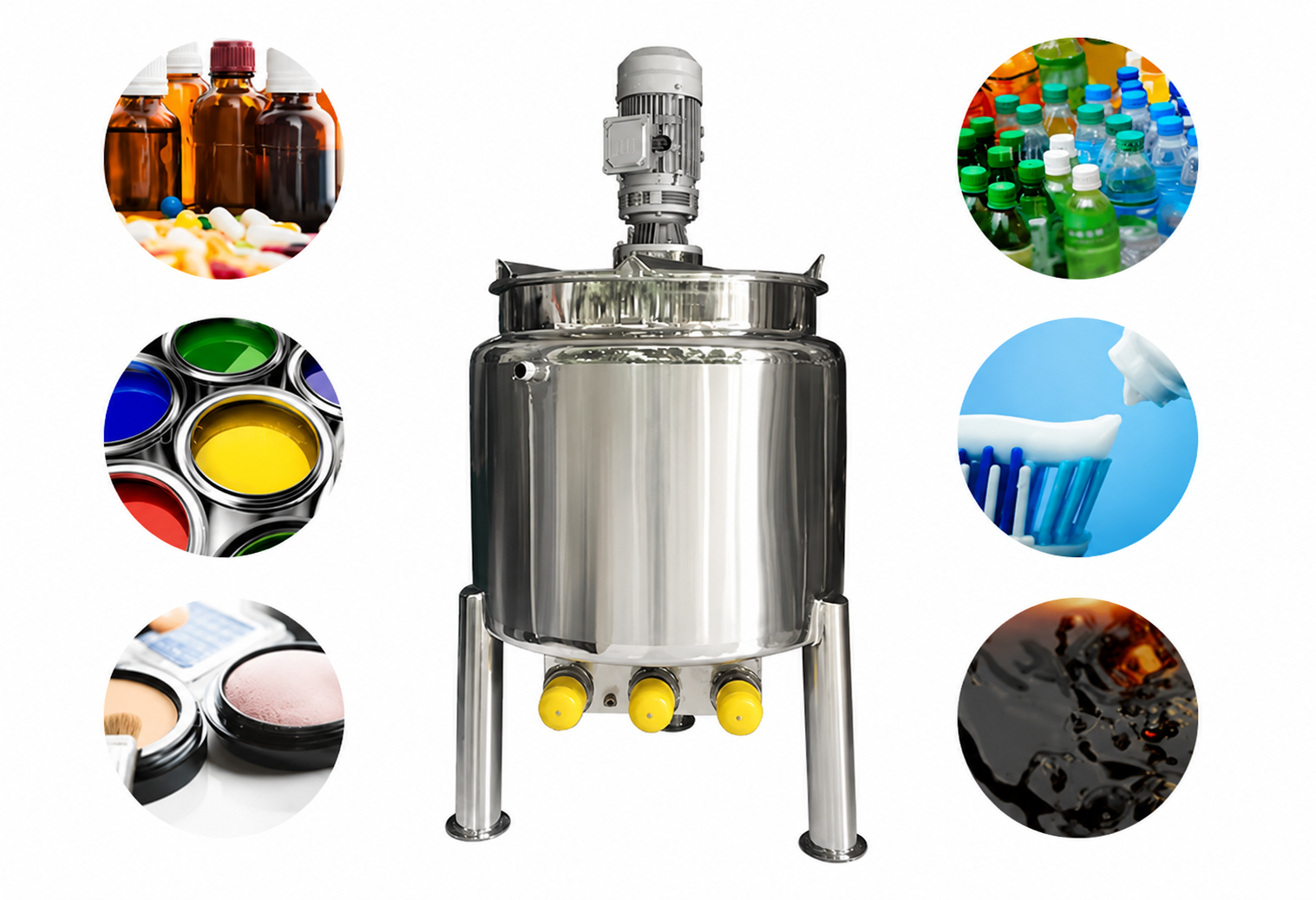
Storage tanks are engineered vessels designed for the safe containment and management of liquids,
semi-liquids, or gases across sanitary and industrial environments.
They are commonly manufactured from stainless steel to ensure hygiene,
corrosion resistance, and long-term durability.
These tanks are widely used in food and beverage processing, pharmaceuticals,
chemicals, cosmetics, and water treatment systems.
Their designs can include vertical or horizontal configurations,
insulated or non-insulated structures, and optional features such as agitators,
level indicators, and manways. By providing controlled, hygienic storage,
storage tanks help maintain product stability, prevent contamination, and support efficient production workflows.
Working Principle
The working principle of storage tanks focuses on secure containment combined
with controlled handling of stored media. Fluids enter the tank through inlet connections and
are held under stable pressure and temperature conditions suited to the process requirements.
Depending on application needs, tanks may integrate mixing, heating, cooling,
or circulation systems to maintain uniform composition.
Outlets allow controlled discharge for downstream processing,
while venting and sealing components ensure safety and cleanliness.
Through precise structural design and process control, storage tanks enable reliable material management,
reduced losses, and consistent product quality throughout industrial and sanitary operations.
Capacity: 100 L – 10,000 L
Material Finish: Ra ≤ 0.6–0.8 μm
Agitator Type: Top-mounted / Bottom-mounted / Magnetic / None
Mixing Speed: 5 – 120 rpm (VFD adjustable)
Temperature Range: -20 °C to 150 °C
Pressure: Atmospheric,Vacuum (≤ -0.098 MPa),Pressurized (≤ 0.3 MPa)
Jacket Type: Single jacket / Dimple jacket / Coil jacket / No jacket
Standards: 3A / FDA / GMP / ASME
Quality guarantee of 3 years
ISO 9001, FDA, SGS approved materials
7-10 days fast delivery on urgent requirements
20 years' Rich exporting experience to make you easy and happy with custom work
Stainless steel sanitary tanks are widely used in high-cleanliness industries and have the following significant feature:
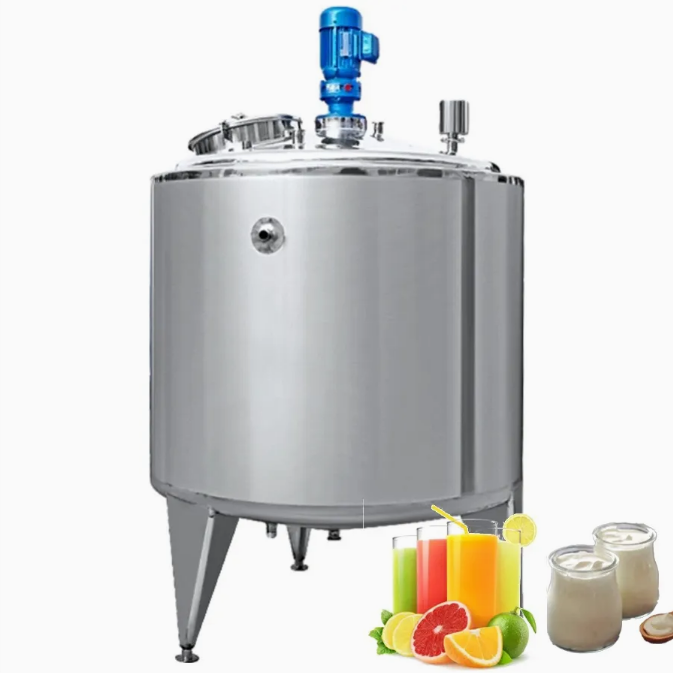
1.High hygienic performance ensures safe storage of sensitive liquids,
effectively preventing contamination while maintaining product purity,
stability, and compliance with strict food, pharmaceutical,
and cosmetic processing standards throughout long-term storage cycles.
2.Excellent corrosion resistance allows storage tanks to handle aggressive
or high-purity media reliably, extending service life, reducing maintenance frequency,
and ensuring consistent performance under demanding sanitary and industrial operating conditions.
3.Flexible capacity and design options support customized process integration,
enabling efficient storage, buffering, and material management for batch
or continuous production lines across diverse processing environments.
4.Stable structural strength enables safe operation under controlled pressure
and temperature, ensuring reliable containment, minimizing leakage risks,
and supporting consistent downstream process performance in industrial applications.
5.Efficient thermal compatibility allows integration with heating or cooling systems,
helping maintain optimal material conditions, improve energy utilization,
and support precise temperature control during storage and transfer operations.
Process Buffer Mixing & Blending Tank – Complete Industry Guide
1. Introduction to Process Buffer Mixing & Blending Tank
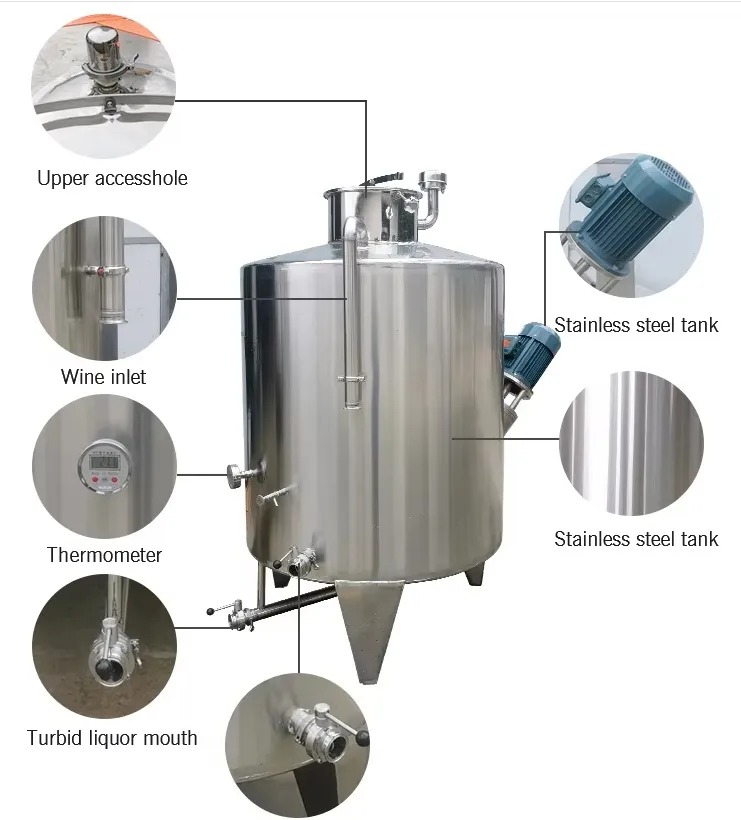
A Process Buffer Mixing & Blending Tank is a critical industrial vessel designed for temporary storage, buffering, mixing, homogenizing, and stabilizing liquid or semi-liquid materials in production systems.
It is widely used in industries that require continuous production flow, stable formulation quality, and precise blending control, such as:
Food and beverage processing
Dairy production
Pharmaceutical manufacturing
Cosmetic and personal care production
Chemical processing
Biotechnology systems
Beverage fermentation and formulation systems
The main purpose of a buffer mixing and blending tank is to ensure that upstream and downstream processes remain stable even when production speed or material input fluctuates.
In modern automated production systems, the Process Buffer Mixing & Blending Tank is essential for:
Maintaining constant material flow
Preventing production interruptions
Ensuring uniform product consistency
Reducing process variability
Supporting continuous manufacturing systems
2. Definition of Process Buffer Mixing & Blending Tank
A Process Buffer Mixing & Blending Tank is a Stainless steel industrial tank designed to:
Temporarily store process liquids
Mix multiple ingredients uniformly
Stabilize flow between production stages
Balance production speed differences
Maintain product consistency and quality
Unlike simple storage tanks, buffer blending tanks integrate:
Mixing systems (agitators)
Flow control systems
Temperature control systems
Hygienic sanitary design
Automated process control compatibility
They act as a bridge between upstream processing and downstream packaging or refining systems.
3. Key Functions of Buffer Mixing & Blending Tank
Absorbs fluctuations in production flow
Prevents upstream or downstream bottlenecks
Stabilizes production lines
Ensures uniform blending of ingredients
Prevents separation or sedimentation
Improves product homogeneity
Temporary holding of liquid materials
Safe intermediate storage before next processing step
Maintains consistent viscosity
Ensures uniform composition
Reduces batch variation
4. Working Principle
The working principle of a Process Buffer Mixing & Blending Tank is based on controlled agitation and flow regulation.
Material Input
Raw liquids or semi-finished products enter the tank.
Buffer Storage
Materials are temporarily stored to balance production flow.
Mixing Process
Agitators blend components evenly.
Conditioning Phase
Temperature and viscosity may be adjusted.
Output Discharge
Homogenized mixture flows to next production stage.
5. Structural Design of Buffer Mixing Tank
A well-designed buffer blending tank includes multiple engineering components:
Inner tank shell (stainless steel)
Outer jacket or insulation layer
Support frame or legs
Manholes for maintenance
Top-mounted agitator
Bottom-mounted agitator (optional)
Side-entry mixer (special applications)
Variable speed motor system
Inlet ports
Outlet discharge valves
Recirculation pipelines
CIP spray ball system
Temperature sensors
Level sensors
Pressure gauges
Automated PLC control system (optional)
6. Material Construction
| Material | Characteristics | Application |
|---|---|---|
| SS304 | General food-grade stainless steel | Food, beverage, general industrial use |
| SS316L | High corrosion resistance | Pharmaceutical and chemical systems |
| SS321 | Heat-resistant stainless steel | High temperature blending |
| Duplex Steel | High strength & corrosion resistance | Heavy industrial applications |
Internal surface: Ra ≤ 0.4–0.8 μm (mirror polished)
External surface: brushed or polished finish
Welds: sanitary TIG welding, fully polished
7. Types of Process Buffer Mixing & Blending Tanks
Space-saving design
High efficiency mixing
Suitable for continuous production lines
Easy maintenance access
Stable operation
Used in large-scale facilities
Heating or cooling system integrated
Temperature-controlled blending
Reduces heat loss or temperature variation
Energy-efficient operation
Multiple mixing zones
Advanced homogenization process
8. Advantages of Buffer Mixing & Blending Tank
Reduces downtime
Balances production flow
Prevents system overload
Uniform blending quality
Eliminates batch variation
Improves final product stability
CIP/SIP compatible
No dead corners
Food-grade sanitary construction
Reduced mixing energy consumption
Optimized thermal control systems
Suitable for multiple industries
Supports batch and continuous production
9. Applications
Juice blending
Dairy processing
Sauce and syrup production
Beverage formulation
Liquid drug preparation
Buffer solution mixing
Vaccine and sterile solution processing
Lotion blending
Shampoo and gel mixing
Emulsion stabilization
Liquid chemical mixing
Intermediate storage systems
Reaction buffering systems
Fermentation support systems
Culture media preparation
Bioprocess stabilization
10. Technical Specifications Table
| Parameter | Specification Range |
|---|---|
| Capacity | 100L – 100,000L+ |
| Material | SS304 / SS316L |
| Mixing Speed | 10–300 RPM (variable) |
| Temperature Range | -10°C to 150°C |
| Pressure Rating | Atmospheric to 10 bar |
| Surface Finish | Ra ≤ 0.4–0.8 μm |
| Tank Type | Vertical / Horizontal |
| Mixing Type | Top / Bottom / Side Entry |
| Control System | Manual / Semi-auto / PLC |
| Compliance | GMP / FDA / ASME / PED |
11. Mixing Technology
Propeller mixer
Anchor agitator
Turbine mixer
Magnetic mixer
High-shear mixer
Axial flow mixing
Radial flow mixing
Turbulent mixing
Laminar blending (viscous fluids)
Homogeneity
Suspension of solids
Emulsification
Heat transfer improvement
12. Heating & Cooling Systems
Buffer blending tanks may include thermal control systems:
Steam heating jacket
Electric heating coil
Cooling water jacket
Glycol refrigeration system
Maintains product stability
Prevents viscosity fluctuation
Improves reaction control
13. Manufacturing Process
Material selection (SS304/SS316L)
Laser cutting and rolling
Sanitary TIG welding
Internal polishing (mirror finish)
Installation of agitator system
Addition of jackets or insulation
Assembly of valves and sensors
Pressure testing and leak detection
Final cleaning and inspection
14. Installation Guidelines
Install on level foundation
Ensure vibration-free support
Connect CIP and process pipelines
Integrate with control system
Maintain safety clearance
15. Maintenance & Cleaning
Inspect seals and welds
Check motor and agitator
Monitor temperature sensors
Alkaline wash
Acid rinse
Sterile water flush
Drying cycle
16. Energy Efficiency Optimization
Variable speed motors
Insulated tank design
Heat recovery integration
Smart process control systems
17. Industry Standards
GMP (Good Manufacturing Practice)
FDA Food Contact Compliance
ASME Boiler & Pressure Vessel Code
PED Pressure Equipment Directive
ISO 9001 Quality Management
18. Troubleshooting Guide
| Issue | Cause | Solution |
|---|---|---|
| Poor mixing | Low agitator speed | Adjust motor speed |
| Sedimentation | Improper agitation | Upgrade mixer type |
| Temperature fluctuation | Insulation failure | Repair insulation |
| Leakage | Weld defect | Re-weld and test |
| Foam formation | High agitation speed | Reduce RPM |
19. Future Trends
Smart IoT monitoring systems
AI-based process optimization
Fully automated blending systems
Modular tank design systems
Advanced hygienic nanocoatings
Energy-efficient hybrid mixing systems
20. SEO Keyword Cluster
process buffer mixing tank
industrial blending tank
sanitary mixing and storage tank
stainless steel buffer tank
liquid blending system tank
pharmaceutical buffer tank
food grade mixing tank
CIP blending tank
industrial process tank
stainless steel blending vessel
intermediate buffer storage tank
21. FAQ
It is used for mixing, buffering, and stabilizing liquids in industrial production systems.
SS304 and SS316L stainless steel are most common.
Yes, it is widely used in food and beverage industries.
Yes, it typically includes agitators or high-shear mixers.
Yes, via heating or cooling jackets.
22. Conclusion
The Process Buffer Mixing & Blending Tank is a core component in modern industrial production systems, enabling stable flow, consistent blending, and efficient process control. With its sanitary stainless steel structure, advanced mixing technology, and flexible design options, it is widely used across food, pharmaceutical, chemical, and biotechnology industries.
This website uses cookies to ensure you get the best experience on our website.




 Phone
Phone